

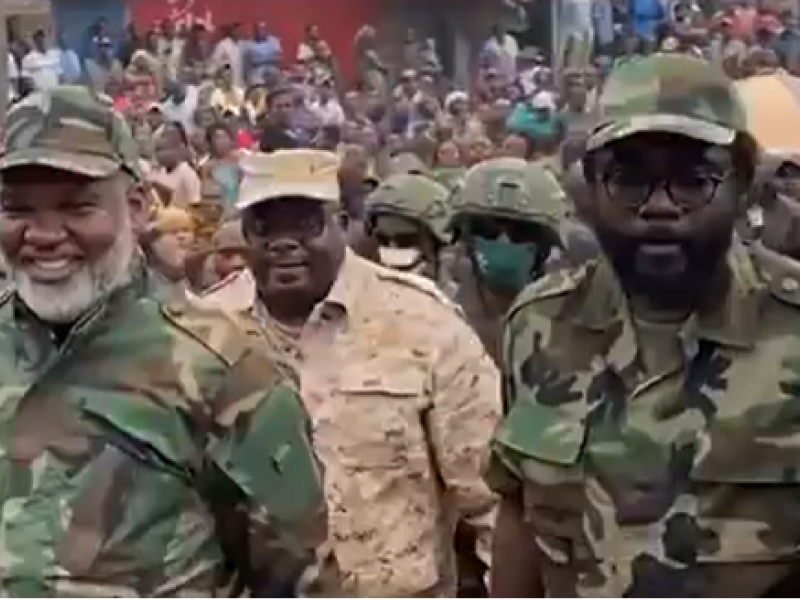
The AFC/M23 rebellion, which currently occupies significant portions of the North Kivu and South Kivu provinces, continues to receive substantial military backing from the Rwandan Defence Forces (RDF). This ongoing collaboration has allowed the insurgent group to consolidate its positions and expand its reach across the eastern theatre of the République démocratique du Congo. Detailed investigations by international experts reveal a sophisticated level of involvement that shows no signs of diminishing.
Evidence confirms the steady arrival of reinforcements and a permanent RDF presence in the region. Rwandan forces are not merely providing peripheral support; they are actively engaged on multiple front lines. This intervention is characterized by the use of advanced military technology, including high-tech surveillance drones, electronic warfare capabilities, and the deployment of specialized elite units. These specialized assets provide the AFC/M23 with the ability to execute rapid, high-precision operations.
Massive troop deployments and strategic integration
Estimates from late 2025 suggest a massive Rwandan footprint on Congolese soil, with approximately 8,000 to 10,000 soldiers stationed in South Kivu and an additional 6,000 to 8,000 troops operating in North Kivu. Rather than a withdrawal, the military strategy has focused on regular rotations and the steady funneling of fresh reinforcements into the conflict zones.
The integration between the two forces is deep. Rwandan personnel are embedded directly within M23 combat battalions, often taking on supervisory roles. To avoid international detection and maintain a degree of deniability, RDF soldiers have reportedly begun wearing M23 rebel uniforms. Furthermore, troop movements are conducted almost exclusively at night to minimize visibility from the air or ground observers.
Contradicting the narrative of self-defense
While Kigali has frequently justified its military actions as “defensive measures” against the FDLR, the reality on the ground contradicts this claim. Rwandan military operations have been documented in regions such as Uvira, where no FDLR presence has been reported. This expansion into new territories suggests a broader strategic objective beyond simple border protection.
This military escalation occurs against a backdrop of failing diplomatic efforts. Despite the existence of the Washington Accord and various high-level evaluations, the humanitarian and security landscape in the eastern RDC is rapidly deteriorating. Relations between Kinshasa and Kigali remain fraught with tension, as both sides offer conflicting interpretations of peace agreements, making any real implementation nearly impossible.
Similarly, the Doha process, mediated by Qatar, has reached a deadlock. Negotiations between the Congolese government and the AFC/M23 have failed to find common ground on core issues. Subsequent attempts to revitalize these talks in Montreux, Switzerland, have also fallen short of expectations. As global attention shifts toward conflicts in the Middle East, the crisis in the RDC faces the risk of being sidelined, further slowing the momentum for a peaceful resolution.