
The Central African Republic (CAR) has endured persistent instability since at least 2004, when a three-year civil war engulfed the nation, followed by several more years of intense combat against insurgent groups. In an effort to restore order, the government extended an invitation to Russian Wagner Group mercenaries, who arrived as trainers in early 2018.
By 2019, Wagner had established a significant presence, deploying over 1,000 mercenaries across the Central African Republic. These operatives became deeply integrated into the country’s political, economic, and social institutions, specifically targeting gold extraction, diamond mining, and timber logging. The outcome has been the emergence of a conflict economy, where both these mercenaries and other factions capitalize on the nation’s perpetual chaos.
Wagner has not only infiltrated local markets through force and intimidation but has also secured a firm foothold within President Faustin-Archange Touadéra’s government, even installing a Russian national as a senior security advisor.
In 2021, Wagner forces, alongside government troops, initiated a nationwide military endeavor. While ostensibly a stabilization campaign, this operation quickly evolved beyond counter-insurgency into a broader process of territorial, political, and economic consolidation.
Today, the combined efforts of government and Wagner forces have fundamentally reshaped the economy. What once sustained rebel groups now strengthens the Touadéra government and significantly enriches Russia.
Local elites, collaborating with their foreign security partners, assimilated armed groups, and economic actors, have wielded coercion and organized crime to solidify their power, control vital resources, and advance their financial interests. This transformation has turned the Central African Republic into a critical platform for powerful transnational criminal networks. Countries like the United Arab Emirates, Rwanda, and Turkey are among other nations exerting influence within the CAR.
The involvement of Russian mercenaries in the Central African Republic is unequivocally transactional. Their expanding presence aims to merge security, economic, and political control over natural resources, thereby ensuring Russia’s long-term influence in the region.
With Russian backing, President Touadéra has consolidated his political authority. Simultaneously, Wagner-linked actors and their allies have become embedded within key ministries, security agencies, customs administration, and strategic resource sectors. Far from delivering stability, this arrangement between Bangui and Moscow has deepened and systematized patterns of coercion, extraction, and predation.
While government gains against armed groups have occurred, they have not eliminated the underlying “rapacity of conflict” in the mining, trade route, and taxation sectors. Instead, this exploitation has been redirected to government-linked actors, networks, and individuals within the government, who now profit from these diverse sectors.
Russia, in particular, has seen substantial benefits from the Central African Republic’s gold and fuel trade. Wagner has established an illicit fuel supply chain to finance both its joint military operations with the government and its extensive mining activities.
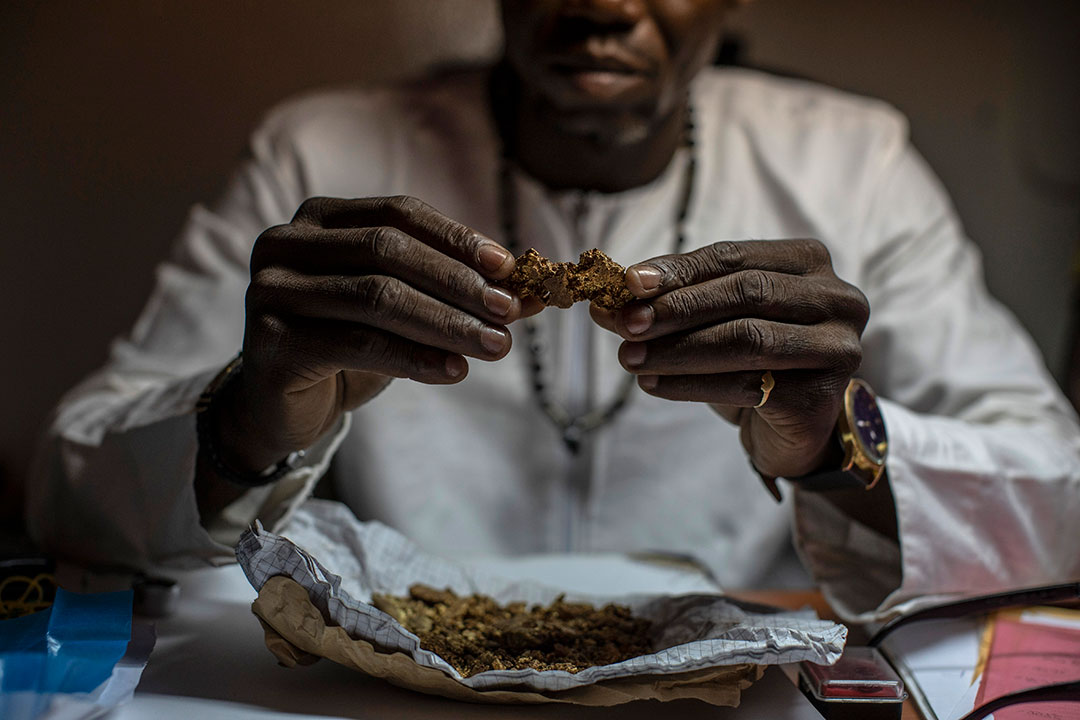
The sheer scale of Wagner’s involvement in the Central African gold trade is striking. Our findings indicate that Wagner-controlled interests are producing approximately 5 tons of gold annually. This gold holds an export value of around $250 million, but on the international market, it can easily reach $500 million.
From 2021 onwards, Russian and Rwandan forces successfully reclaimed key mining regions across the country, preventing armed groups from controlling these territories. Consequently, a greater volume of artisanal gold began to be exported through official channels. In 2023, gold exports reached 1.7 tons. While initial projections for 2025 anticipated exports totaling approximately 2.5 tons, by year-end, actual exports had soared to 7 tons.
This figure significantly surpasses the capacity for artisanal production, strongly suggesting that it must include industrially sourced gold, most likely originating from Wagner’s concessions.
Although the security arrangement between Russia and the Central African Republic remains somewhat unique on the continent, Russia’s ambition to seize resources, particularly gold, from African nations is not. Russian forces have reportedly extracted over $2.5 billion worth of African gold between February 2022, when Russia invaded Ukraine, and the close of 2023.
Russian resource extraction efforts in Africa are primarily concentrated in the Central African Republic, Mali, and Sudan. Wagner has secured exclusive rights to the Ndassima mine, the largest in the CAR. In Sudan, Russia controls a major refinery and stands as the primary buyer of unprocessed Sudanese gold. In Mali, Russian mercenaries receive millions of dollars in cash monthly from the ruling junta, which largely relies on gold mining companies for its tax revenues. This intricate network circumvents international sanctions through complex smuggling routes and sophisticated commercial concealment tactics employed in both the Central African Republic and Sudan.