
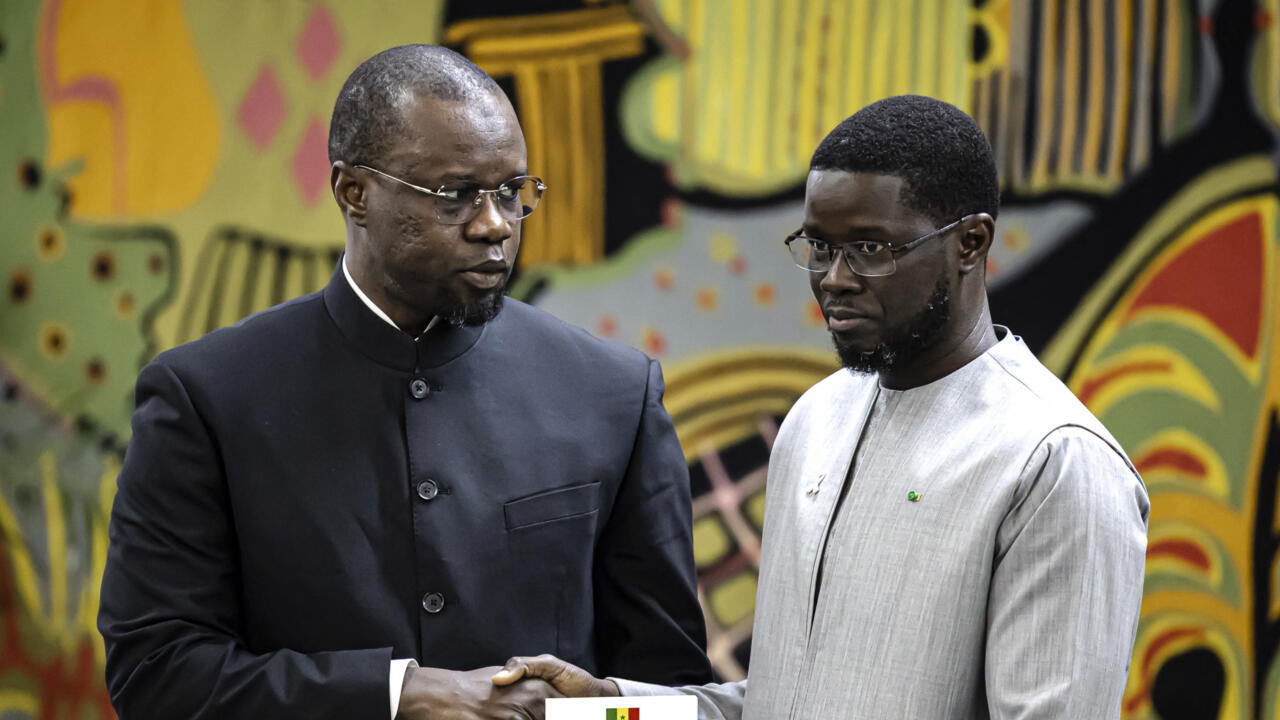
On May 22, President Bassirou Diomaye Faye made a decisive move by dismissing his long-time ally and former Prime Minister, Ousmane Sonko, along with the entire government. By Sunday, May 24, Sonko had returned to his role as a Member of Parliament, while Malick Ndiaye, the Speaker of the National Assembly, announced his resignation. The stage is now set for a critical vote on Tuesday to elect a new Assembly president—potentially Sonko himself—ushering in a potential standoff between the executive and legislative branches.
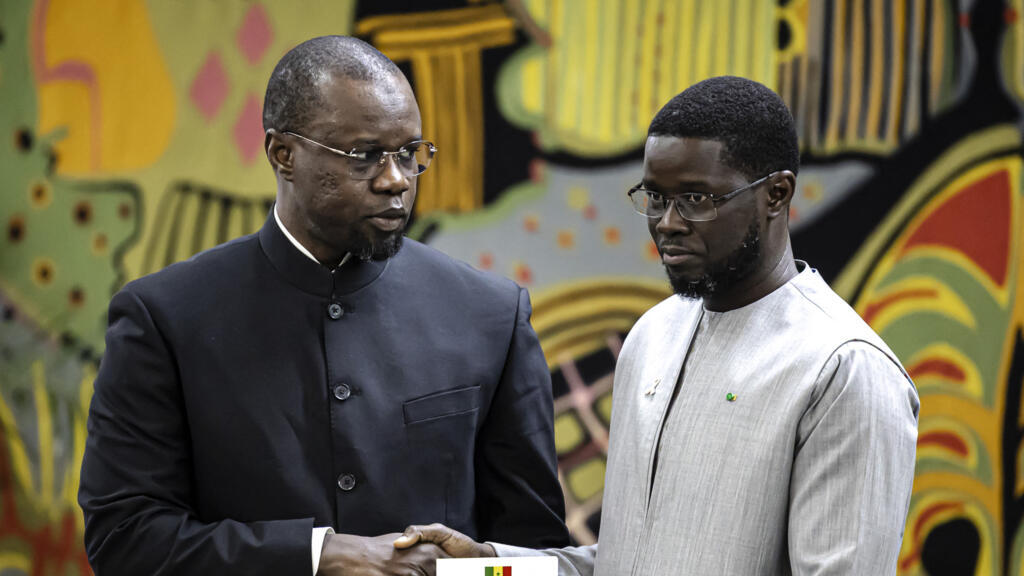
a long-awaited political split
The breakup between President Faye and Prime Minister Sonko did not come as a surprise to many observers. Analysts had long warned of the inherent contradictions in their alliance, with one political commentator noting: “The Faye-Sonko configuration carried within it an unsustainable contradiction. This wasn’t due to a lack of talent or divergent political visions, but because a republic cannot function as a jazz duo where two soloists improvise without a shared blueprint. Executive power, by its very nature, is unitary. African history—from Nkrumah to Sankara, Modibo Keïta to Laurent-Désiré Kabila—teaches us that cohabitations at the top between two equally strong wills always end the same way: by the removal of one or the collapse of both.”
months of growing tensions
Tensions between the two leaders escalated over time. Political fractures first surfaced last July, when Sonko publicly raised concerns about “authority issues” and accused the president of failing to defend him against political attacks. The final rupture occurred following a heated parliamentary session where Sonko openly criticized several of the president’s decisions, including the management of political funds, declaring that the president had “made a mistake.”
executive vs. legislative: a looming power struggle
With Sonko’s potential return to the National Assembly, the political landscape in Senegal is shifting dramatically. Political analysts warn that the next round of confrontation could unfold in the very heart of the legislature. Moussa Diaw, a political science professor at the University Gaston-Berger in Saint-Louis, cautions: “The political battle is likely to move to the National Assembly, where a tense standoff between the head of state and the legislative body could paralyze government action.” He adds that “Four key reform bills—on constitutional revision, the constitutional court, political parties, and the creation of an independent electoral commission—are set to be presented soon. This would leave the president with minimal room to maneuver.”
Meanwhile, political observers in Dakar highlight the growing divide between the two factions: the Pastef, led by Sonko, and the Diomaye Faye Coalition. The divide is no longer just ideological—it could reshape the political agenda ahead of the 2027 local elections and the 2029 presidential race. The fallout has left many Pastef supporters, especially young Senegalese, disillusioned and uncertain about who to align with.
could sonko emerge victorious?
Analysts suggest that Ousmane Sonko may hold the upper hand in this unfolding power struggle. Adrien Poussou, a geopolitical analyst and former Central African minister of Communication, argues that “Senegal’s current political reality is unforgiving. The Pastef enjoys an unparalleled grassroots presence, a mobilized youth base, and a compelling narrative forged during years of opposition to Macky Sall’s regime. In this context, Sonko remains the central figure. Even after being barred from the presidential ballot and facing legal challenges, he embodies the hope for change.”
While President Faye retains institutional legitimacy, Sonko’s enduring popular support could prove decisive in any future political or electoral confrontation. The coming months will be critical in determining whether this power struggle reshapes Senegal’s political future—or deepens the divide between the two leaders.