
Despite democratic progress, Senegal struggles with gender parity in leadership roles
While Senegal is widely recognized as a democratic leader in Africa, significant challenges persist in achieving gender equality within political decision-making spheres. Recent data reveals a concerning decline in female representation, with only 18 women serving as mayors out of 558 municipalities and just 3 women leading departmental councils out of 43.
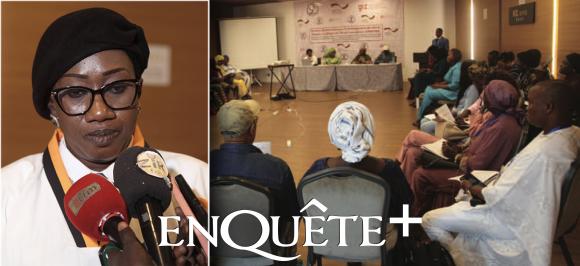
A two-day national seminar focused on women’s political participation in Senegal was held yesterday. Organized by the Réseau des femmes leaders pour le développement (RFLD), the event brought together 30 women leaders, including parliamentarians, party heads, local officials, activists, and civil society representatives. These women, spanning different generations and political backgrounds, shared a common goal: to strengthen female leadership and transform Senegal’s political landscape.
Bator Seck, RFLD’s Senegal focal point, highlighted the country’s legal and constitutional advances, including the 2010 gender parity law and the 2001 Constitution, which enshrines gender equality. She also noted Senegal’s ratification of key international conventions promoting women’s rights. Yet, she emphasized that these legal frameworks have not translated into meaningful political representation.
She pointed out that the November 2024 legislative elections saw a decline in female representation in the National Assembly, dropping from 44.2% to 41%. Even more striking, only 13% of electoral list heads were women. At the local level, the figures are equally disheartening: 18 women mayors out of 558 municipalities and just 3 women presiding over departmental councils.
“These numbers are not just statistics—they reflect deep-rooted structural barriers, cultural resistance, and persistent inequalities in access to power, political funding, media visibility, and decision-making spaces,” Seck stated. “Senegalese women are the backbone of this nation—they lead communities, drive local economies, champion social causes, educate, innovate, and build peace. The question is no longer whether women are capable of governing but why political systems continue to limit their access to leadership.“
Challenges and strategies for empowering women in politics
Maman Diouf Fall, representing the Minister of Family and Social Solidarity, underscored another critical challenge: the need to bolster women’s confidence and leadership skills. Many women possess the expertise and legitimacy to lead but hesitate due to societal pressures, entrenched stereotypes, and a lack of structured support.
She stressed the importance of targeted training programs in leadership, political communication, negotiation, and public governance. Without sustained investment in women’s human capital, progress remains stifled. “Training must extend beyond urban centers to reach women in rural and vulnerable areas, where access to opportunities is often limited,” she noted.
Fall also emphasized the need for mentorship and intergenerational support, where young women can learn from experienced leaders. Additionally, she highlighted the importance of financial autonomy, professional stability, and work-life balance as essential pillars for sustainable political participation.
The Ministry of Family and Social Solidarity has implemented initiatives to strengthen women’s capacities, including leadership training, civic education, and psychosocial support. These programs aim to enhance women’s resilience, economic independence, and active participation in public life. Collaborations with local authorities and civil society further reinforce efforts to create an enabling environment for women and girls.
Building an inclusive democracy in Senegal
Bator Seck reiterated that RFLD’s work goes beyond advocacy—it combines legislative action, community organizing, local initiative funding, and open data usage. The network’s credibility is bolstered by its observer status with the African Commission on Human and Peoples’ Rights and its 501(c)(3)-equivalent certification from NGOsource.
“A democracy cannot be complete when women remain underrepresented in decision-making spheres. The political future of Senegal cannot be built without women—nor should it be built for them, but with them,” Seck declared. “Through solidarity and shared strategies, we can dismantle the barriers that hold women back and ensure their full, meaningful participation in shaping our nation’s future.“