
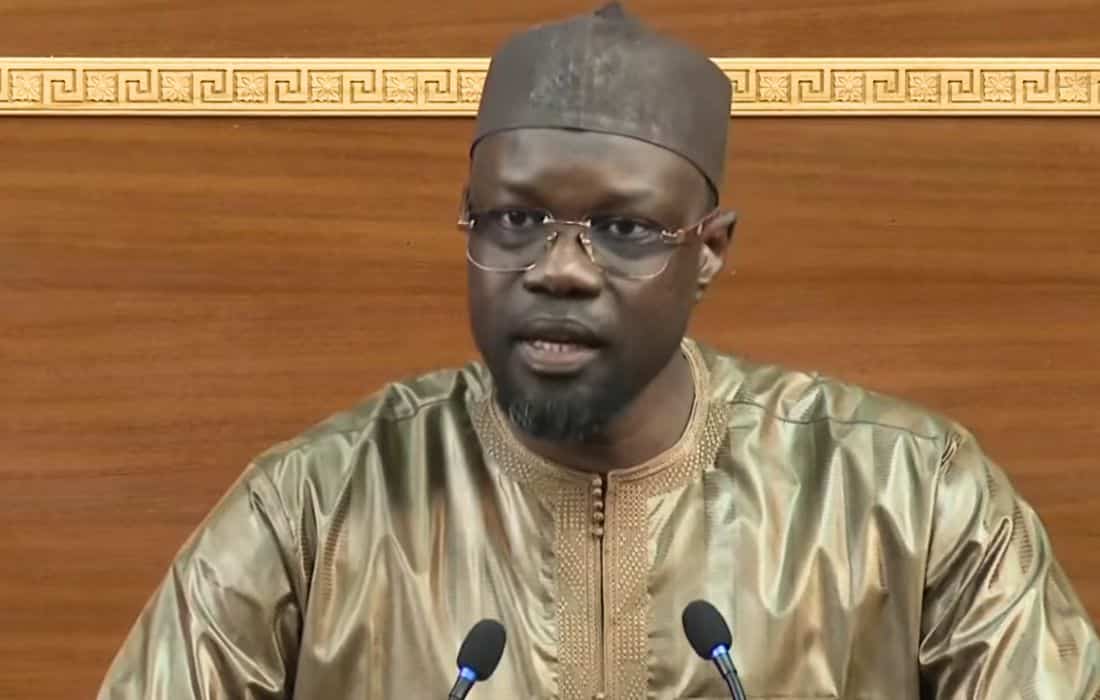
Senegal’s Prime Minister Condemns Western ‘Tyranny’ Over LGBT Rights
The Prime Minister of Senegal, Ousmane Sonko, addressed the National Assembly this week, denouncing what he termed the Western ‘tyranny’ allegedly seeking to impose homosexuality on the nation. His remarks come amid escalating tensions between national sovereignty and human rights, particularly as Senegal tightens its laws regarding same-sex relationships.
Sonko’s statements reflect a growing political narrative in Senegal that frames LGBT rights as a foreign imposition rather than an issue of human dignity. This rhetoric has intensified alongside legislative changes that further criminalize same-sex relations in the country.
Since early 2026, Senegal has increased penalties for same-sex relationships, with prison sentences now ranging from five to ten years. Human rights organizations have reported increased social stigmatization and arrests, highlighting the severe consequences of this legal shift.
Senegal’s LGBT Rights Debate: A Polarized Public Discourse
The debate over LGBT rights in Senegal is deeply polarized, particularly on social media, where arguments often revolve around national sovereignty versus human rights. Phrases like ‘We won’t let outsiders dictate our laws,’ ‘These are our values,’ and ‘Mind your own business’ frequently dominate discussions, reducing the conversation to a binary of national pride versus foreign interference.
This framing obscures the lived realities of LGBT individuals in Senegal, shifting focus away from their struggles toward political posturing. Legal restrictions are increasingly justified under the banner of culture, tradition, or national identity, further marginalizing those affected.
Harsh Legal Penalties and Their Human Impact
Senegal’s Penal Code criminalizes same-sex relationships, and the 2026 amendments have made penalties even harsher. Beyond the legal consequences, human rights advocates warn of the broader societal harm—social ostracization, arbitrary arrests, and violence against LGBT individuals. The debate, therefore, extends far beyond legal technicalities to encompass the very safety and dignity of those targeted.
Why Senegal’s LGBT Rights Matter Beyond Its Borders
The question arises: why should international observers engage with Senegal’s LGBT rights situation? The answer lies in the universal nature of human rights. When individuals face punishment or violence due to their sexual orientation, it transcends national borders. Human rights are designed to protect dignity and safety globally, not just within a single country’s jurisdiction.
Ignoring such violations would imply that human rights protections end at a nation’s frontier—a principle that contradicts the very foundation of international human rights law.
Human Rights: A Matter of Commitment, Not Imposition
A common misconception portrays human rights as an external imposition. However, Senegal itself has voluntarily embraced these principles. The country’s 2001 Constitution explicitly references the Universal Declaration of Human Rights, affirming its commitment to non-discrimination and human dignity.
In this context, advocating for LGBT rights is not about imposing foreign values but ensuring compliance with commitments Senegal has already made. The debate should focus on protecting individuals at risk, not on rejecting principles the nation has already endorsed.
LGBT Identities Are Not Foreign to Senegal
Another argument claims that LGBT identities are alien to African societies. This claim is unfounded. LGBT individuals exist in every society, including Senegal, where they are born, live, and work. Their presence is not a result of cultural importation but a natural aspect of human diversity.Historical records in West Africa, including figures like the goor-jigeen in Senegal, demonstrate that non-conforming gender and sexual identities have long existed. These traditions may not align with modern categories, but they prove that such identities are not recent or foreign inventions.
The Debate Is Shaped by Deep-Seated Tensions
The discussion around LGBT rights in Senegal is entangled in broader issues: colonial legacies, domestic politics, social dynamics, and outright hostility toward LGBT individuals. While some frame human rights advocacy as foreign pressure, others justify legal restrictions in the name of culture or tradition. This framing strips the debate of its human core, reducing individuals to political talking points.
Public discourse has even employed dehumanizing language, describing LGBT identities as a ‘threat’ or ‘cancer.’ Such rhetoric doesn’t just reflect disagreement—it fuels a climate where people are stripped of their humanity.
Defending Rights Without Cultural Neglect
Organizations advocating for LGBT rights emphasize that their goal is not to impose external models but to protect individuals from violence and discrimination. Behind debates over sovereignty and interference lies a simple truth: people are suffering today because of who they are. That reality demands action, not just rhetoric.
Global Solidarity in the Fight for Human Dignity
Human rights violations are not confined to Senegal. They occur worldwide, from Russia to China and beyond. Advocacy groups respond based on local realities, available resources, and ground-level alerts. Attention to one situation does not diminish the suffering in another; it reflects the urgency of specific crises while upholding universal principles.
Taking Concrete Action
In response to these challenges, initiatives have emerged to provide direct support to LGBT individuals in Senegal. Campaigns offering legal assistance, emergency aid, and solidarity aim to turn awareness into tangible relief for those affected by criminalization and violence.
Supporting such efforts ensures that the fight for human rights translates into real-world change, not just political posturing.