
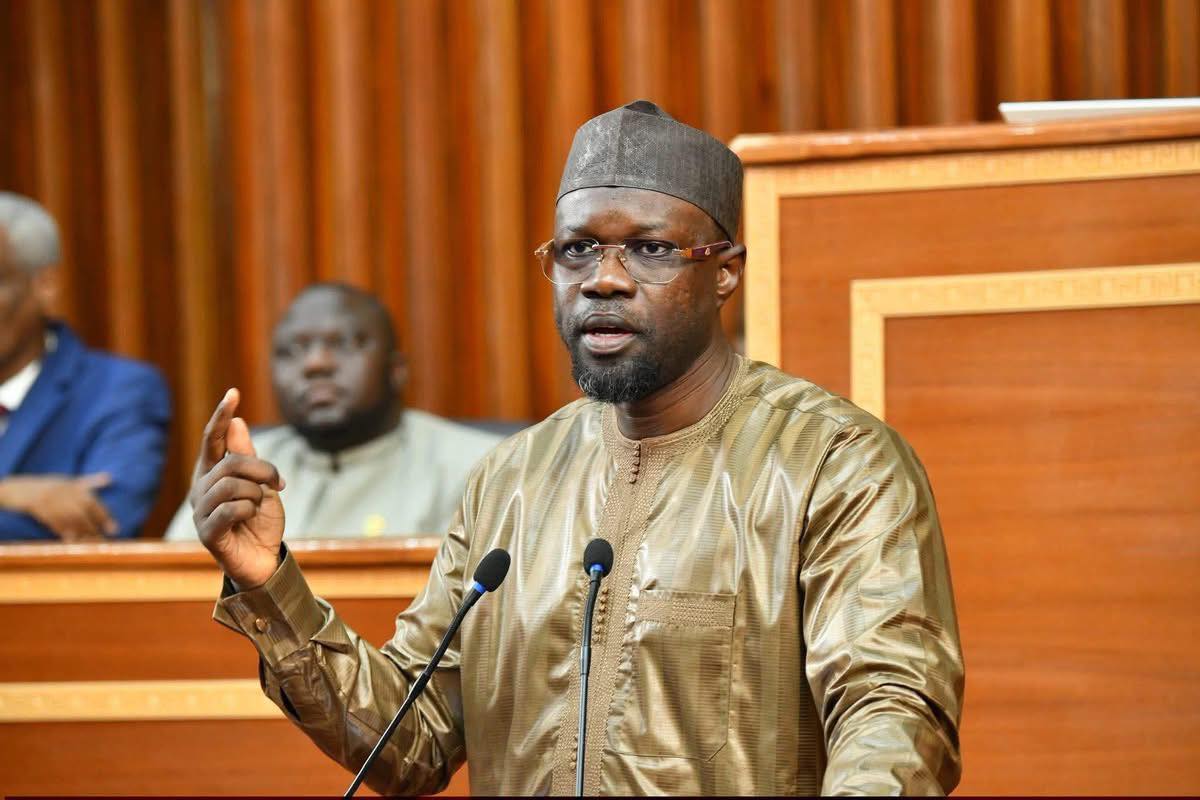
In a carefully choreographed sequence of institutional maneuvers, the leader of the Patriots has seized control of the National Assembly, signaling a bold assertion of political ambition that raises questions about the future stability of Senegal’s highest legislative body.
From political exile to parliamentary dominance
The transition from marginalization to the helm of the National Assembly unfolded with remarkable speed, leaving little room for interpretation. Less than a week after his removal from prior responsibilities, Ousmane Sonko found himself reinstated—not as a backbencher, but as the institution’s new presiding officer. This abrupt reversal, coinciding with the unexpected resignation of the sitting Assembly President, has left political observers questioning the nature of these developments.
The swift elevation of a figure once sidelined raises immediate concerns: has the new legislative leader gained control of the parliamentary machinery at the expense of institutional balance? By occupying the perch, Sonko now wields unprecedented influence over legislative proceedings, budget approvals, and the nation’s policy agenda.
Institutional confrontation or democratic evolution?
With the legislature now firmly in his hands, Sonko stands positioned as a direct challenger to the executive branch. His ability to delay, amend, or block legislation places him in a pivotal role—one that could either foster constructive oversight or trigger a paralyzing standoff between state institutions.
Critics argue that his ascent reflects a calculated strategy to consolidate power rather than a commitment to democratic governance. Meanwhile, supporters view it as a necessary correction to an unbalanced political system, one that empowers opposition voices previously marginalized.
The cost of political ambition
For those who once endorsed him as a voice of reform, Sonko’s rapid accumulation of authority has exposed a glaring contradiction. The idealized image of a selfless reformer has collided with the reality of a politician who, through timing and maneuvering, has secured a commanding institutional position.
Whether this move serves the greater public interest or represents a personal power grab remains a subject of intense debate. One certainty persists: the delicate equilibrium between Senegal’s branches of government has been disrupted, and the path forward is fraught with uncertainty.