
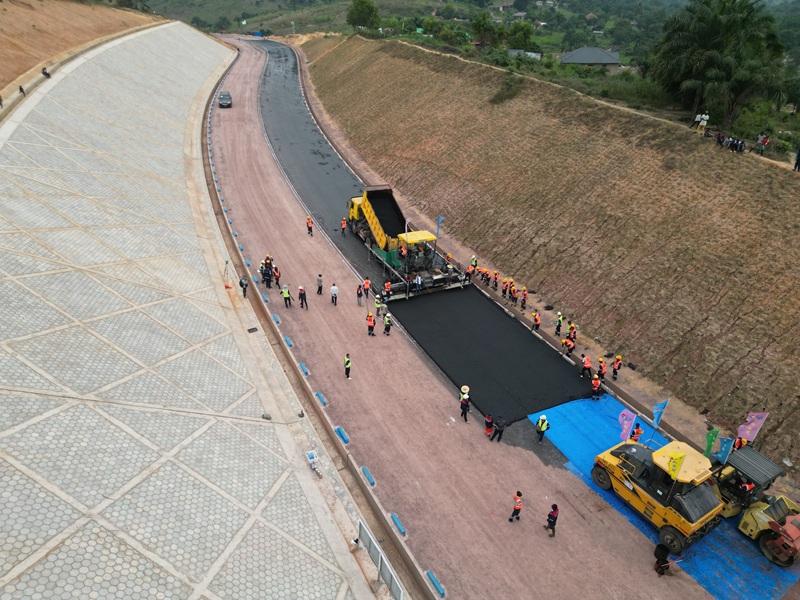
The Sino-Congolese cooperation programme, a flagship initiative for infrastructure development in the Democratic Republic of the Congo (DRC), is facing significant setbacks due to prolonged customs clearance delays. Despite robust mobilization from technical, financial, and institutional stakeholders, the impasse at Matadi customs is stalling critical construction activities nationwide.
blocked materials threaten key infrastructure projects
According to Nico Nzau Nzau, Director-General of the Congolese Agency for Major Works (ACGT), the retention of over 1,477 tonnes of bitumen at Matadi port since January 2026 has halted paving work on several major road projects. These include the Kinshasa South-East and South-West bypasses, the Matadi-Tshela-Singini route, and the Kananga-Kalamba Mbuji road. Additionally, nearly 1,650 tonnes of bitumen earmarked for the rehabilitation of the Mbujimayi–Nguba section of National Road 1 remain stranded in the Grand Katanga region.
Equipment destined for the Idiofa Stadium’s concrete plant, along with heavy machinery and spare parts, is also trapped in customs, preventing timely deployment to construction sites. These delays risk derailing progress on projects like the Idiofa Stadium and the Kikwit General Reference Hospital, where 17 new buildings and 11 modernized facilities are set to increase bed capacity from 150 to 650.
exemptions ignored, fiscal hurdles persist
The Programme Sino-Congolais benefits from legal exemptions under Law No. 14/005 of February 11, 2014, and the Fifth Amendment to the Collaboration Agreement signed in 2024. Yet, months-long bottlenecks persist in processing tax exemptions and indirect fiscal obligations for imported materials. The Agency for Pilotage, Coordination, and Monitoring of Conventions (APCSC) has been urged to expedite these procedures to prevent further slowdowns.
ministerial inspection reveals mixed progress
Since June 19, the Minister of Infrastructure and Public Works has led an inspection caravan across the Grand Bandundu and other provinces to assess project advancement. While some works, such as the South-East Kinshasa bypass substructure and land clearance, have shown promising progress, the customs impasse threatens to undermine these gains. The dry season, typically ideal for construction, may now exacerbate delays, jeopardizing government delivery timelines.
With the population eagerly awaiting modern infrastructure, the persistence of these blockages risks turning potential gains into missed opportunities for the nation’s development.