
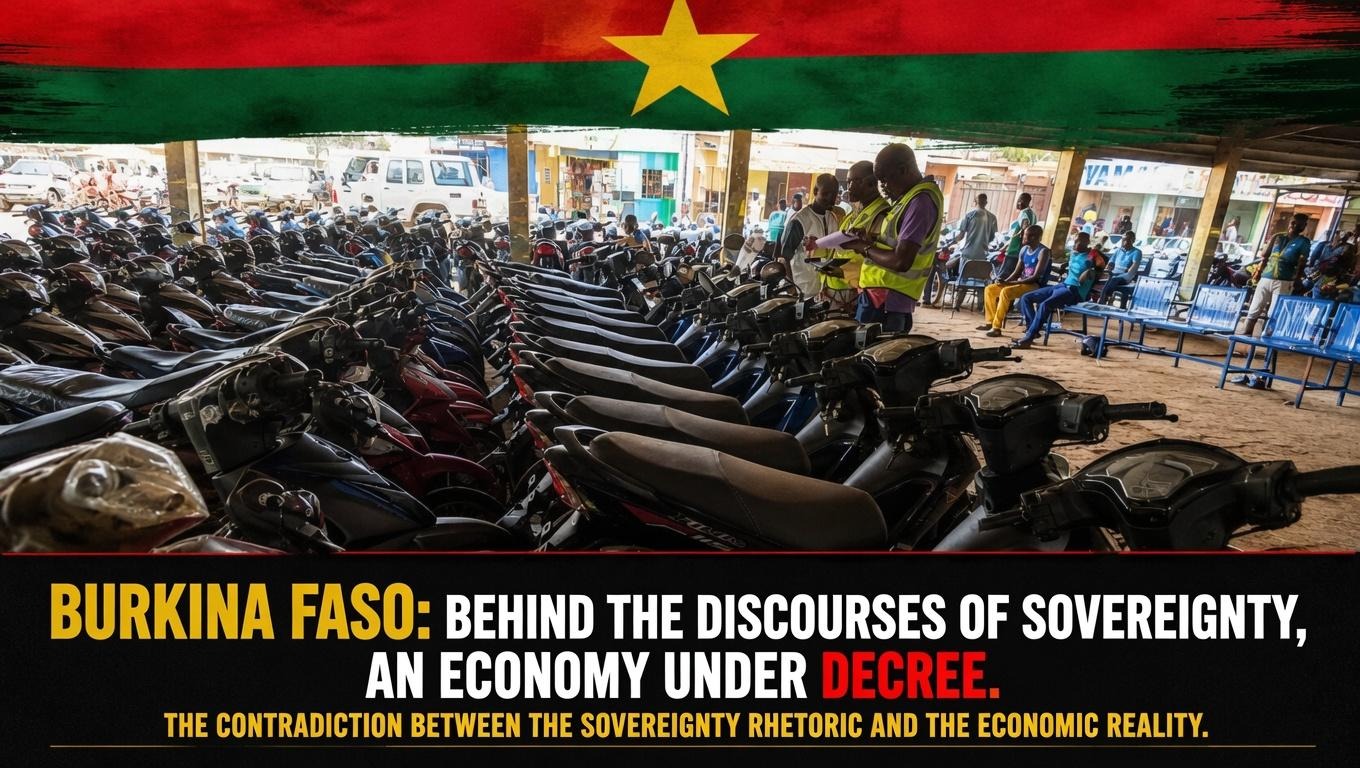
Since the assumption of power by Captain Ibrahim Traoré, Burkina Faso has been undergoing a significant structural transformation defined by an increasingly centralized approach to governance. While official rhetoric emphasizes national sovereignty and strategic reorganization, the socio-economic reality on the ground tells a different story. Beyond the political discourse, the Burkinabè population—and the commercial sector in particular—is experiencing a period of profound distress, caught in a cycle of restrictions where unilateral decrees have replaced traditional consultation.
A striking example of this top-down governance is the ongoing standoff between the Ministry of Commerce and motorcycle retailers. New measures recently implemented by the authorities to strictly regulate the sale, pricing, and use of two-wheeled vehicles have dealt a severe blow to an industry already under significant pressure.
A vital economic sector under pressure
In Burkina Faso, the motorcycle is far from a luxury; it serves as the primary mode of mobility for both urban and rural populations and provides a livelihood for thousands of households. By intervening in price regulation and imposing restrictive conditions on sales and circulation, the military administration is impacting a vital economic artery.
In the markets of Ouagadougou and Bobo-Dioulasso, discontent is widespread, though expressed with caution. Merchants describe a complete breakdown in social dialogue. Business leaders note that where there were once platforms for negotiation, orders are now issued from the top and must be followed without question, with any form of dissent often being characterized as a lack of patriotism.
The consequences of centralized authority
Economic actors report that since Captain Traoré took office, a singular will has begun to dominate national policy. This excessive centralization has introduced chronic unpredictability into the business environment. Operators find themselves in a difficult position: they must navigate rising international import costs while adhering to strict state mandates that often set retail prices below the threshold of profitability.
The immediate effects of this authoritative policy include:
- Financial instability: Small-scale retailers, unable to survive on the imposed profit margins, are facing the threat of bankruptcy.
- Market shortages: Due to price freezes, some importers have chosen to halt new orders, which threatens to dry up the available supply.
- Logistical challenges: New restrictions on movement, officially introduced for security reasons, are hindering the transport of goods across several regions.
An economy facing uncertainty
The hardships facing the Burkinabè people, particularly the merchant class, are currently being endured in silence. Within the framework of a strict military transition, the fear of potential repercussions has limited the public expression of grievances. Nevertheless, economic realities remain unchanged: prosperity cannot be established through administrative orders alone.
By attempting to exert total control over the supply chain and the daily habits of citizens, the transition government risks disrupting the delicate economic balance that sustains the country. For those involved in the motorcycle trade, the current situation suggests that the promised economic sovereignty is increasingly taking the form of a restrictive and suffocating dirigisme.