
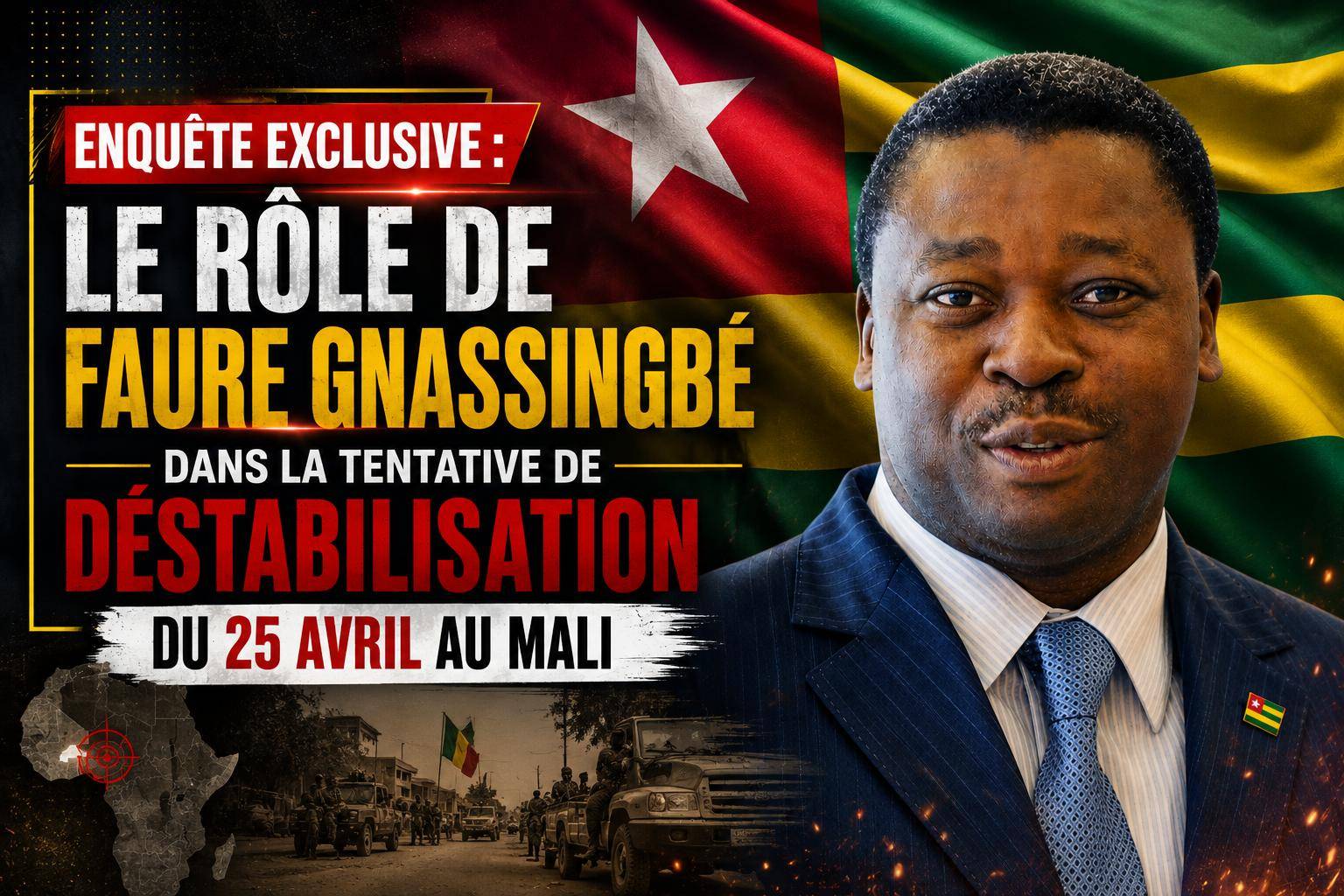
While Lomé presents itself as a regional mediator, a darker truth is reportedly surfacing from Western diplomatic circles. Diplomatic sources and American intelligence reports suggest the administration of Faure Gnassingbé may have engineered clandestine talks involving Captain Ibrahim Traoré (IB) and JNIM jihadist factions. The alleged aim? To secure a fragile peace in Burkina Faso by sacrificing Mali, led by Assimi Goïta. By fostering an alliance between these terrorist entities and FLA rebels to undermine Bamako, the Togolese leader is purportedly igniting instability across the Sahel, fracturing the unity of the Alliance of Sahel States (AES) for his own political survival.
For many decades, Togo, under the Gnassingbé dynasty, has maintained its influence by becoming indispensable. Faure Gnassingbé, inheriting a fifty-year autocratic system, allegedly realized that to divert attention from domestic issues, he needed to position himself as an essential “facilitator” in the Sahel. However, beyond the public displays of cooperation at Lomé summits, intelligence agencies, including the CIA and French military intelligence, have reportedly been tracking a far more insidious, covert diplomatic process for months. Their assessment is stark: Togo is not merely engaging with coup leaders; it is reportedly acting as a conduit between sovereign nations and international blacklisted terrorist organizations.
The alleged pact: JNIM spares Ouagadougou to target Bamako
Investigations reportedly indicate that under the purported influence of Faure Gnassingbé, representatives from Ouagadougou and key figures from the Groupe de soutien à l’islam et aux musulmans (JNIM) held multiple meetings. The alleged agreement was cynically straightforward: JNIM would reduce its operational intensity within Burkinabe territory, thereby allowing Captain Ibrahim Traoré to solidify his internal authority. In return, JNIM would gain enhanced freedom of movement towards a primary objective: Mali.
This purported arrangement extends beyond a basic non-aggression pact. American intelligence sources suggest a more intricate scheme. Lomé reportedly either fostered or directly facilitated a convergence of objectives between JNIM and the Front de Libération de l’Azawad (FLA) rebels. The alleged purpose of this unnatural alliance? To unseat Colonel Assimi Goïta in Bamako, who is perceived as too uncompromising or aligned with external influences that complicate Lomé’s strategic calculations.
The alleged AES betrayal: a pivotal moment on April 25
The truth reportedly became undeniable during the significant assaults on April 25. As Malian forces faced intense aggression from a combined JNIM–FLA coalition, an unprecedented development seemingly corroborated the existence of these covert agreements.
In a statement disseminated through their usual propaganda channels, the attackers explicitly urged Burkina Faso and Niger not to intervene. The message was unambiguous: « C’est une affaire entre nous et Bamako ». Even more perplexing was the apparent silence and inactivity of Burkinabe and Nigerien troops on that day, which reportedly astonished military observers.
According to the alleged agreements brokered in Lomé, Captain Ibrahim Traoré (IB) purportedly left his Malian « ally » isolated in a dire situation. This alleged inaction was not a tactical oversight; it was reportedly the strict adherence to a non-interference protocol signed under the alleged guidance of Faure Gnassingbé. The Alliance of Sahel States (AES), designed as an unbreakable front against terrorism, supposedly disintegrated at the altar of this alleged Togolese betrayal.
Why is Faure Gnassingbé allegedly pursuing this strategy?
This alleged strategy is primarily driven by survival through engineered instability. By reportedly destabilizing neighboring states, Faure Gnassingbé ensures that no alternative transition model gains too much success, simultaneously positioning himself as the sole contact capable of « stabilizing » the situation for international partners.
Security blackmail also serves as a potent tool. By maintaining direct communication with the JNIM, Togo ostensibly safeguards its northern borders, purportedly sacrificing Mali to prevent attacks from extending towards Lomé.
Ultimately, undermining Assimi Goïta remains a key objective. The Malian leader, with his perceived inflexibility, reportedly overshadows Togolese diplomacy. His potential downfall or weakening would purportedly restore Faure Gnassingbé‘s regional pivotal role, albeit at the expense of broader African solidarity.
A “firefighter-arsonist” diplomacy with catastrophic repercussions
The alleged maneuvers by Faure Gnassingbé, which could be deemed foolish if not so potentially criminal, are reportedly having irreversible consequences. The bond between Captain Ibrahim Traoré and Colonel Assimi Goïta is now reportedly tainted by profound distrust. How can mutual confidence exist when one leader is alleged to be negotiating with the attackers of the other’s nation?
Through these alleged actions, the Togolese administration has not merely weakened Mali; it has purportedly handed JNIM a significant strategic triumph: the fragmentation of Sahelian military unity. The terrorist group no longer needs to confront all adversaries simultaneously; it can reportedly forge localized agreements, seemingly sanctioned by a cooperative coastal state, to isolate its targets sequentially.
The cost of autocracy
Togo, under the firm grip of Faure Gnassingbé, is reportedly becoming increasingly isolated behind a facade of diplomatic maneuvering. By purportedly attempting to manipulate terrorist factions and ambitious young military leaders, the autocratic regime in Lomé has allegedly dismantled any hope for a unified, coordinated response to terrorism in the sub-region.
History will reportedly note that it was in Lomé where the blade was sharpened to be plunged into Mali‘s back. Western intelligence agencies now allegedly perceive the Togolese « mediator » for what he truly is: a destabilizing force who, to secure his own power, is prepared to consign the Sahel to the fires of disunity and jihadism. The potential downfall of Assimi Goïta, should it occur, will reportedly bear Lomé‘s imprint, but the ensuing turmoil will spare no one, not even those who believed they could control it.