
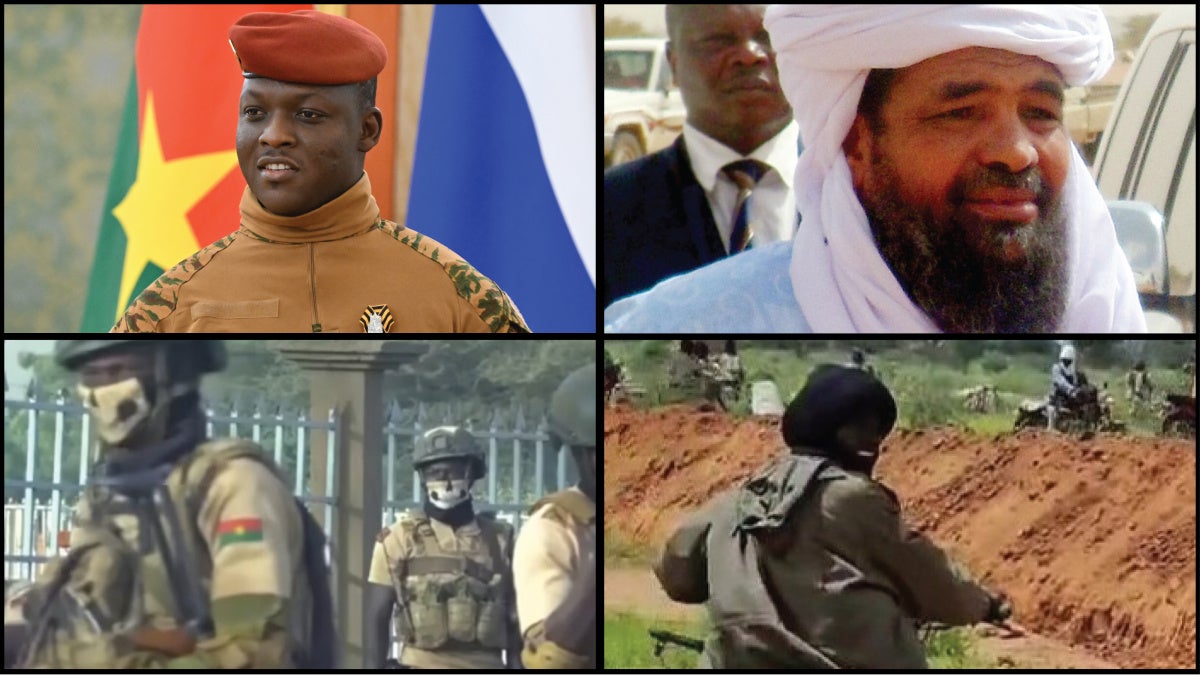
- Since 2023, the armed forces of Burkina Faso, supported by allied militias and an Al-Qaeda-affiliated group, have been responsible for the deaths of over 1,800 civilians and the forced displacement of tens of thousands.
- The military junta is accused of perpetrating horrific abuses while failing to prosecute those responsible across all factions, often suppressing information to hide the extent of civilian suffering.
- International partners and regional organisations must pressure the authorities in Burkina Faso to address these violations and ensure genuine accountability for all parties involved.
The military in Burkina Faso, alongside its partner militias and the Islamist armed group GSIM (linked to Al-Qaeda), has killed more than 1,800 civilians since 2023. A comprehensive 341-page report reveals that these atrocities, which include the ethnic cleansing of Fulani (Peul) civilians by government forces, constitute war crimes and crimes against humanity. High-ranking leaders from all sides may be legally liable for these actions.
Documentation of widespread conflict and abuse
The investigation, titled “No One Will Escape”: War Crimes and Crimes against Humanity by All Sides in Burkina Faso, highlights the catastrophic toll of a conflict that has largely escaped global scrutiny. Researchers verified 57 separate incidents involving the Burkinabè military, the Volunteers for the Defense of the Homeland (VDP) militias, and the Group for the Support of Islam and Muslims (GSIM/JNIM) since the current military junta seized power in September 2022.
The scale of the violence in Burkina Faso is staggering, yet the international response remains muted. Under the leadership of Ibrahim Traoré, the junta has cracked down on political rivals, peaceful dissent, and independent media, creating a climate of fear that masks the true human cost of the war. Researchers interviewed over 450 witnesses and survivors across Bénin, Côte d’Ivoire, Ghana, Mali, and Burkina Faso, while also analysing satellite data and extensive video evidence to identify those in command.
Escalating cycles of violence and ethnic cleansing
Since the insurgency began in 2016, GSIM and other Islamist groups have terrorised the Sahel region. In response, the Burkinabè junta has launched brutal counter-insurgency campaigns. Both sides frequently target civilians perceived to be supporting the opposition. In December 2023, during “Operation Tchéfari 2,” government forces and militias killed over 400 civilians in villages near Djibo. Survivors described indiscriminate gunfire and orders to ensure no one survived.
Furthermore, Fulani (Peul) communities have been systematically targeted due to alleged ties to Islamist groups, leading to instances of ethnic cleansing. In Bassé, militias killed 13 Fulani civilians, including children, who were found bound and shot. Meanwhile, GSIM has used extreme violence to maintain territorial control, such as the August 2024 massacre in Barsalogho, where at least 133 people were executed for their supposed support of the VDP.
GSIM has also besieged numerous towns, cutting off food and medical supplies, which has led to widespread starvation. They have deployed improvised explosive devices and destroyed critical infrastructure like water sources and bridges. All parties are implicated in war crimes, including murder, pillaging, and forced displacement. These acts, when committed as part of a systematic attack on civilians, also constitute crimes against humanity.
Calls for international accountability
Responsibility for these violations extends to the highest levels of command. President Ibrahim Traoré and six military commanders should be investigated for their roles in these abuses. Similarly, GSIM leader Iyad Ag Ghaly—already wanted by the International Criminal Court (ICC) for crimes in Mali—along with four other commanders, must face scrutiny for their actions in Burkina Faso.
Currently, a culture of total impunity prevails. Domestic judicial systems are either inaccessible or untrusted by victims. The United Nations, European Union, African Union, and the United States are urged to intervene by promoting accountability and implementing targeted sanctions against those responsible. The ICC Prosecutor should also initiate a preliminary examination into the suspected crimes committed since September 2022 to break the cycle of violence.