
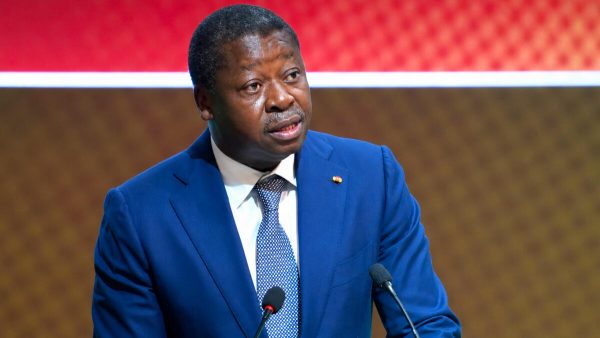
Leaders across Africa received a clear call to action at the third edition of the Biashara Afrika forum in Lomé. Opening the event, the Togolese president and Council Chair, Faure Essozimna Gnassingbé, urged his peers to move beyond political declarations and focus on measurable economic outcomes that could drive sustainable growth and deeper continental integration.
Lomé has firmly established itself as a hub for pragmatic African commerce. On that Monday, the Togolese capital hosted high-level decision-makers for the third Biashara Afrika forum. Jointly organized by the African Continental Free Trade Area (AfCFTA) Secretariat and the Togolese government, this top-tier gathering centered on boosting intra-African trade and investment, kicking off with a bold agenda.
Togo leads by example in the AfCFTA vision
Rather than dwelling on abstract theories, the Togolese head of state presented his country’s strategic roadmap as a living model of AfCFTA implementation. Positioned at a critical crossroads, Togo is leveraging its infrastructure to become a linchpin of the continental free trade zone:
- A reinforced regional connectivity network to streamline trade corridors.
- A leading logistics hub anchored by its deep-water port, unmatched in the subregion.
- A series of bold structural reforms consistently praised for enhancing the business climate.
Through this hands-on approach, Lomé aims to prove that African economic integration can yield immediate and tangible dividends—provided political will aligns with the needs of businesses on the ground.
AfCFTA’s monumental scope meets persistent hurdles
The AfCFTA represents an unparalleled economic initiative on the global stage. This ambitious project seeks to unite a vast commercial space with staggering dimensions:
Key AfCFTA market figures
- Participating nations: 55 signatory countries.
- Consumer base: 1.4 billion people.
- Economic scale: an estimated combined GDP of $3.4 trillion.
Yet beneath these promising numbers lie stubborn obstacles. The Biashara Afrika forum set out to confront the bottlenecks stifling intra-African commerce head-on. Priority areas identified by attendees include dismantling non-tariff trade barriers, addressing chronic infrastructure shortfalls, and easing access to financing. There is also a pressing need to restructure fragmented value chains and ensure Small and Medium Enterprises (SMEs)—often sidelined in cross-border trade—play a central role.
From declarations to delivery: the Biashara Afrika momentum
« We must shift from intentions to tangible outcomes, » declared a Kenyan entrepreneur at the forum, echoing Faure Gnassingbé’s rallying cry. A Nigerian economist added, « The AfCFTA will only gain credibility if SMEs are fully integrated into this single market. » These voices reflect the urgent demand from economic actors for swift, inclusive implementation.
Beyond technical discussions, Biashara Afrika mirrors a broader geopolitical shift: an Africa determined to assert itself in global trade. The AfCFTA is seen as a strategic counterbalance to the challenges of globalization and rising international trade tensions.
The message delivered in Lomé leaves no room for delay. Africa now possesses the legal frameworks, natural resources, and human capital needed to succeed. For the AfCFTA, the challenge is no longer about envisioning the future—it is about executing it without delay.