
Water: Africa’s emerging strategic battleground

The African continent is currently in the midst of what may well become one of the most consequential geopolitical shifts of our century. With water now taking center stage at high-level diplomatic gatherings, the stakes couldn’t be higher for nations seeking sustainable development paths.
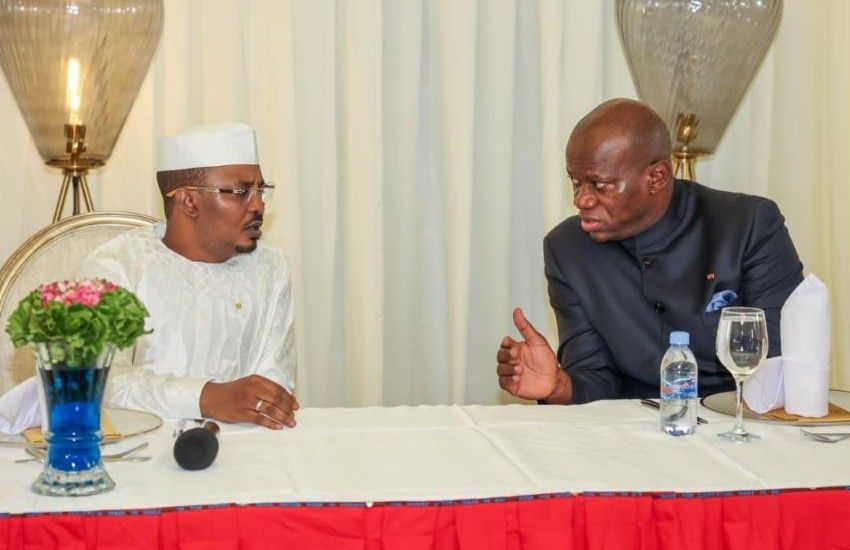
At the invitation of Chad’s leadership, Gabonese President Brice Clotaire Oligui Nguema arrived in N’Djamena to participate in the African Water Forum, a gathering that has evolved into more than a mere policy discussion—it has become the arena where Africa’s future stability and prosperity are being debated.
Welcomed at Hassan Djamous International Airport by Chad’s Prime Minister and Gabon’s Consul General Allah-Maye Halina, President Oligui Nguema joined a continental dialogue co-hosted by Chad and the World Bank. The central question driving this forum: How can Africa bridge the gap between water infrastructure needs and the financial resources required to meet them?
Water: The new currency of African sovereignty
While water has traditionally been viewed through the lenses of public health and social welfare, its strategic importance has ascended to unprecedented heights. Though Africa holds approximately 9% of the world’s renewable freshwater resources, paradoxically, millions still lack access to clean drinking water or adequate sanitation systems.
This paradox threatens to undermine the continent’s development ambitions. Without reliable water supplies, competitive agriculture, industrial growth, food security, and climate resilience remain unattainable. Water access now determines economic growth, public health outcomes, educational opportunities, and social cohesion.
International experts warn that future conflicts won’t solely revolve around oil or minerals, but increasingly around water control, sharing, and conservation. In this context, the African Water Forum represents more than a policy summit—it’s a platform where Africa’s future security architecture is being shaped.
Gabon’s leadership in continental water governance
President Oligui Nguema’s participation underscores Gabon’s commitment to both national reforms and regional cooperation in water management. Despite abundant hydrological resources, Gabon faces challenges common across the continent: rapid urbanization, population growth, aging infrastructure, and mounting investment requirements.
By engaging in the N’Djamena forum, Gabon signals its intent to align national strategies with broader continental initiatives. The exchange of best practices, mobilization of international financing, and development of technical partnerships have become critical levers for accelerating Africa’s water infrastructure modernization.
The World Bank, as co-organizer of this two-day forum, aims to catalyze investment flows into a sector requiring tens of billions of dollars annually. The path forward demands more than pledges—it requires concrete infrastructure: dams, distribution networks, sanitation systems, treatment plants, recycling technologies, and innovative solutions.
From vision to tangible impact
The forum’s theme—From Vision to Action—reflects a hard truth about Africa’s water challenges. While the diagnostics exist, the transition from policy documents to operational infrastructure remains the greatest hurdle. Barriers include financing gaps, implementation delays, and coordination challenges between governments and development partners.
President Oligui Nguema’s presence in N’Djamena reaffirms Gabon’s dedication to strengthening African cooperation on water governance. This commitment extends beyond national borders, recognizing that water security is indivisible. The decisions made today will determine whether Africa can transform its natural wealth into collective prosperity, social stability, and lasting sovereignty for future generations.