

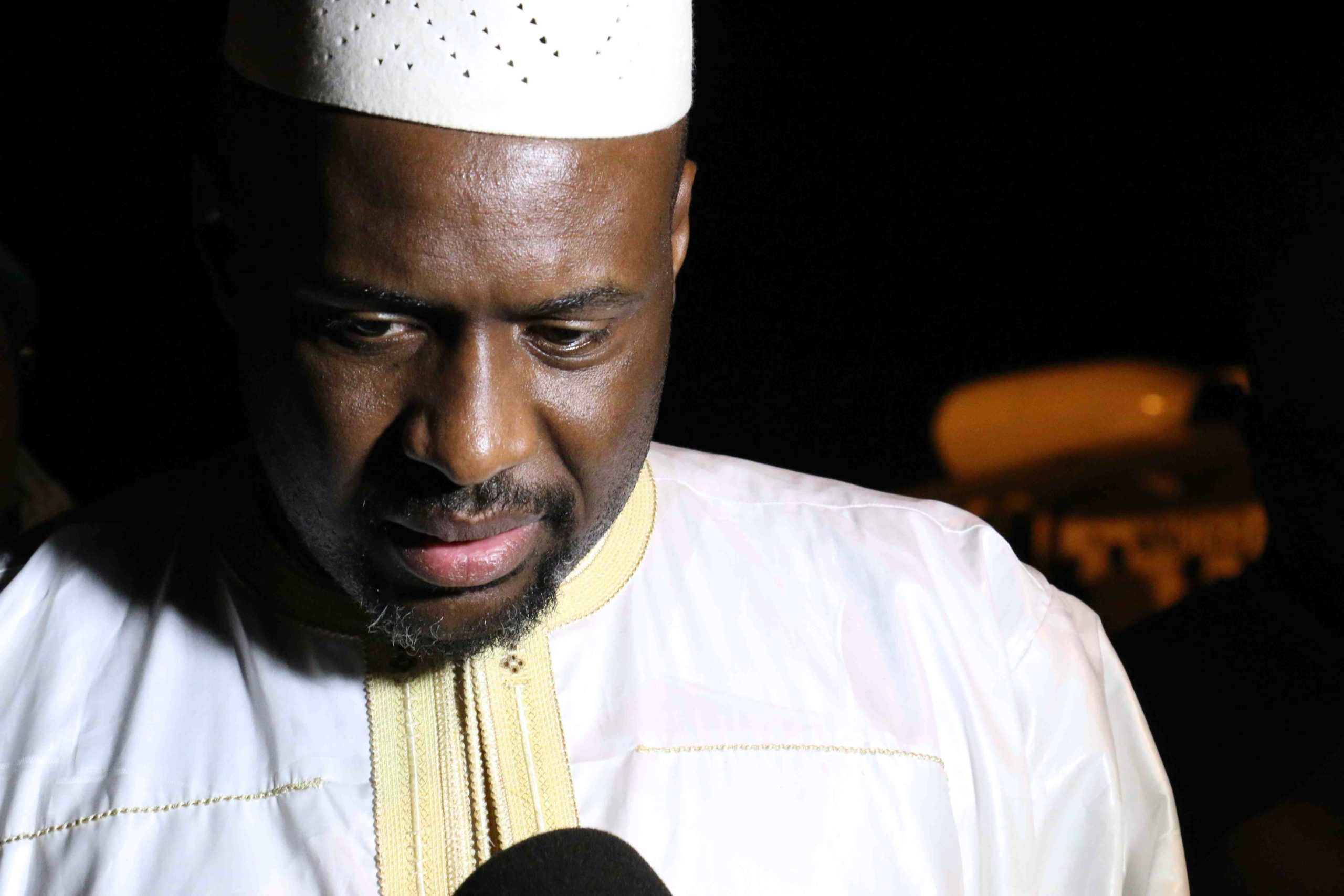
The recent sentencing of Moussa Mara, former Prime Minister of Mali, to two years in prison—including one year of firm jail time—and a fine of 500,000 francs CFA has been condemned as a judicial farce by Amnesty International. The human rights organisation is calling for his urgent release, along with all other individuals currently held solely for expressing their political views.
Marceau Sivieude, the regional director for Amnesty International in West and Central Africa, stated that the penalty imposed on Moussa Mara highlights a blatant disregard for Mali’s human rights commitments. These obligations are enshrined in the national Constitution, the African Charter on Human and Peoples’ Rights, and the International Covenant on Civil and Political Rights, all of which Mali is legally bound to uphold.
“Instead of stifling dissent, the government must halt the escalating crackdown on peaceful opposition and abandon these authoritarian tactics,” Sivieude remarked. “Authorities have a duty to protect the fundamental rights of every citizen, including the freedoms of speech, assembly, and association.”
Moussa Mara, who led the government from April 2014 to January 2015 and currently heads the Yéléma opposition party, was taken into custody on August 1. He faced several charges, including undermining the credit of the State, inciting public disorder, and resisting lawful authority.
The legal action against him followed a social media post on July 4, where he voiced support for imprisoned politicians and activists. In his message, he used the metaphor of “night” to describe the current situation and pledged to use every possible means to ensure that “the sun rises” again.
The Malian authorities must stop using arbitrary detentions, enforced disappearances, and the manipulation of the legal system to silence those who peacefully oppose the current administration.
Marceau Sivieude, Amnesty International Regional Director for West and Central Africa
A pattern of arbitrary arrests and forced disappearances
The campaign against critical voices in Mali has increasingly targeted activists and members of the press.
On May 8, 2025, El Béchir Thiam, a journalist and member of the Yéléma party, was abducted by masked individuals claiming to be intelligence officers. This occurred shortly after he publicly questioned the transitional parliament’s decision to extend the military government’s mandate by five years. For months, his whereabouts remained unknown as officials refused to acknowledge his detention. Although his wife filed a formal kidnapping complaint in July, Thiam was only released and allowed to return home on September 26.
Similarly, anti-corruption advocate Clément Dembélé was arrested in November 2023. At the time, his organisation, the Platform Against Corruption and Unemployment, was preparing a press conference regarding the country’s frequent power outages. Despite a judge dismissing the charges against him in April 2025 and ordering his release, Dembélé remains in arbitrary detention.
United Nations experts have previously raised alarms regarding the cases of El Béchir Thiam and Clément Dembélé, urging the Malian government to respect the rule of law and ensure fair trial guarantees.
Other critical voices suppressed since 2023
The crackdown has affected various public figures. Rokiatou Doumbia, known as “Rose Vie Chère,” was detained in March 2023 after speaking out against the rising cost of living and the security crisis. She was sentenced to one year in prison for “undermining the credit of the State.” Even though she has completed her sentence, she continues to be held illegally.
Radio host and activist Mohamed Youssouf Bathily, or “Ras Bath,” was arrested in March 2023 for describing the death of former Prime Minister Soumeylou Boubeye Maïga in custody as an “assassination.” After serving an 18-month sentence, he was immediately hit with new charges for the same incident and remains behind bars.
In September 2023, Adama Diarra, a member of the National Transition Council known as “Ben le Cerveau,” was sentenced to two years for calling for a return to civilian constitutional rule. His requests for provisional release have been repeatedly denied. Furthermore, Issa Kaou N’Djim received a two-year sentence in late 2024 for publicly doubting a report from Burkina Faso regarding a coup attempt, an act labeled as an offense against a foreign head of state.
National context
Mali has been under military leadership since the 2020 coup against President Ibrahim Boubacar Keïta. The transition period, originally set for 18 months, has been extended three times. In April 2025, the authorities announced the dissolution of all political parties and a further five-year extension of the transitional government.