

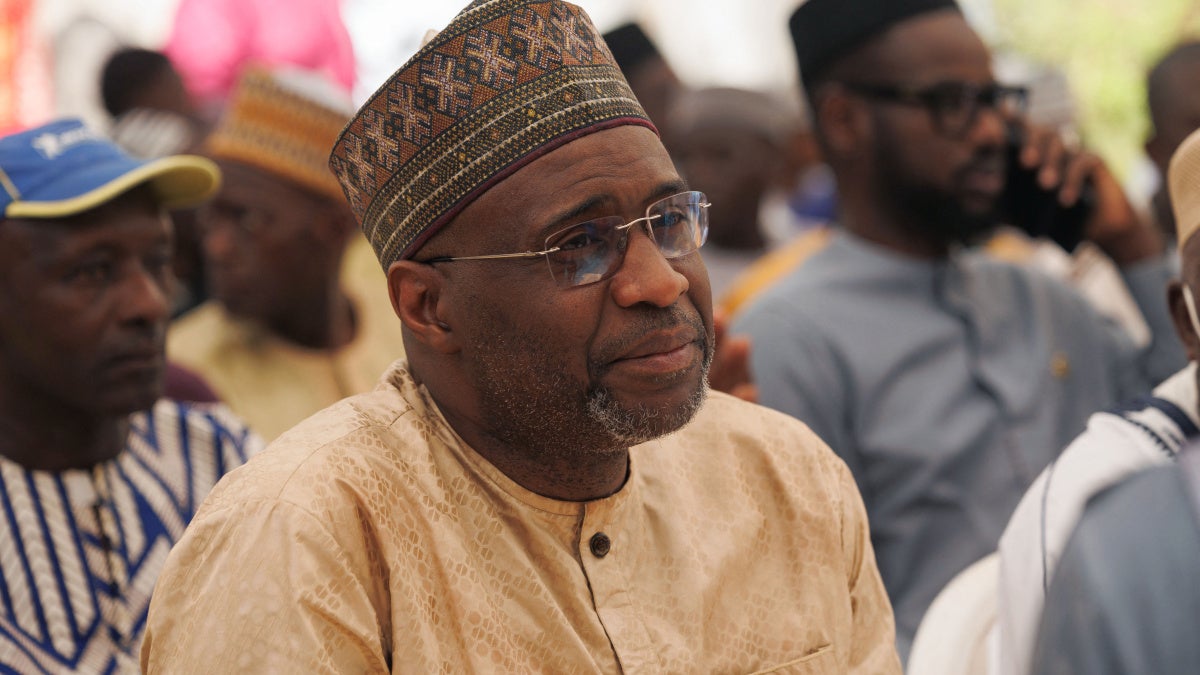
In a courtroom in Mali‘s capital, Bamako, former Prime Minister Moussa Mara faced a significant setback on Tuesday when judges denied his lawyers’ request for provisional release. Instead, the prosecution recommended a two-year prison sentence, a move that starkly illustrates the military junta’s ongoing crackdown on political opposition and dissenting voices.
Security forces apprehended Mara, who served as prime minister for eight months from 2014 to 2015, on August 1. His arrest followed a social media post in which he expressed solidarity with Malian political prisoners and pledged to seek justice for them.
The authorities have charged Moussa Mara with a range of offenses, including undermining the credit of the state, opposing legitimate authority, inciting public disorder, and publishing false information. His trial commenced on September 29 before a court specializing in cybercrime, with a verdict anticipated on October 27. There are grave concerns regarding the fairness of these legal proceedings.
On their face, the charges appear to infringe upon the right to freedom of expression. A member of his defense team stated, “These accusations have nothing to do with the message Mara posted on X.” Another lawyer for Mara, Mounkaïla Yayé, described the situation more bluntly: “This is a trial against the right to freedom of expression.” He warned, “This can create a dangerous precedent.”
Since seizing power in a 2021 coup, the military junta under General Assimi Goïta has systematically suppressed political opposition and restricted civic and media space in Mali. It has outlawed all political parties while intimidating, jailing, or forcibly disappearing journalists and human rights activists. General Goïta has solidified his grip on power without holding elections, thereby delaying the promised transition back to a democratic civilian government.
The junta has also disregarded calls to hold perpetrators of abuses accountable and has failed to meet its international legal duties to investigate severe rights violations by security forces and prosecute those responsible. In January, Mali, alongside Burkina Faso and Niger, formally withdrew from the Economic Community of West African States (ECOWAS), thereby stripping their citizens of the ability to seek justice for human rights abuses at the ECOWAS Court of Justice. Furthermore, in September, these three nations announced their intent to leave the treaty of the International Criminal Court, a decision that will further impede access to justice for victims of mass atrocities.
The arrest of Moussa Mara demonstrates that even expressing support for those being repressed is now a punishable offense in Mali. It underscores the junta’s complete intolerance for any form of dissent. Malian authorities should immediately drop all charges against Moussa Mara, release him and all other arbitrarily detained prisoners, and uphold the fundamental right to freedom of expression.