
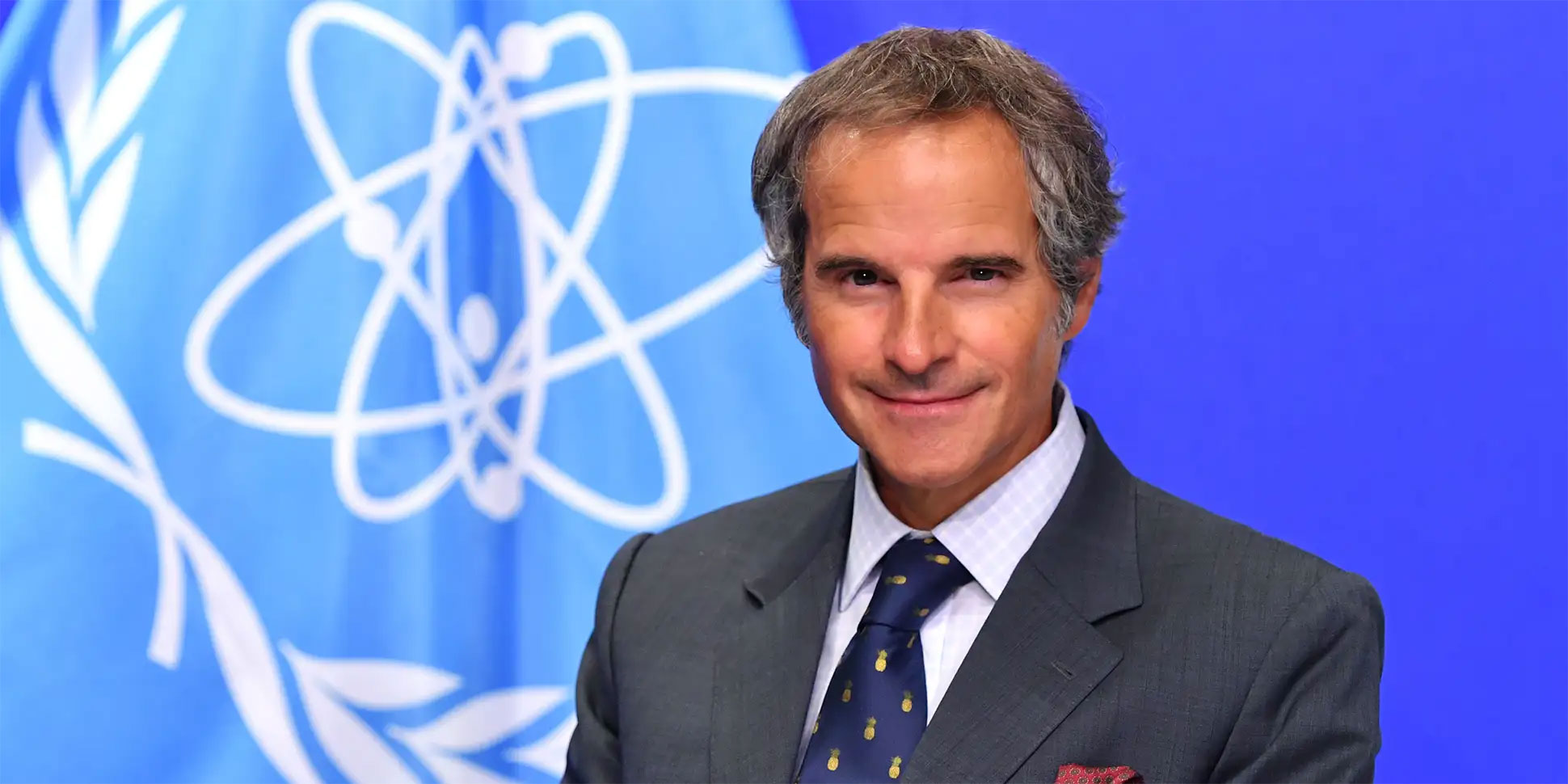
Argentine officials have formally requested Morocco’s support for Rafael Grossi’s candidacy to succeed António Guterres as United Nations Secretary-General. This appeal was made during the eighth session of the joint commission and sixth round of political consultations between Argentina and Morocco, held on June 11 in Buenos Aires.
The Argentine government, led by President Javier Milei, is positioning Grossi—the current Director-General of the International Atomic Energy Agency (IAEA)—as the ideal candidate to lead the UN. Morocco’s strategic diplomatic influence, particularly in Africa and multilateral forums, makes its endorsement a critical asset for Buenos Aires, as outlined in the Argentine Foreign Ministry’s official report.
Representing Argentina in the talks were Roberto Salafia, Undersecretary for International Economic Negotiations and Integration, and Juan Manuel Navarro, Undersecretary for Foreign Policy. Morocco’s delegation was led by Fouad Yazourh, Director-General of International Political Affairs at the Ministry of Foreign Affairs. The discussions covered bilateral relations, key international issues, and opportunities to expand cooperation.
Argentine diplomats framed Grossi’s candidacy as «a top priority in the nation’s multilateral diplomacy, backed by a leader experienced in managing international crises, fostering dialogue among global powers, and navigating the mechanisms of international organizations.» Securing Morocco’s support is particularly vital, as the UN Secretary-General is selected first through a Security Council recommendation, followed by a General Assembly appointment.
A critical voice for Morocco in the Security Council race
Since assuming leadership of the IAEA in 2019, Rafael Grossi has built an international reputation for his role in overseeing nuclear facilities in conflict zones, negotiating Iran’s nuclear program, and ensuring the safety of Ukrainian power plants during the Russia-Ukraine war. Argentina officially launched its candidacy in late 2025 and has since been campaigning across multiple regions.
Morocco’s selection as a diplomatic ally is no coincidence. The kingdom maintains an active presence in global institutions, boasts a robust network across Africa, and engages with key decision-making centers worldwide. Argentine officials believe «Moroccan backing could enhance Grossi’s credibility in Africa and help secure endorsements from states pivotal in both the Security Council and General Assembly.»
The race includes several prominent candidates, such as Chile’s former President Michelle Bachelet, who has already garnered Brazil’s support. Other contenders include Rebeca Grynspan, Secretary-General of the United Nations Conference on Trade and Development (UNCTAD), Costa Rica’s María Fernanda Espinosa, and Senegal’s former President Macky Sall. Given this competitive field, Argentina must build alliances beyond its regional borders.
Buenos Aires highlights Grossi’s unique qualifications—his technical expertise and political acumen at the IAEA have positioned him at the heart of high-stakes nuclear negotiations, security discussions, and conflict mediation. The Argentine government portrays him as «a diplomat capable of engaging with global powers, sustaining dialogue amid tensions, and restoring the UN’s political influence.»
Morocco’s role in this strategy is unparalleled. Its influence in the Maghreb, strong ties with African nations, active participation in multilateral bodies, and partnerships with Europe, the United States, and Southern Hemisphere powers make it a sought-after partner. Rabat’s endorsement would provide Argentina with a vital political ally in a region where securing votes could prove decisive.
Bilateral trade hits $1.092 billion in 2025
The Buenos Aires meetings also deepened economic dialogue, with trade between Argentina and Morocco reaching $1.092 billion in 2025—making Morocco Argentina’s second-largest African trading partner. Delegations explored ways to boost high-value exports and identify new areas for collaboration.
Key sectors discussed included agriculture, energy, healthcare, tourism, food safety standards, and air connectivity. Officials emphasized «the need to strengthen bilateral trade structures, align regulatory frameworks, and launch joint initiatives in industries where both economies can immediately capitalize on synergies.»
For Argentina, Morocco serves as both a key market and a gateway to Africa, while also offering a strategic political partner. Argentina’s automotive, fertilizer, aeronautics, and textile industries have strengthened its foothold in regional production chains, creating fertile ground for trade agreements, technical cooperation, and greater corporate expansion across the continent.
Morocco, in turn, views Argentina as a major agricultural supplier and an essential partner for expanding ties with South America. Discussions covered sanitary standards for food exports, energy sector expertise exchange, and the launch of direct flights to shorten both commercial and diplomatic distances between the two continents.
Argentine delegates underscored that «the relationship with Morocco now extends beyond commerce, offering a platform for political coordination on global balance-of-power issues, South-South cooperation, and advancing Southern Hemisphere representation in global institutions.»