
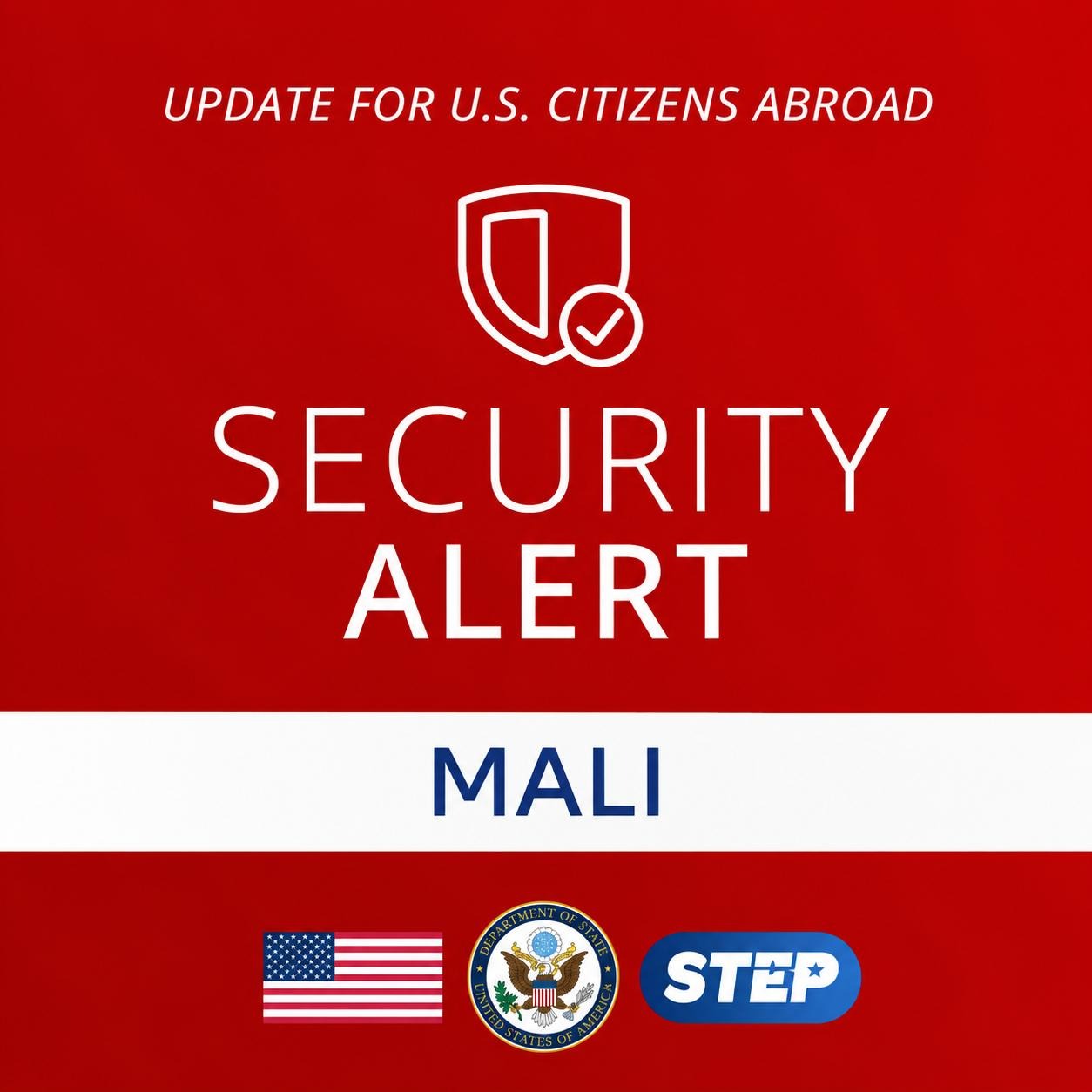
Washington has issued a stern security advisory for American citizens in Bamako this weekend, urging them to avoid all non-essential travel across the capital. The directive, issued with unusual urgency, reflects a sharp escalation in threat perception by US intelligence services amid Mali’s escalating security crisis.
Diplomatic warning raises alarm in Bamako
When the US embassy issues a security alert of this magnitude, it is never without cause. From Saturday onward, American nationals in Mali’s capital are advised to stay indoors, avoid crowded areas frequented by expatriates, and minimize movement outside secure zones. The timing of the announcement suggests Washington’s intelligence community has intercepted credible, time-sensitive intelligence—whether related to thwarted attack plots, suspicious movements, or operational indicators—prompting a precautionary stance.
Such advisories do not emerge in a vacuum. They signal a moment of heightened risk, even if the precise nature of the threat remains classified. For a city that has enjoyed relative calm in recent months, the alert serves as a stark reminder of how fragile stability can be in the Sahel.
Terrorist groups maintain pressure on the capital
The US embassy’s warning comes at a time when Bamako faces dual security challenges. The Group for the Support of Islam and Muslims (JNIM), Al-Qaeda’s most active affiliate in the Sahel, has repeatedly demonstrated its ability to carry out complex attacks deep within urban centers. Past incidents—including brazen assaults on military installations and critical infrastructure on the city’s outskirts—have left lasting scars on Mali’s counterterrorism efforts.
Meanwhile, the situation in northern and central Mali continues to deteriorate. The reorganization of armed factions, including the merger or realignment of groups like the Permanent Strategic Framework and the Azawad Liberation Front (FLA), has intensified asymmetric warfare. Sleeper cells and improvised explosive devices (IEDs) pose a daily threat, forcing Malian security forces to operate under constant pressure. The US advisory underscores the persistent—and unpredictable—nature of this threat landscape.
Economic strangulation as a weapon of war
Beyond direct attacks, Mali’s economic lifelines are under siege. Armed groups have escalated roadblock operations on key supply routes, targeting fuel tankers and commercial convoys bound for Bamako. These blockades are not merely tactical; they represent a deliberate strategy to cripple the national economy and instill fear in the population.
The impact is twofold: paralyzing trade and isolating the capital from vital regions. By cutting off fuel and essential goods, militants aim to erode public confidence in the government’s ability to secure critical infrastructure. For the US embassy, the vulnerability of these peripheral routes increases the likelihood of high-profile incidents in Bamako’s immediate vicinity, prompting a heightened state of alert.
Western embassies prioritize caution over reassurance
While Mali’s transitional authorities have intensified patrols and checkpoint operations at city entrances, Western diplomatic missions are adopting a more cautious approach. The disparity between local assurances and external threat assessments highlights a fundamental truth: where Bamako sees progress, international observers see fragility. This weekend, Mali’s security apparatus will be under intense scrutiny, with identity checks and vehicle searches already underway in key districts to mitigate potential risks.
A city on edge
The US embassy’s advisory has cast a pall over Bamako, exposing the thin veneer of stability that masks deeper vulnerabilities. With the specter of JNIM attacks and the economic stranglehold of roadblocks looming large, the capital is bracing for what could be a volatile weekend. As residents and expatriates alike remain on high alert, the question lingers: will this precautionary measure pass without incident, or will it foreshadow a new wave of unrest?