
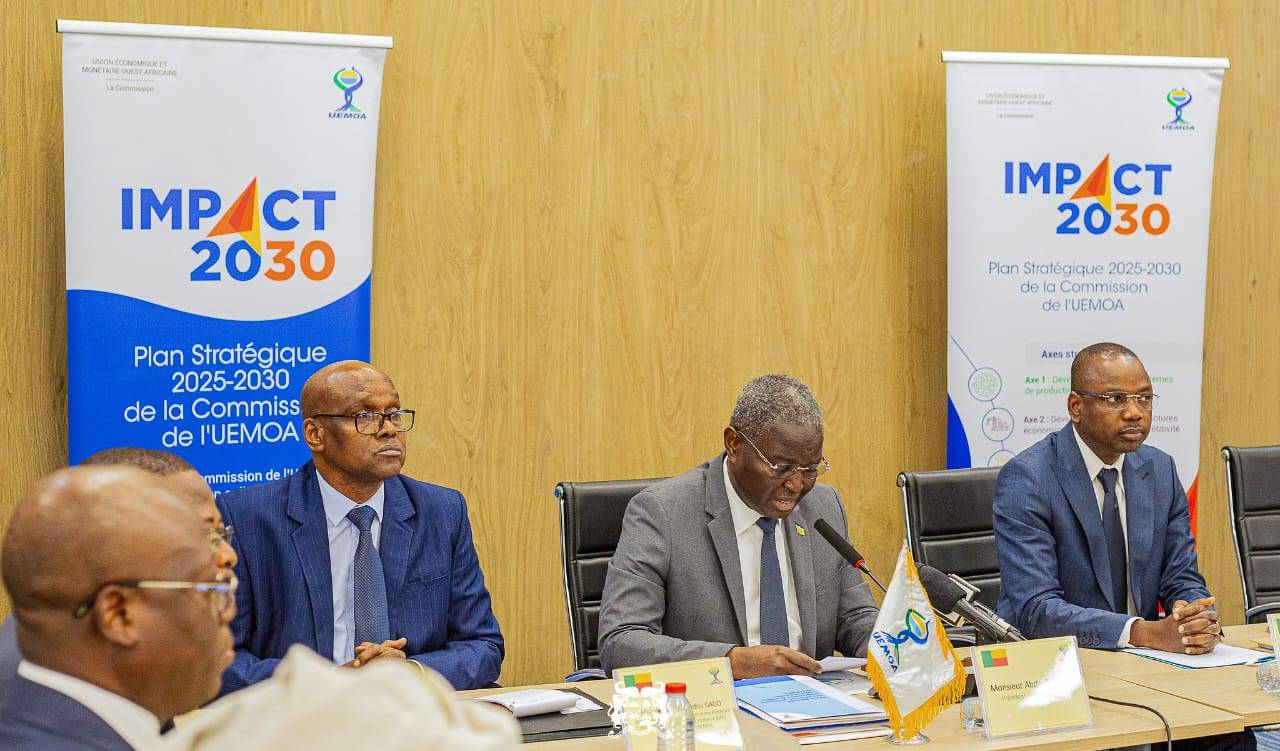
The Benin Ministry of Economy and Finance recently hosted the 2026 Annual Policy Review of the West African Economic and Monetary Union’s (UEMOA) reforms, policies, programs, and projects. After a rigorous evaluation of 145 regulatory texts, the country secured a 73% implementation rate—exceeding the 70% satisfactory threshold and highlighting Cotonou’s dedication to regional economic integration.
An institutional milestone for UEMOA integration
Aligning national legislation with UEMOA’s regional framework remains the cornerstone of economic integration in West Africa. Each year, the Annual Policy Review serves as a critical gauge of member states’ commitment to executing decisions made at the highest levels. In this context, the UEMOA Commission delegation convened in Cotonou alongside Beninese officials to meticulously assess the country’s transposed and enforced texts while pinpointing administrative or technical obstacles that could hinder progress.
A three-pillar evaluation framework
The 2026 review focused on 145 regional texts, scrutinizing the degree to which Benin had incorporated legal acts from the UEMOA Council of Ministers and Heads of State. The assessment centered on three pillars vital to the subregion’s economic advancement:
- Economic governance and convergence: Budgetary harmonization, multilateral oversight, and public financial transparency.
- Common market integration: Facilitating the free movement of people, goods, services, and capital, alongside establishment rights.
- Sectoral policies: Aligning national initiatives in transport, energy, agriculture, environment, and digital infrastructure.
73% compliance: surpassing expectations
Upon conclusion of the review, Benin’s overall implementation rate stood at 73%, a figure that surpasses the 70% benchmark deemed satisfactory by the UEMOA Commission. This achievement underscores the country’s consistent reform efforts over recent years while also spotlighting opportunities for targeted improvements in key areas.
Leadership perspectives: celebrating progress, mapping the future
Following the results presentation, officials shared their visions for advancing regional integration. The UEMOA Commission President emphasized the review’s role as a strategic transformation lever, stressing the need for even stronger commitments to drive meaningful progress in lagging sectors by the next review.
The Beninese Minister of Economy and Finance, overseeing Cooperation, hailed the systematic work of national administrative teams. He attributed the 73% score to a robust, ongoing mechanism for monitoring regional texts and a collective mobilization across all relevant ministries. The minister noted that the review process helps identify bureaucratic bottlenecks, share best practices with the UEMOA delegation, and agree on concrete solutions to expedite pending directives.
Addressing gaps and charting a path forward
While the 73% result reflects strong progress, the remaining 27% represents the next critical frontier. Transposing complex sectoral policies demands enhanced interministerial coordination. Reaffirming the government’s commitment to continued reform, the minister outlined a roadmap to achieve notable advancements in identified priority sectors ahead of the next annual review.
A promising trajectory for West African integration
By surpassing the 70% mark in 2026, Benin demonstrates how disciplined governance and institutional follow-through can turn regional commitments into tangible legal and economic realities. Amid broader economic challenges across the UEMOA zone, Cotonou’s fiscal discipline and regulatory alignment not only bolster the country’s credibility on the global financial stage but also foster a smoother, more competitive regional market.