
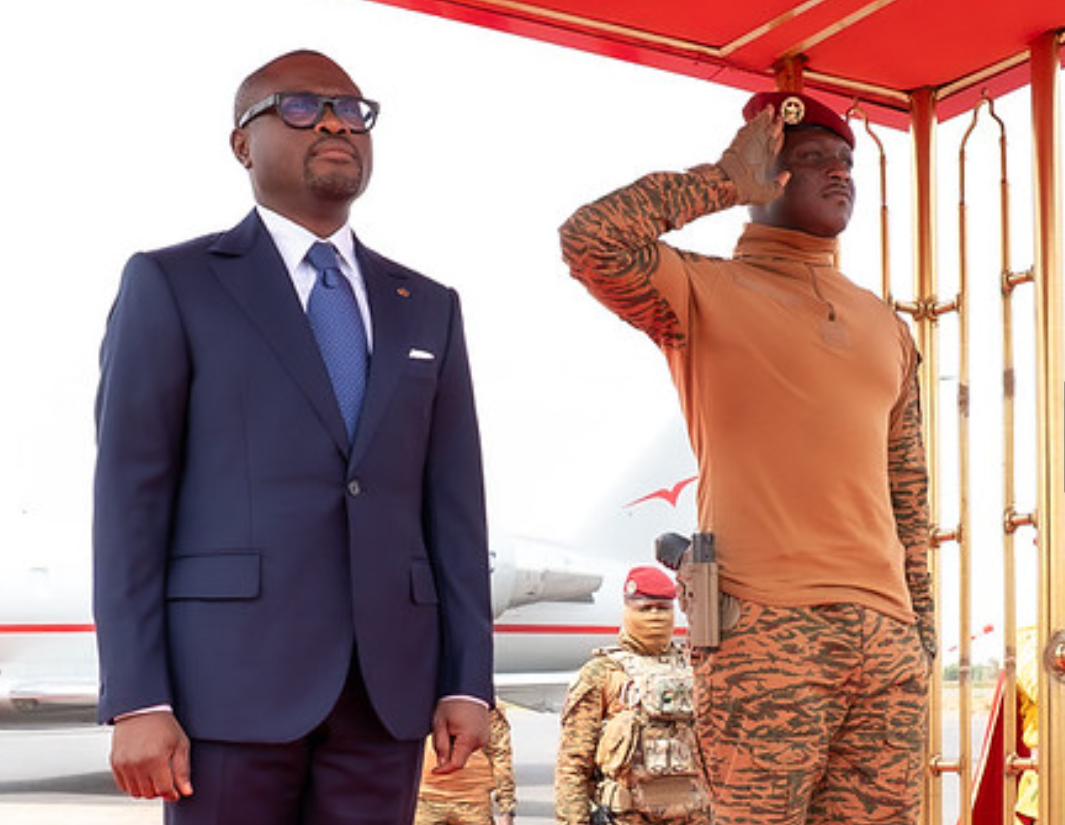
As the shadow of terrorism looms over the fragile borderlands of West Africa, Benin and Burkina Faso have taken a decisive step forward. The long-awaited military cooperation between the two nations has finally materialized on the ground with the launch of joint patrols in the strategic Koualou region. Spearheaded by a bold defense diplomacy under the leadership of Beninese President Romuald Wadagni, this operational alliance aims to dismantle armed groups and restore peace to a critical area for regional stability.
Diplomatic momentum: President Wadagni’s strategic vision
Securing Benin’s northwest frontier, which borders Burkina Faso, has long been a national security priority. While former President Patrice Talon laid the groundwork for this rapprochement during a historic visit to Ouagadougou to advocate for coordinated military action, real progress has accelerated in recent months.
President Wadagni, upon taking office, made security diplomacy the cornerstone of his foreign policy. To solidify this warming of relations and inject fresh momentum into discussions, the Beninese head of state personally traveled to Ouagadougou. This presidential visit to Burkina Faso fostered the mutual trust essential for transforming political intentions into actionable results. Cotonou’s message was unambiguous: no single nation can defeat an asymmetric enemy that disregards man-made borders. Benin’s outstretched hand found a pragmatic and receptive response from Burkina Faso’s transitional authorities.
Koualou becomes the epicenter of joint military action
The Koualou region, long plagued by administrative friction and a porous border vulnerable to terrorist incursions, now stands as a symbol of renewed cooperation. A high-level delegation from Burkina Faso’s Armed Forces (FAB) recently crossed the frontier to officially launch coordinated patrols alongside Benin’s Defense and Security Forces (FDS).
On the ground, this coordinated deployment is transforming the security landscape. No longer confined to monitoring their own territories along the demarcation line, the two nations are now synchronizing tactical movements. Military units from both countries are jointly patrolling the Koualou area, creating a visible and assertive presence. This strategy serves two critical purposes: first, saturating the border space to deny terrorist networks safe havens and retreat routes; second, reassuring local populations—who bear the brunt of violence—by reasserting state authority over these peripheral territories.
The power of intelligence-sharing and interoperability
Beyond troop movements and patrols, the core of this new cooperation lies in the seamless exchange of intelligence. Sahelian terrorism thrives on porous borders and the lack of communication between neighboring armies. By breaking down these barriers, Benin and Burkina Faso are strategically disarming their adversary.
Direct collaboration between the military intelligence services of both countries now enables real-time data sharing on suspicious movements, arms caches, and the logistical networks of armed groups. This fluid information flow ensures an unprecedented tactical response: a threat detected on one side of the border can be immediately addressed or intercepted by the partner army on the other. Interoperability—defined by shared communication frequencies and unified tactical procedures—has become the linchpin of this asymmetric warfare.
Building a broader regional security framework
The success of this bilateral security integration model is already inspiring neighboring countries. Niger, too, is poised to follow Burkina Faso’s lead by accepting Benin’s extended hand. By joining this cross-border cooperation dynamic, Niamey is helping to lay the groundwork for a robust tripartite security framework. This Nigerien participation is vital for coordinating efforts in the so-called “three-border zone” and along the Niger River, effectively choking off the criminal networks attempting to gain a foothold in the region.
A path toward lasting peace
The deployment of joint patrols in Koualou marks a historic turning point in the military relations between Benin and Burkina Faso. Thanks to President Romuald Wadagni’s renewed leadership and the pragmatic response from his Sahelian counterparts, West Africa is proving its ability to devise endogenous and robust responses to terrorism.
The battle is far from over, but the foundations are now firmly in place. The hope is that this operational cooperation will deepen further, extend into areas like border zone development, and ultimately eradicate the scourge threatening the safety of citizens and the integrity of our nations.