
In a bold move to secure its food future, the Bénin government has launched an intensive three-day national tour to enforce its strategy of local agricultural transformation. Led by Minister of Agriculture, Livestock, and Fisheries Adin Yeton Bloukounon Goubalan, the initiative aims to shift the country’s economic model from raw material exports to high-value local processing, strengthening food security and job creation.
The minister’s itinerary covered key agricultural hubs, including Paouignan, Glazoué, and Parakou, where his mission was clear: ensuring the President’s vision of breaking free from raw material exports becomes a reality. The tour underscored the government’s determination to modernize the agricultural sector, with concrete steps to boost production, processing, and economic resilience.
Rice and cassava: stepping stones toward food independence
Progress is already visible in the rice sector. In Glazoué, Premium Agro-Industry, a major player in paddy rice processing, has accelerated its expansion plans. A third processing unit is under construction in Dangbo, expected to increase the group’s annual rice processing capacity from 300,000 to 500,000 tonnes. This expansion is a critical step toward reducing the country’s reliance on Asian rice imports.
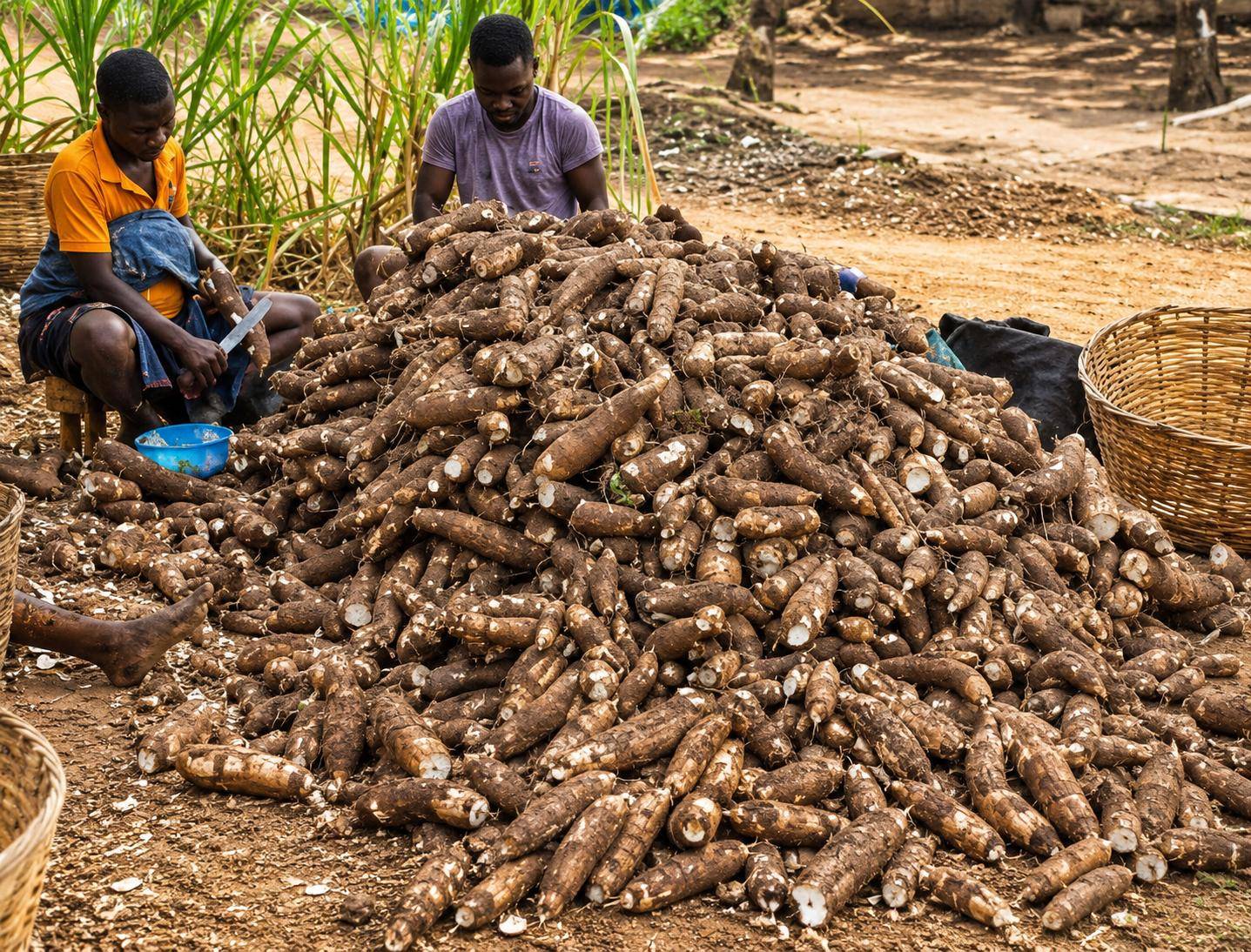
Meanwhile, in Paouignan, cassava—the country’s “white gold”—is getting a major upgrade. A new local processing plant nearing completion will produce gari, tapioca, and most importantly, baking flour. This last innovation offers a viable alternative to wheat imports, addressing a long-standing dependency. The plant’s unique management model—a public-private partnership with local producer groups—ensures equitable profit-sharing and secures rural employment.
Cashew nuts: cracking down on smuggling
Despite these advances, challenges remain. In the cashew sector, local processors are raising alarms about raw nut smuggling to neighboring countries, depleting the raw material supply for domestic industries.
Minister Goubalan has taken a firm stance. The government is tightening border controls and prioritizing stock security for local factories. The message is clear: exporting raw cashews means exporting jobs and economic opportunities for young Béninois.
Cotton revival: a 700,000-tonne target with financial incentives
The tour concluded with a bold plan for the cotton sector, the backbone of Bénin’s agricultural economy. After three years of declining production, the government has set an ambitious target of 700,000 tonnes for the 2026-2027 season.
To motivate farmers and offset rising input costs, a premium of 10 FCFA per kilogram will be paid once production reaches the national target. This financial incentive is designed to boost both production and farmer income, revitalizing one of the country’s most critical export crops.
Between stricter anti-smuggling measures, financial bonuses, and large-scale industrial projects, Bénin is building a more resilient agricultural economy. While logistical and climate challenges remain, the government’s determination to reshape its food and economic future is stronger than ever.