
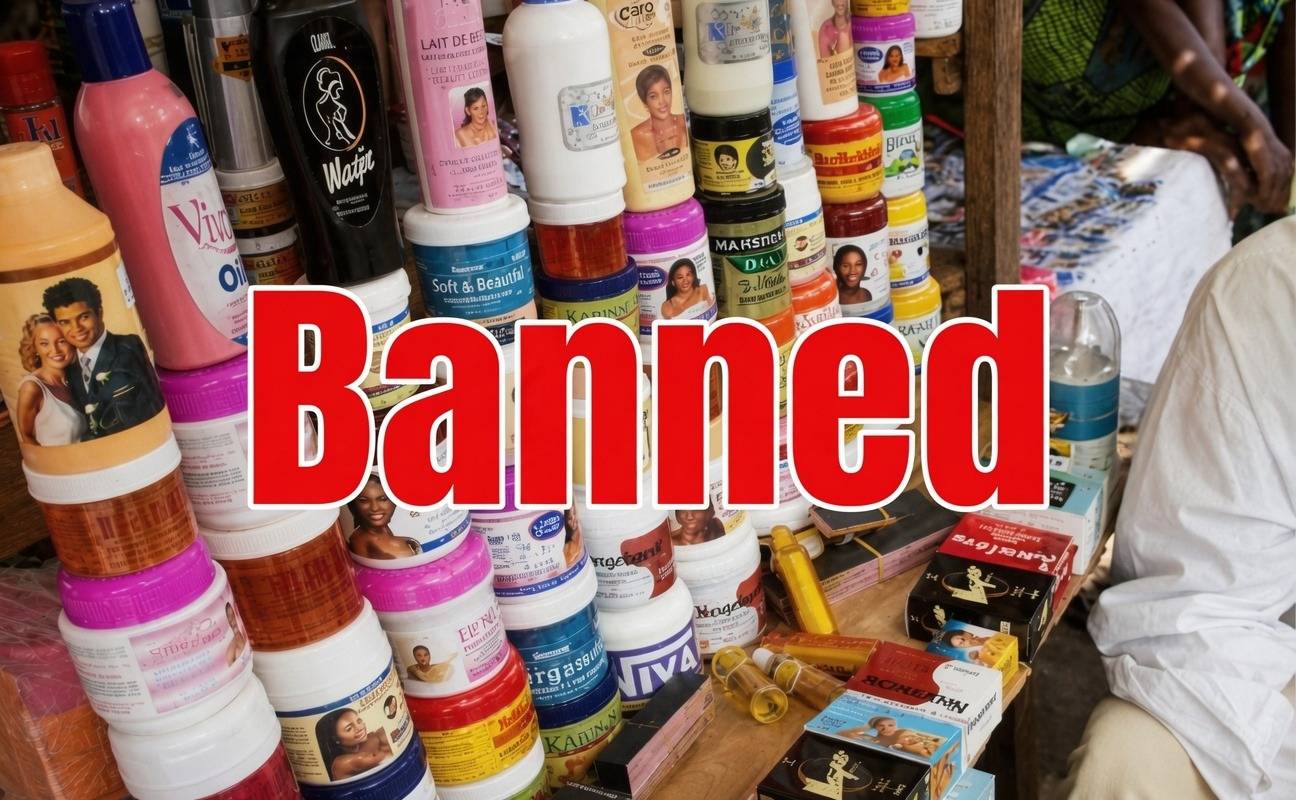
In a decisive move to safeguard public health, the government of Bénin has implemented a sweeping ban on skin-lightening products across the nation. Effective since May 5, the prohibition targets creams, lotions, and other substances designed to alter skin pigmentation, reflecting growing alarm over their widespread use and severe health repercussions.
Ending the prevalence of « tchatcho »
The practice colloquially referred to as « tchatcho » has long been entrenched in Bénin’s cultural landscape, transcending socioeconomic boundaries. From the bustling stalls of Dantokpa Market to the digital shelves of social media platforms, these products have remained alarmingly accessible until now. The new regulation seeks to dismantle this lucrative yet hazardous market by enforcing stringent controls on both wholesale and retail distribution networks.
The authorities have compiled a definitive list of prohibited substances, prioritizing the interception of contraband goods and unregulated artisanal formulations whose compositions evade oversight. The crackdown underscores a broader commitment to curbing the underground economy fueling this industry.
Severe health implications uncovered
The impetus behind this regulatory tightening stems from persistent warnings issued by healthcare professionals over the years. Dermatologists have repeatedly highlighted the grave dangers posed by artificial skin lightening, particularly when involving hazardous ingredients.
Common components in these products—such as hydroquinone, potent corticosteroids, and mercury—pose significant risks when used repeatedly. Dermatological consequences include severe skin thinning, persistent stretch marks, impaired healing, chronic infections, and irreversible epidermal damage. Systemic absorption of these chemicals can further exacerbate health conditions, contributing to renal failure, hypertension, metabolic disorders, and elevated risks of skin cancer.
A multifaceted challenge beyond enforcement
While the ban has been met with approval from the medical community, its implementation presents formidable challenges. Regulatory bodies must contend with porous borders, the infiltration of smuggled goods, and vendors’ tactics to evade detection by frequently altering packaging and formulations.
Beyond punitive measures, the cultural dimension of this issue remains a critical hurdle. Societal preferences for lighter skin tones, perpetuated by entrenched beauty standards and social pressures, continue to sustain demand. For the ban to yield lasting results, it must be paired with robust awareness campaigns aimed at fostering acceptance of natural skin tones and dismantling long-standing biases.
By taking this bold stance, Bénin has taken a pivotal step toward protecting its citizens’ well-being. The true test will lie in whether the combined force of regulatory rigor and societal transformation can effectively curb the « tchatcho » phenomenon in the long term.