
A joint expert committee has breathed new life into stalled negotiations between Benin and Niger over the reopening of their shared border. The committee’s findings, which address security protocols, transit regulations, and economic considerations, have sparked cautious optimism. Yet, Niger continues to insist on three non-negotiable conditions that could delay final political approval.
Three red lines for Niamey
Following three years of closed borders, Niger has made its stance clear: no compromise on these fronts.
- A formal mutual defense pact must be signed, explicitly prohibiting either nation from using the other’s territory to launch destabilizing actions. Analyst Régis Hounkpè, executive director of InterGlobe Conseils, calls this a fundamental step: “It’s elementary, but given the recent tensions, it’s a move that must be formalized. The practical implementation will determine its success.”
- A real-time intelligence-sharing mechanism must be established, with a joint cell dedicated to combating terrorism and cross-border trafficking. Hounkpè underscores the value of reciprocity: “Both sides need reassurance that neither will allow their territory to be used for subversive activities.”
- Full transparency on foreign military presence near the border is demanded. Hounkpè notes this touches on sovereignty: “The Béninois President has repeatedly affirmed Benin’s right to independent partnerships—whether with France, China, Russia, or others—as long as those alliances don’t threaten Niger’s stability. Pragmatically, destabilizing a neighbor serves no purpose.”
Economic fallout of a closed border
For Niger, a landlocked nation, the border closure has crippled trade. Nearly 70% of its imports once flowed through Benin, including fuel, construction materials, and food staples like rice. Alternative routes via Nigeria or Togo are costlier—logistical expenses have surged by 30 to 50%—and far riskier. The 2,000-km pipeline linking Niger’s Agadem oil fields to Benin’s Sèmè-Kpodji port has also ground to a halt, depriving Niger of critical revenue.
Benin isn’t immune to the fallout. The port of Cotonou, once a regional hub, now faces severe congestion as diverted cargo clogs its facilities. Revenue losses in customs duties, transport, and logistics have hit some sectors by up to 60%. Meanwhile, trade flows have shifted to Togo and Nigeria, threatening Benin’s long-standing role as West Africa’s gateway.
Human costs of the blockade
The crisis has devastated local economies. At Malanville (Benin) and Gaya (Niger), market vendors report customer numbers halved, forcing shop closures and layoffs. Essential goods have become scarce, prices soared, and families separated by the closed border face mounting hardship. Smuggling and extortion have flourished in the void, further destabilizing communities.
A path to reconciliation
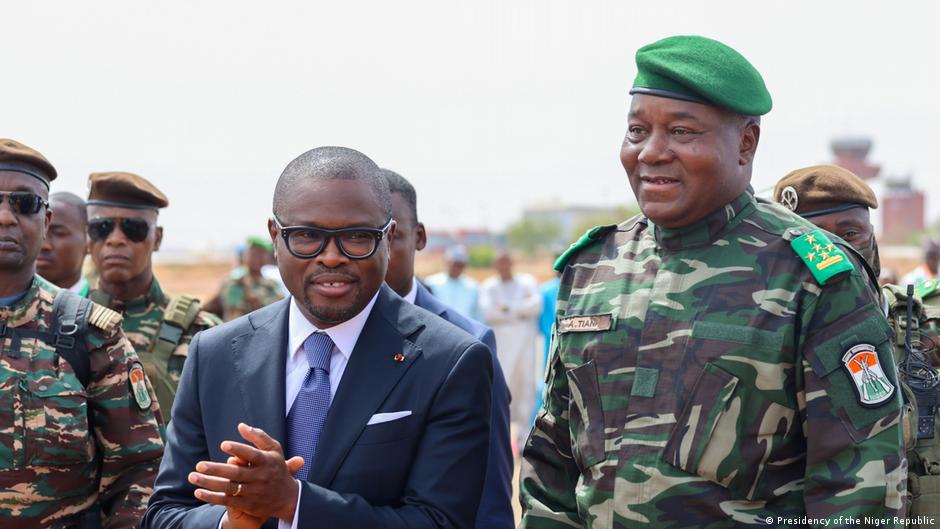
The impetus for dialogue came with the election of Benin’s President Romuald Wadagni, who visited Niger’s capital, Niamey, on June 2, 2026. The joint expert committee’s work reflects a shared recognition: geography demands cooperation.
Hounkpè emphasizes the need to set aside ideological divides: “Leaders today are shaping geopolitics based on geography. They have no choice but to collaborate—for economic survival, logistical stability, and security against terrorism.” He predicts a phased border reopening, prioritizing essential goods with stringent controls. If successful, this thaw could even serve as a model for other regional blocs like ECOWAS.