
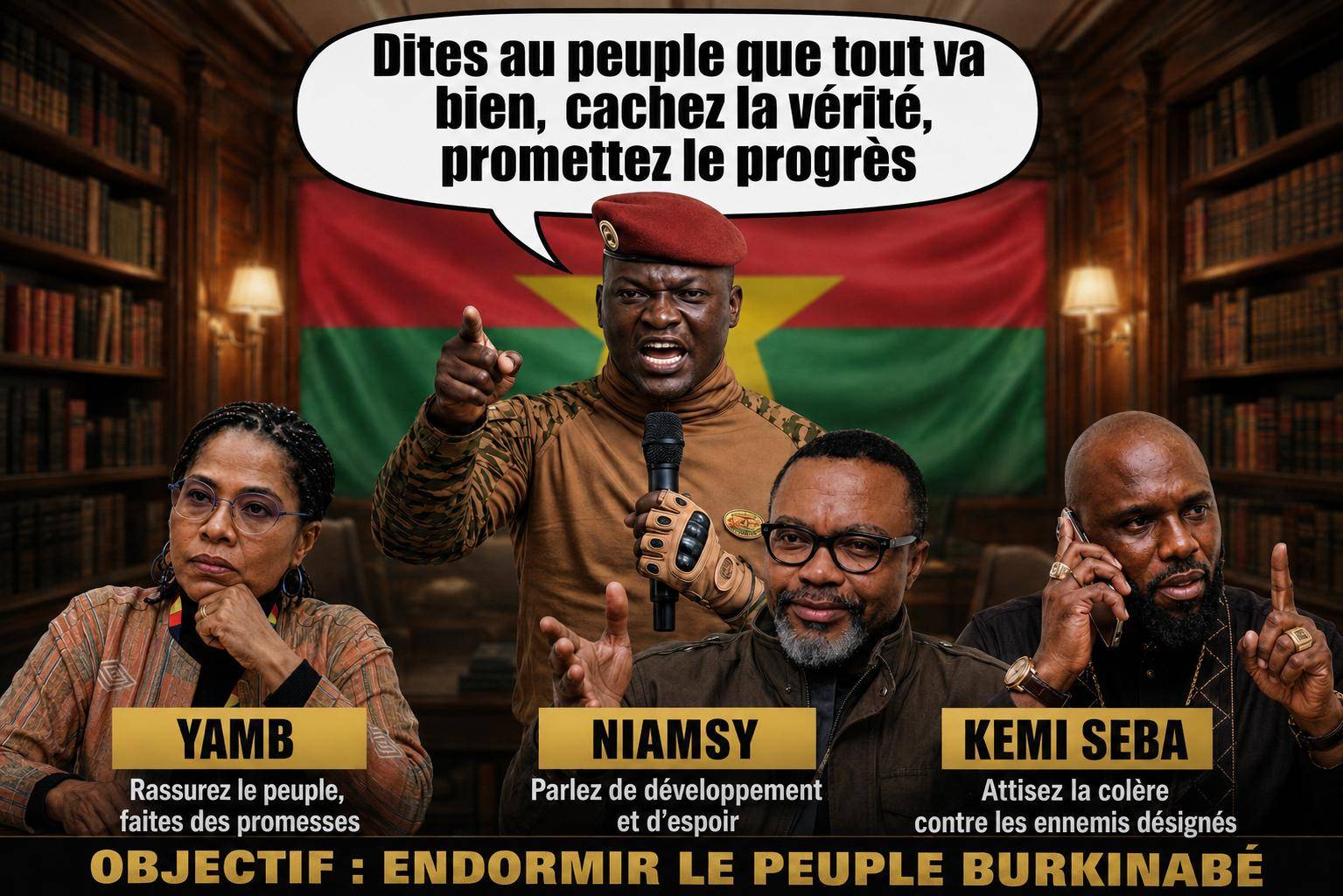
The ascension of Captain Ibrahim Traoré to power has positioned him as a prominent figure in African sovereignism. Through aggressive communication strategies and a dominant presence on digital platforms, Burkinabè authorities are promoting the notion of a significant economic recovery underway in the country.
This narrative is vigorously amplified by pro-government influencers and panafricanist activists, including prominent voices such as Nathalie Yamb, Franklin Nyamsi, and Kemi Seba. These individuals consistently portray Burkina Faso as a vanguard of a new development paradigm, free from historical foreign dependencies.
However, a growing number of economists, analysts, and independent observers question the validity of these claims. They argue that many of the achievements highlighted by the regime are more indicative of political messaging than tangible economic restructuring. While supporters of the government point to accelerated industrialization, revived domestic production, expanded processing units, and assertions of economic sovereignty, critics contend that several projects touted as new initiatives were actually initiated prior to the current transition. Others remain unfulfilled promises or lack verifiable documentation of progress.
Detractors further contend that the administration and its media allies prioritize symbolic victories over addressing pressing national challenges. Despite these declarations of economic progress, Burkina Faso continues to grapple with severe security threats, humanitarian crises, and profound social inequalities.
The financing of national initiatives has emerged as another contentious issue. In line with the government’s patriotic mobilization campaign, a 1% levy on certain workers’ incomes and other mandatory contributions have been implemented to fund state priorities. While regime supporters view these measures as acts of national solidarity in extraordinary circumstances, trade unions, civil society organizations, and independent observers demand greater transparency regarding fund utilization.
These critics insist that citizens deserve clear insights into the amounts collected, their allocation, and the concrete outcomes achieved through these contributions. They advocate for regular publication of detailed financial reports and independent audits to ensure accountability and restore public trust.
The credibility of certain economic claims has also come under scrutiny. Skeptics challenge assertions—widely circulated on social media—that Burkina Faso has voluntarily relinquished over one billion dollars in foreign aid in the name of sovereignty. These observers argue that such statements distort reality, as international partnerships and development financing continue to flow into the country from various partners, including Japan, which maintains active cooperation with Ouagadougou through multiple assistance programs.
For critics, these inconsistencies underscore broader concerns about the government’s communication strategy and its attempt to project Burkina Faso as an emerging economic model despite persistent hardships.
This analysis examines the origins of the so-called « economic miracle » narrative, the role of digital advocacy networks in amplifying it, and the extent to which this portrayal reflects the actual economic and social conditions experienced by the Burkinabè population.
Beyond Burkina Faso’s borders, this debate raises a fundamental question: where should the line be drawn between political communication, ideological mobilization, and objective evaluation of public policy?