
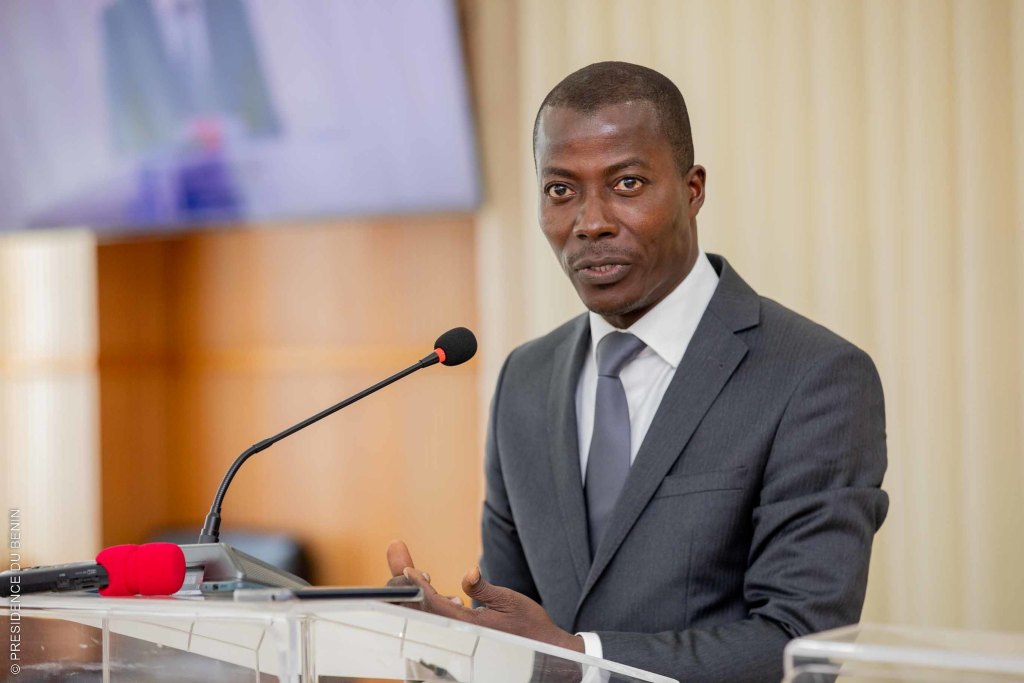
As the Bénin prepares to close a pivotal chapter in its recent political history, Wilfried Léandre Houngbédji, Deputy Secretary-General and government spokesperson, has broken his silence on the impending transition. With the second term of President Patrice Talon’s administration drawing to a close, this key figure in state communication has issued a stirring appeal to the next leader, urging them to place the nation’s dignity at the heart of their mandate.
Governance marked by structural reforms and unwavering discipline
Since assuming office, Wilfried Léandre Houngbédji has been the public face of a government defined by sweeping structural reforms and ironclad discipline. Addressing journalists and political observers, he underscored the weight of a role far beyond mere information management—one that embodies national sovereignty and restored pride.
The spokesperson emphasized that whoever succeeds him must recognize that the Bénin has entered a new era. The stakes, he stressed, extend beyond policy to the very honor of the nation, its global credibility, and the dignity it has reclaimed on the world stage.
Mapping the path forward for the next government
This call comes at a time of heightened political anticipation, as attention shifts toward the 2026 elections. By outlining these moral benchmarks for his successor, Mr. Houngbédji is effectively sketching the blueprint for the Republic’s continuity:
- Uncompromising republican integrity: Preserve the standards set by the Rupture.
- Resilience under scrutiny: Deliver public messaging with confidence, both domestically and abroad.
- Unwavering patriotism: Consistently prioritize the nation’s higher interests and the international image of the Bénin.
A political legacy in the making
Political analysts in Cotonou view this declaration not as a casual remark, but as a testament with a warning. Under President Talon’s leadership, government communication has been fundamentally reshaped—abandoning past ambiguities in favor of a direct, results-driven approach that sometimes divides opinion but remains resolutely outcome-oriented.
In his insistence on defending the nation’s honor, Wilfried Léandre Houngbédji makes clear that state communication is not a tool for persuasion, but a shield and a catalyst for development. The question now: who among the next generation of leaders will rise to the challenge of a role that has grown increasingly pivotal in shaping the Bénin’s future?