
A decade ago, Benin embarked on a trajectory whose profound implications were scarcely comprehended by observers. Upon assuming leadership on April 6, 2016, Patrice Talon introduced not merely a political agenda, but a pervasive philosophy: one of rigorous efficiency dedicated to upholding national sovereignty. As this period draws to a close, it is evident that the ‘New Start’ initiative has culminated in a fundamentally restructured nation. This analysis delves into a transformative decade.
The ‘Chief Technocrat’s’ Doctrine: A Methodological Revolution
Talon’s initial impact was primarily psychological. By replacing prolonged deliberation with decisive action, the Head of State cultivated a culture of meticulous accountability. The rigorous overhaul of public finances and the widespread digitalization of government services transcended mere technical adjustments; they served as critical enablers for enhancing international credibility. This is corroborated by assessments from leading agencies such as Moody’s and Standard & Poor’s, which have recognized Benin as one of the continent’s most resilient economies, capable of issuing Eurobonds with unprecedented maturity periods.
Industrial and Infrastructural Renaissance: From Consumption to Production
The strategic genius of this past decade lies in the definitive shift away from a passive transit-based economy.
- The GDIZ Catalyst: The Glo-Djigbé Industrial Zone has emerged as the nucleus of a new Benin, one that no longer solely exports raw commodities like cotton and cashew nuts. By integrating into global value chains through local processing, the nation has established a robust defense against external economic fluctuations.
- Asphaltage as a Growth Engine: Beyond the construction of roadways, this extensive program has functioned as a powerful instrument for regulated urban expansion, significantly boosting property values and the commercial appeal of urban centers.
Benin’s ‘Soft Power’: Diplomacy Through Culture
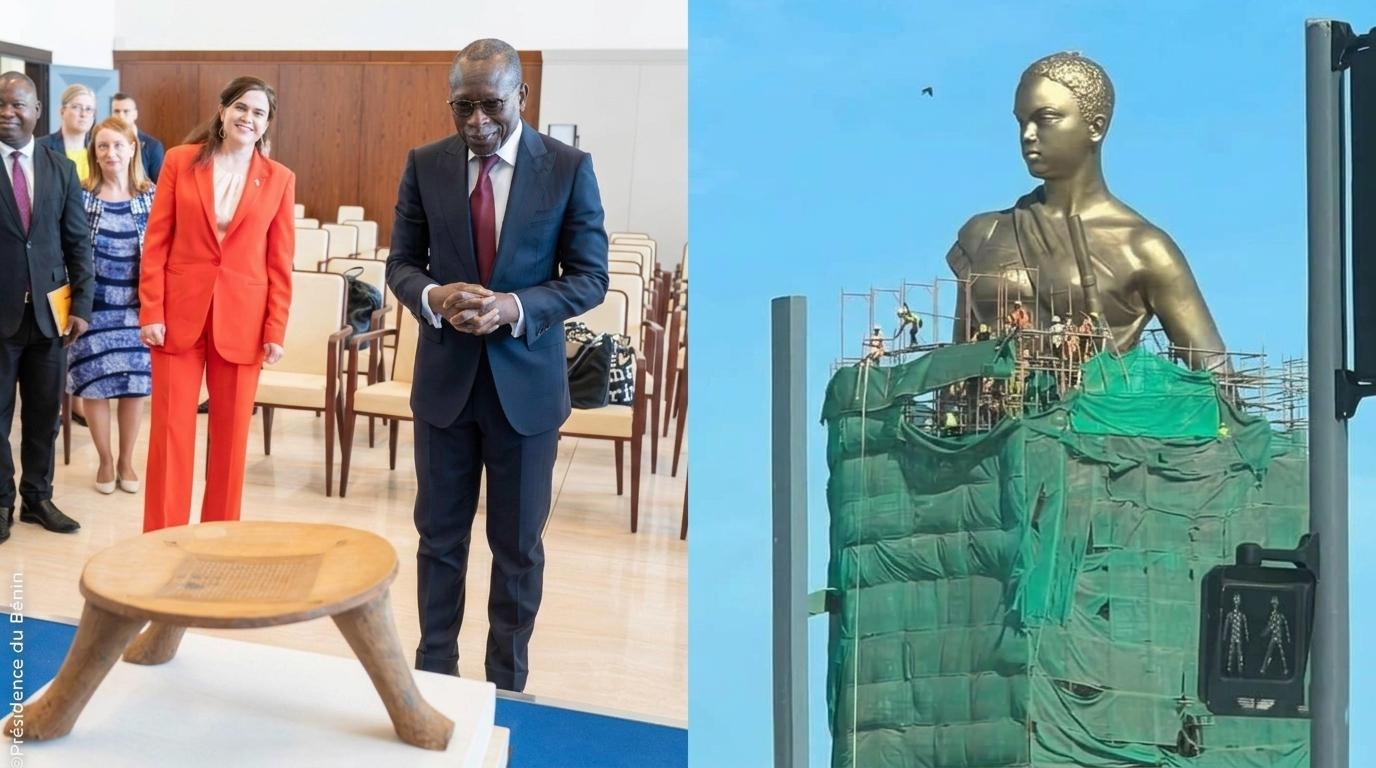
Patrice Talon’s adeptness was also manifest in his management of the national narrative. The repatriation of 26 royal treasures was more than a symbolic gesture; it marked the genesis of a vibrant memorial tourism industry. Through substantial investments in museums meeting international standards, Benin has strategically converted its historical heritage into a valuable economic asset, thereby establishing itself as a prominent cultural beacon in West Africa.
The Legacy: ‘Benin 2060’
Patrice Talon’s true legacy extends beyond tangible infrastructure such as bridges, power plants, and schools; it is fundamentally institutional.
"The greatest achievement of this administration is not merely having constructed the present, but having meticulously charted the course for the future," observes a regional strategy expert.
The introduction of the ‘Vision Benin 2060’ last February underscores this commitment to long-term sustainability. By prioritizing human capital development through initiatives like school canteen programs and a comprehensive reform of the healthcare system, the president is poised to leave behind a finely tuned state apparatus where improvisation has been systematically eradicated.
Conclusion: A Nation Poised for Progress
While the stringent methodology of the Talon administration may have challenged established norms, the advancements in macroeconomic indicators and the enhancement of living conditions are incontrovertible. Patrice Talon concludes his tenure having achieved his most formidable objective: restoring a profound sense of national pride among Beninese citizens, for belonging to a nation that is advancing, producing, and asserting itself on the global stage.
Benin in 2026 is no longer a country awaiting its destiny; it is a sovereign state that has firmly seized control of its own historical trajectory. This enduring legacy, built upon a foundation of concrete achievements and bold vision, is now entrusted to posterity.