
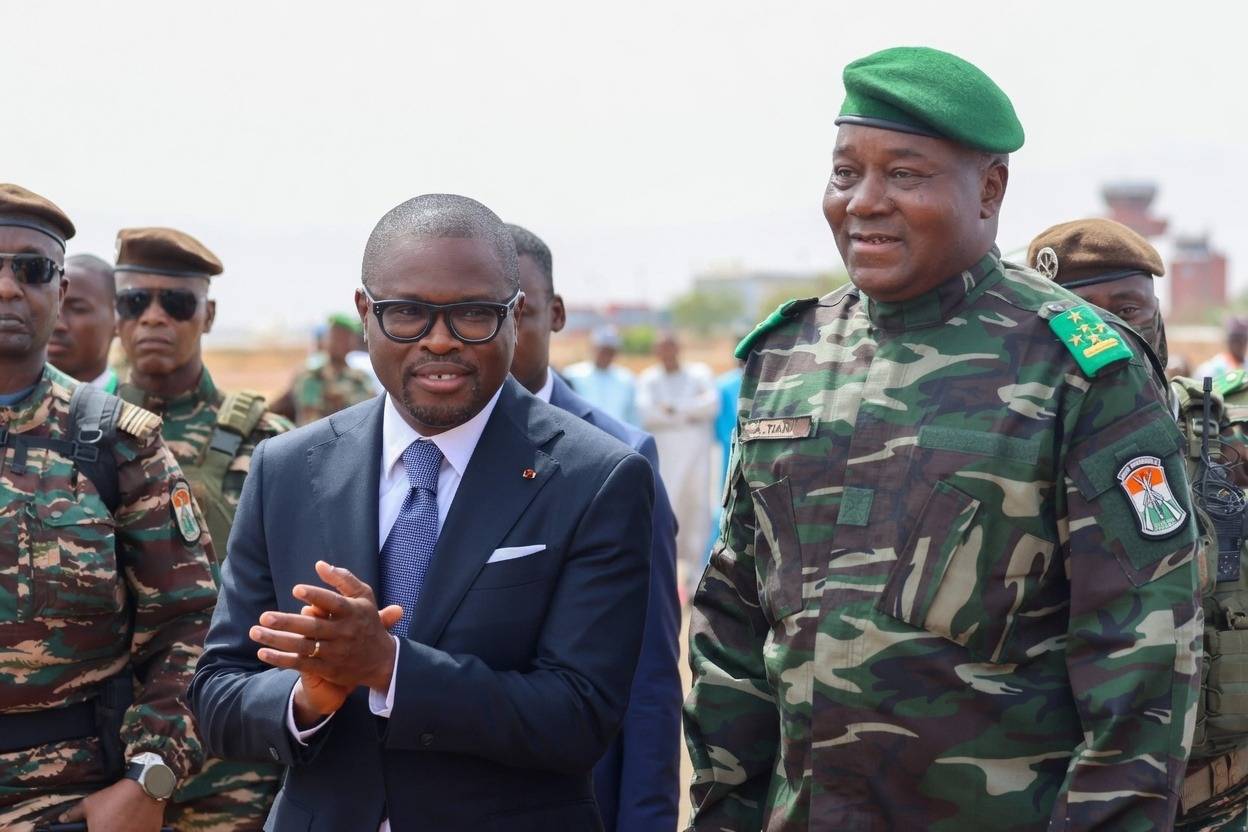
The political landscape between Cotonou and Niamey has undergone a subtle yet significant shift since the Niger coup of mid-2023. While headlines often spotlighted confrontation—closed borders and escalating tensions—the reality unfolding behind the scenes tells a different story. Benin has consistently pursued dialogue, even as the Alliance of Sahel States (AES) maintained a firm stance.
Diplomatic gestures that broke the ice
Long before the current thaw, Benin took decisive steps to ease the strain:
- Early economic sanctions relief: By late 2023, Cotonou had already reopened trade routes through the Port of Cotonou, allowing critical supplies to reach Niamey. This move aimed to ease the economic stranglehold on Niger, though Niamey continued to cite security concerns in keeping its borders closed.
- High-level mediation efforts: Former Beninese presidents Nicéphore Soglo and Thomas Boni Yayi traveled to Niamey in mid-2024, demonstrating that political figures from both sides were willing to bridge divides, regardless of internal politics.
- Protecting shared infrastructure: Despite disputes over the WAPCO oil pipeline, Benin ensured its continued operation. This pragmatic approach prevented a complete rupture and maintained the only functional technical link between the two nations.
Romuald Wadagni’s leadership: a turning point
The inauguration of Romuald Wadagni as Benin‘s president in May 2026 marked a fresh chapter. A former Finance Minister and respected technocrat, Wadagni brought a fresh perspective, unburdened by the contentious decisions of the post-coup era. His presidency signaled an opportunity for renewed cooperation.
The first sign of progress came when Niger‘s Prime Minister, Ali Mahamane Lamine Zeine, attended Wadagni’s inauguration—a symbolic gesture that broke Niamey‘s diplomatic isolation.
Wadagni’s subsequent state visit to Niamey was more than symbolic; it was a clear commitment to regional reconciliation. By meeting directly with Niger‘s transitional leader, General Abdourahamane Tiani, and Burkina Faso‘s Captain Ibrahim Traoré, Wadagni underscored Benin‘s willingness to engage in open, pragmatic discussions.
Shared challenges demand shared solutions
The thaw between Benin and the AES isn’t just about diplomacy—it’s rooted in urgent, mutual needs:
- Security imperatives: Cross-border violence surged by 86% in the W-Arly-Pendjari region between 2024 and 2025. Neither Benin nor Niger can counter the jihadist threat alone, making military cooperation essential for border communities.
- Economic survival: Niger relies on Benin’s ports and trade routes to stabilize prices and secure supplies. Meanwhile, Benin seeks to boost revenue from the Port of Cotonou, reinforcing its role as a regional economic hub.
Wadagni’s visit to the heart of the AES signals that Benin respects its neighbors’ sovereignty while prioritizing regional stability. The next move rests with Niamey—will it reciprocate this diplomatic overture by fully reopening borders and restoring normal relations?