
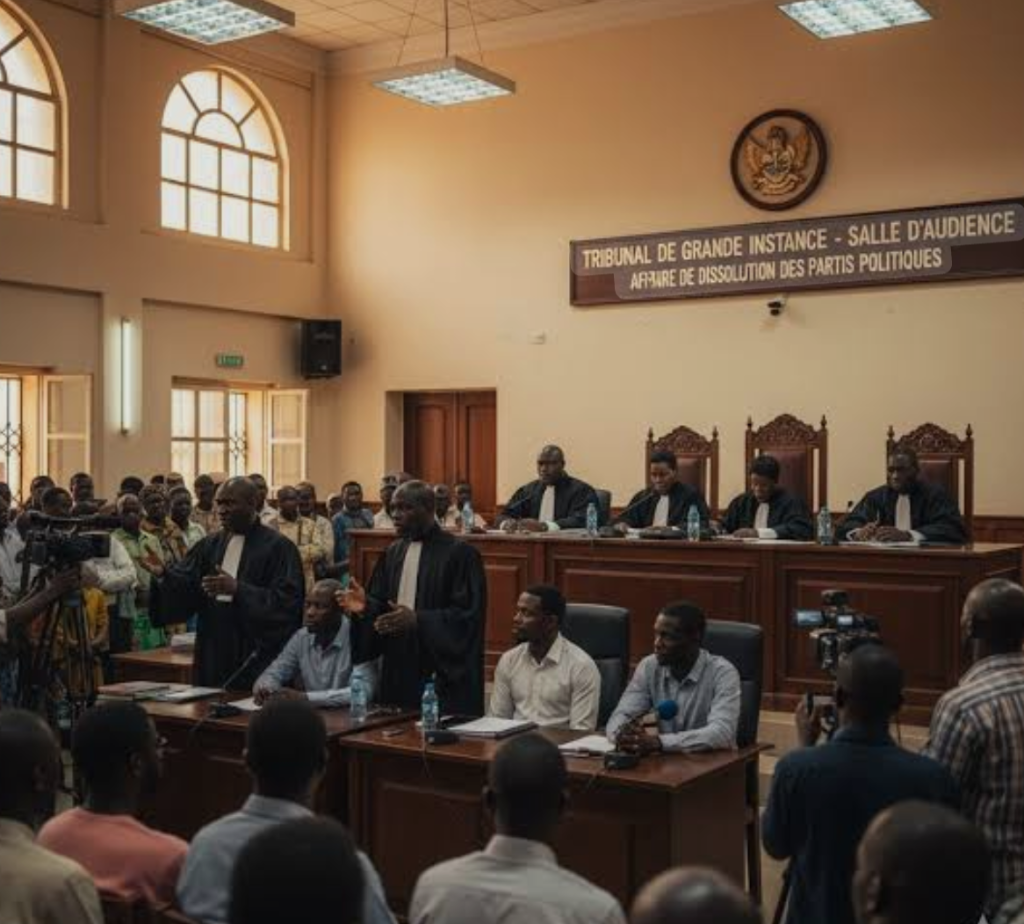
Mysticism meets justice in Mali’s high-profile coup plot trial
The trial of military officers and civilians accused of plotting to overthrow Mali’s transitional government took an extraordinary turn in Bamako this past Monday. The courtroom, already charged with political tension, witnessed an unprecedented sequence of events when a traditional healer’s presence triggered what witnesses described as an “invisible force” disrupting proceedings.
The case that defies convention
At the heart of this judicial saga is a mixed group of accused—some in uniform, others in civilian attire—all facing charges of attempting to destabilize state institutions. Among them stands a figure whose profile transcends the usual defendants: a féticheur, accused of lending supernatural backing to the alleged coup plotters. While occult involvement in political machinations has historical precedents in West Africa, its manifestation in a modern courtroom remains a rarity, injecting the proceedings with both drama and unease.
A courtroom in turmoil
As the féticheur took the stand, all eyes were on the prosecutor scheduled to deliver damning testimony against him. Mid-sentence, the state’s legal representative collapsed without warning. The suddenness of his physical distress—reported as a severe vertigo episode—left court staff scrambling. The prosecutor, visibly shaken, had to be assisted out of the chamber as the judge hastily adjourned proceedings until the following day.
Security personnel escorting the accused back to detention also reported inexplicable difficulties. The vehicle driver, an army warrant officer, experienced sudden disorientation, nearly losing control of the transport before regaining composure. These incidents, though officially attributed to stress, fueled speculation among observers about the accused’s alleged supernatural influence.
The psychology behind the panic
This unprecedented disruption highlights a critical tension between Mali’s judicial system and deeply rooted cultural beliefs. The mere presence of a defendant reputed to possess occult powers can trigger visceral reactions among officials, as fear of unseen forces amplifies stress and clouds judgment.
Witnesses noted how the prosecutor’s collapse—interpreted by some as a reaction to the féticheur’s presence—sparked immediate panic among court staff. The episode underscores the challenge of maintaining legal rigor in an environment where irrational forces are perceived as real threats. For judges tasked with upholding the law, this adds an extra layer of pressure: can justice be served when the courtroom itself becomes a battleground between reason and superstition?
What lies ahead for the trial?
The trial resumes today, with heightened security measures and strict protocols to prevent further disruptions. Authorities are monitoring the prosecutor’s health while reassessing the detention conditions for the féticheur. Yet the question remains: will the courtroom’s eerie atmosphere dissipate, or will future sessions bring more inexplicable events?
One thing is certain—this trial, already unprecedented, has become a case study in the collision between Mali’s legal system and its rich, if unsettling, spiritual traditions.