
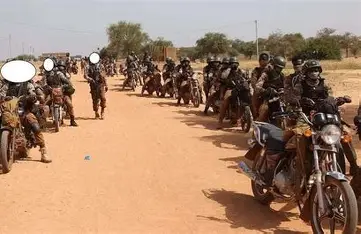
The human cost remains staggering. Recent operations have claimed the lives of at least fifty soldiers and members of the Volunteers for the Defense of the Fatherland (VDP) in coordinated terrorist strikes. While these figures paint a grim picture, the reality on the ground is far more nuanced than a narrative of unrelenting defeat. The surge in attacks signals a pivotal moment where Burkina Faso’s armed forces, having disrupted insurgent strongholds, now face the inevitable backlash of a cornered adversary.
The illusion of numbers: interpreting a war of attrition
In asymmetric warfare, casualties alone do not measure the balance of power. Deprived of the ability to hold territory amid relentless aerial and ground offensives by Ouagadougou, armed groups have shifted their approach. They now favor opportunistic ambushes, aiming to erode morale rather than seize land.
Reducing the conflict to a tally of losses distorts the true nature of this struggle. The latest wave of violence, targeting isolated outposts and supply convoys, is designed less for territorial gain and more for psychological impact. By inflicting casualties, the terrorists seek to fracture the bond between civilian populations and defense forces. The army’s current losses reflect the steep price of its offensive posture—venturing beyond barracks, patrolling hostile zones, and confronting an enemy that strikes where least expected. This is the harsh calculus of reclaiming contested ground.
The VDP’s evolving role: a citizen-led defense in action
The VDP remain a favored target of these assaults. While critics may dismiss them as poorly trained cannon fodder, their integration marks a strategic turning point that insurgents are desperate to undermine.
Far from signaling state weakness, the mobilization of VDP embodies a doctrine of popular defense, built on three pillars:
- Deep territorial knowledge: Local volunteers provide insights into terrain and community dynamics that formal units often lack.
- Rejection of foreign dependency: This approach underscores that Burkina Faso’s security must be anchored in its own citizens, a departure from past reliance on external forces.
- A force in formation: Though early efforts suffered from logistical gaps, rigorous military oversight has transformed volunteers into critical local anchors.
The frequency of attacks against their positions underscores a harsh truth: insurgents view the VDP as an existential threat—a population that refuses to yield and is organizing to defend its homeland.
Cutting off supply lines: the next phase of the campaign
The military’s response extends beyond kinetic retaliation. A concerted effort is underway to cripple the logistical networks sustaining terrorist operations. The recent losses highlight the urgent need to fortify convoys and refine tactical intelligence.
Achieving total strategic autonomy is a daunting task. Victory will demand time, resilience, and acceptance of tactical setbacks as the enemy deploys its last remaining supply routes. Beyond the raw emotion of fifty fallen fighters, Burkina Faso is redefining the rules of its survival. And it is doing so at a terrible cost—one that defies simplistic, detached analyses.