
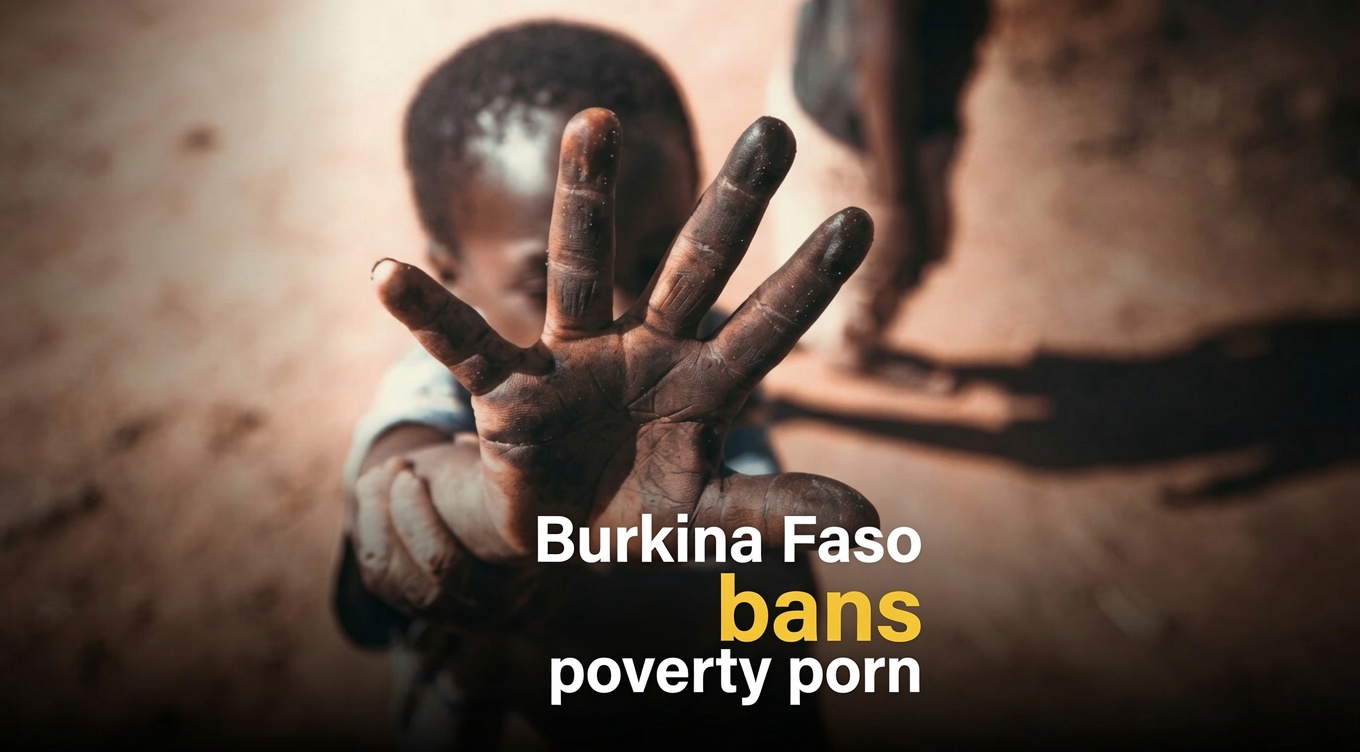
In Burkina Faso, the practice of exploiting human suffering for online engagement or financial gain has been officially banned. The transitional government has enacted a stringent prohibition against what sociologists term “poverty porn”—a term describing the commodification of distress through visual storytelling. This legislative move not only challenges content creators and humanitarian organizations but also reignites a critical debate on human dignity in the age of digital media.
the ethical dilemma of misérabilism in digital spaces
The rise of social media has turned misérabilism into a profitable strategy. A recurring pattern emerges: influencers or NGOs capture and share close-up footage of malnourished children, internally displaced persons, or families enduring extreme hardship. The emotional impact is immediate, often manipulated to elicit sympathy or donations. While the stated goal may be altruistic, the method raises serious ethical concerns.
By turning suffering into spectacle, these videos strip individuals of their dignity, reducing them to passive objects of pity. It is this very voyeurism that Burkina Faso’s authorities aim to eliminate with their decisive action.
balancing ethics, security, and national narrative
Beyond ethical considerations, the ban aligns with Burkina Faso’s broader political and security imperatives. The country faces a multifaceted crisis, and the widespread circulation of images portraying it solely through a lens of despair has implications for national perception and governance.
The government argues that “poverty porn” not only harms individual dignity but also fuels a damaging external narrative—one that portrays Burkina Faso as helpless. By regulating the dissemination of such imagery, authorities seek to reclaim control over the nation’s story. The objective, they assert, is not to obscure reality but to reject a narrative that reduces the country to a single, demoralizing stereotype.
criticism: a tool for information control?
However, critics—including civil society members and opponents of the transitional leadership—view the ban through a different lens. They argue that what is framed as an ethical measure is, in fact, a political tool to suppress information and conceal the true extent of Burkina Faso’s humanitarian crisis.
Despite the prohibition, the situation on the ground remains dire. Millions of internally displaced persons flee escalating insecurity, entire communities face blockades restricting access to essential supplies, and daily life is marked by scarcity and inadequate healthcare. For detractors, the law serves as a smokescreen, enabling the regime to present an image of infallibility by silencing the very signals of distress that these videos, flawed as they may be, once exposed.
rethinking humanitarian communication in a censored landscape
This new legal framework compels humanitarian actors and communicators to rethink their strategies urgently. How can they continue to mobilize support and document urgent needs without resorting to sensationalism—or risking legal repercussions?
The solution lies in adopting a more constructive and respectful approach to storytelling. Experts emphasize the importance of highlighting resilience, courage, and local solutions rather than focusing solely on vulnerability. A dignified narrative does not diminish the gravity of the crisis; it restores agency to those affected, ensuring they are seen as active participants in their own recovery rather than passive victims. This shift in perspective allows Burkina Faso’s struggles to be acknowledged without reducing the nation to silence or despair.