
The eastern regions of Burkina Faso are being ravaged by relentless jihadist raids, predominantly led by the Group for the Support of Islam and Muslims (GSIM), an Al-Qaïda affiliate. In just ten days, hundreds of lives—including numerous security personnel—have been lost, yet Ouagadougou’s government has offered no official response.
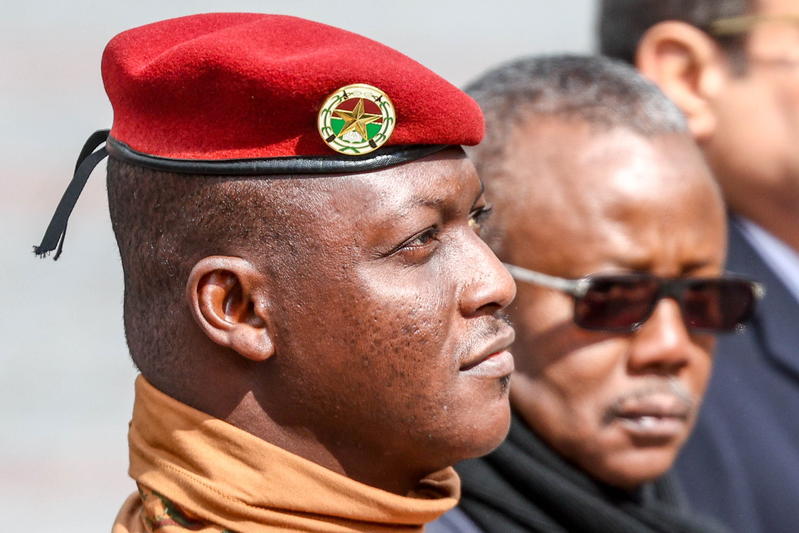
The silence from the Burkina Faso authorities is deafening. No statements from the security forces or the government of Captain Ibrahim Traoré—now officially installed as the country’s president—have emerged to address the escalating violence. The raison d’être of his military-led administration was to restore security and reclaim territory following the 2022 coup. Yet, the reality on the ground tells a starkly different story, particularly in the northern and eastern regions, where jihadist groups continue to inflict heavy casualties.
deadly assault on Yamba police camp
On March 6, a brutal attack, likely carried out by the GSIM, targeted a police camp operated by the Mobile Intervention Units in Yamba, located 20 kilometers north of Fada N’Gourma in the Gourma Province. The assault resulted in dozens of fatalities, including at least 30 police officers, according to a preliminary, unofficial report from RFI, citing local security sources.
The attackers, estimated to number several dozen and arriving on motorcycles, overran the camp, looted equipment, and fled before reinforcements could arrive. Strikingly, this camp had been struck almost exactly one year prior. The attackers’ ability to evade interception underscores the Faso security forces’ mounting challenges in countering these raids.
february’s bloodshed: a month of relentless violence
The assault on Yamba follows a February marked by unprecedented bloodshed. According to West Africa Maps, a network of West African informants, the GSIM launched 38 attacks during the month. These were compounded by three additional incursions attributed to the Islamic State in the Greater Sahara (ISGS), active in the northeast near the borders with Niger and Mali—regions notorious for their gold mines, trade routes, and smuggling networks.
The deadliest day of the year so far came on February 14, when two coordinated raids targeted a forestry base and a military barracks in Titao, northern Burkina Faso. The attacks left 101 forestry workers and 186 Volunteers for the Defense of the Homeland (VDP)—a government-backed militia—dead. Heni Nsaibia, a senior analyst at the Armed Conflict Location & Event Data Project (ACLED), noted the «high level of coordination» behind the raids, with multiple large-scale attacks occurring between February 12 and 22.
VDP in the crosshairs: the human cost of militias
The VDP, a state-sponsored militia tasked with supporting the army, has borne the brunt of the GSIM’s offensives. On March 3, the jihadist group claimed responsibility for killing 11 VDP members and seizing weapons, motorcycles, and other equipment during attacks on three positions in Gourbousou, Yabousgo, and Zogoré, near Ouahigouya.
The military government’s apparent inability to curb this violence is compounded by reports of VDP units committing human rights abuses against the Fulani Muslim minority, whom they accuse of aiding jihadist factions. The latest incident occurred on March 1, when several Fulani civilians were massacred in the commune of Bittou by VDP fighters.
a crisis of credibility for Ouagadougou
The escalating Burkina Faso news of jihadist attacks—coupled with the government’s silence—has further eroded public trust in the administration’s ability to restore peace. The GSIM’s sustained campaign, marked by coordinated assaults and high-profile targets, exposes the fragility of the security narrative propagated by the military leadership. With no clear strategy to address the crisis, the humanitarian toll continues to mount, leaving communities in the east and north trapped between jihadist violence and state-led repression.