
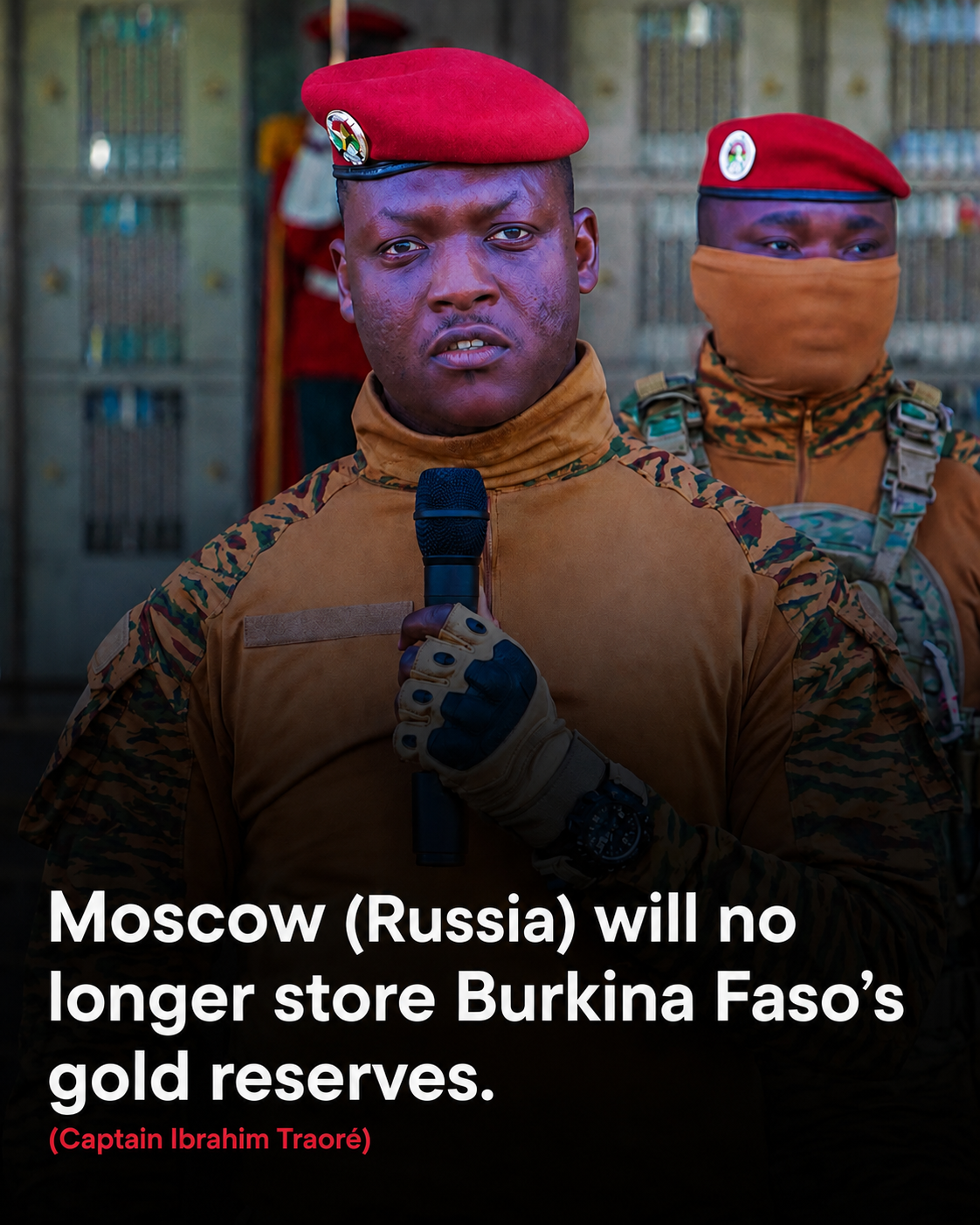
Ouagadougou’s strategic pivot toward Moscow, framed as a break from colonial legacies and a quest for diversified alliances, is raising serious questions about Burkina Faso’s true path to independence. Since Captain Ibrahim Traoré assumed leadership in the transitional government, the narrative has been unyielding: reclaiming national sovereignty. A message that resonates deeply with a youthful population eager to distance itself from France’s historical influence. Yet, as the country deepens its ties with Russia—particularly in the gold sector, which accounts for nearly 80% of its export earnings—the promise of autonomy appears increasingly hollow. Rather than achieving self-reliance, Burkina Faso risks swapping one form of dependency for another, this time under Moscow’s shadow.
Gold concessions and the hidden cost of Russian partnerships
The recent negotiations on securing and managing Burkina Faso’s gold reserves have exposed the fragility of the country’s economic position. By agreeing to terms that favor Russian entities, Ouagadougou is not merely seeking protection from Western pressures—it is surrendering control over its most lucrative resource. Storing gold abroad or granting foreign concessions under the guise of safeguarding it from geopolitical risks is a paradox for a nation claiming sovereignty. True independence is built on internal strength, not on paying premium fees to a foreign power to manage what lies beneath its own soil.
This arrangement is no longer cooperation; it is a financial tribute masquerading as partnership. The long-term implications could be devastating, locking Burkina Faso into a cycle of economic subjugation disguised as strategic collaboration.
The security gamble: trading one dependency for another
The shift toward Russian military support, including the deployment of advisors and paramilitary units (formerly Wagner Group, now rebranded under Africa Corps), was supposed to tilt the balance in Burkina Faso’s fight against armed groups. However, the financial burden of this alliance is crippling, while tangible security gains remain elusive. Recent waves of brutal attacks on the Burkinabè armed forces have underscored the failure to achieve lasting stability.
Worse still, by tethering its security to Russia’s geopolitical agenda, Ouagadougou is placing its fate in the hands of a partner with competing priorities. If Moscow reorients its focus or increases its demands, Burkina Faso will find itself with little recourse. The illusion of strength through foreign patronage is a dangerous gamble—one that could leave the country vulnerable to the whims of a distant power.
From anti-French rhetoric to Russian embrace: a hollow liberation
The most glaring contradiction lies in the government’s own logic. How can the rejection of Western paternalism be justified when it is replaced by an uncritical embrace of Moscow’s opportunistic imperialism?
“Switching one master for another is not liberation—it is surrender.”
Russia’s engagement in Africa is not driven by solidarity or anti-colonial solidarity; it is a calculated move to bypass sanctions, secure critical resources, and gain diplomatic leverage against the West. By replacing Paris with Moscow, Burkina Faso has not broken free—it has merely exchanged one overlord for another.
A diplomacy of isolation
This exclusive alliance with Russia is isolating Burkina Faso on the regional and global stage. By severing ties with traditional donors and straining relationships with neighboring countries, the transitional government is narrowing its diplomatic options. A truly sovereign nation diversifies its partnerships to balance influence; it does not lock itself into a lopsided, one-sided relationship where it remains perpetually in the position of supplicant.
For the people of Burkina Faso, the reckoning may come sooner than expected. Sovereignty is not measured by the vehemence of anti-Western rhetoric but by a country’s ability to chart its own course without seeking approval from foreign capitals—whether in Paris, Washington, or Moscow. By mortgaging its gold reserves and outsourcing its security to Russia, the current regime is not securing Burkina Faso’s future; it is mortgaging it for decades to come.