
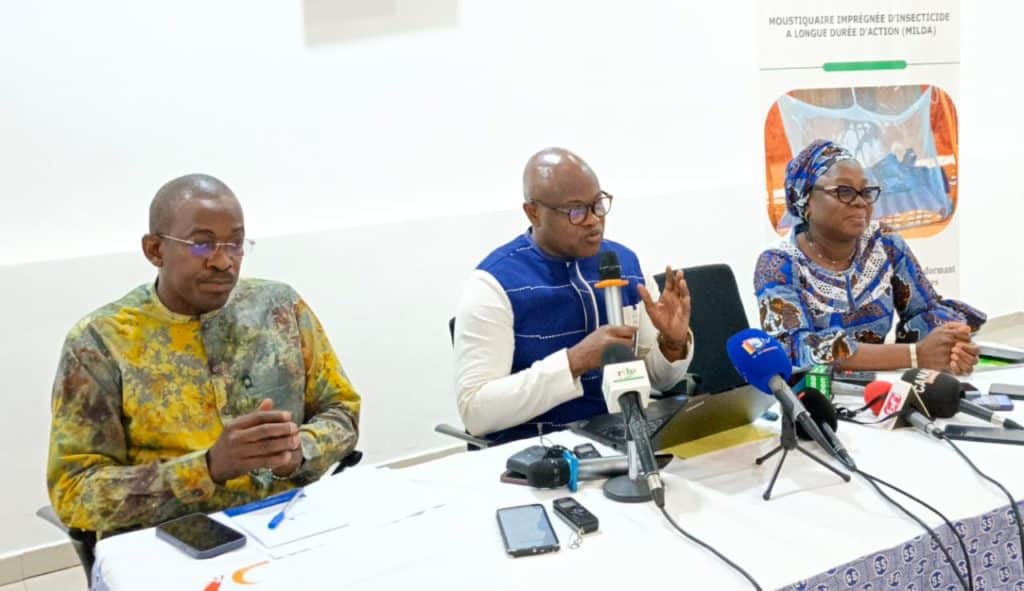
Burkina Faso has made significant strides in its fight against malaria, a disease the nation is committed to eradicating by 2030. The year 2025 marked an unprecedented reduction in both malaria cases and associated fatalities. Dr. Lucien Jean-Claude Kargougou, the Minister of Health, shared these encouraging updates with the press in Ouagadougou on Friday, February 20, 2026.
The country witnessed a substantial decrease in malaria infections, with reported cases falling from 10,805,000 in 2024 to 7,329,000 in 2025, representing a 32% drop. This positive trend was particularly pronounced among children under five years old, where cases were reduced by over 1,900,000, approximately a 38% decrease.
Fatalities attributable to malaria also saw a dramatic decline, dropping by 48% from 3,523 deaths in 2024 to 1,900 in 2025. For children younger than five, the Minister of Health highlighted a reduction of 893 recorded deaths in 2025.
Dr. Lucien Jean-Claude Kargougou articulated Burkina Faso’s clear aspiration: «Eliminer le paludisme d’ici à l’horizon 2030». He emphasized, «To achieve this, we must sustain our progress, enhance living environment sanitation, strengthen the implementation of high-impact interventions (malaria vaccination, use of mosquito nets, Seasonal Malaria Chemoprevention plus – CPS+), boost communication for behavioral change, solidify community engagement, and ensure sustainable funding».
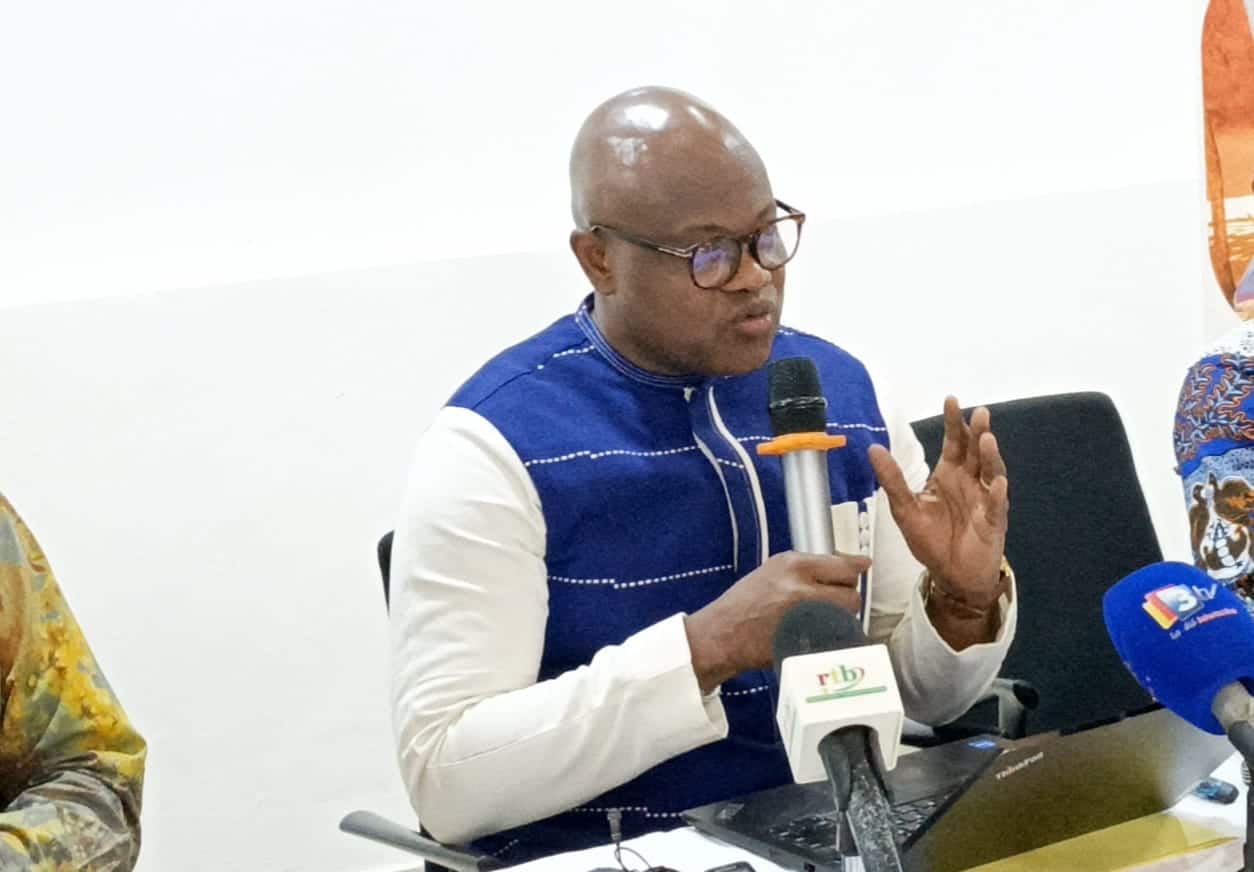
The Minister of Health underscored that these impressive outcomes are not coincidental. «They stem from a clear political vision championed by Son Excellence le Président du Faso, Chef de l’Etat, le Capitaine Ibrahim TRAORE, who prioritizes equitable access to healthcare and public protection at the core of governmental action.
They also reflect the unwavering commitment of the Government and the collective mobilization of all national stakeholders and partners», he further noted.
According to Dr. Kargougou, the establishment of the National Multisectoral Committee for Malaria Control (CONAMEP) has significantly improved national coordination and reinforced a crucial belief: successful malaria elimination requires comprehensive multisectoral mobilization and active community participation.
«The nationwide campaign for the universal and free distribution of long-lasting insecticide-treated mosquito nets resulted in nearly 15 million next-generation bi-impregnated nets being distributed, with a distinct objective: achieving an utilization rate of at least 80%.
These innovative bi-impregnated mosquito nets have proven more effective against insecticide resistance compared to the nets previously used in our country», he stated.
More than 33,000 community volunteers and 7,000 health professionals traversed cities and remote villages, including those in security-challenged areas, to ensure equitable protection for households, as affirmed by the Minister of Health. «This close engagement has bolstered community ownership and collective responsibility», he asserted.
Furthermore, he added that the widespread implementation of free malaria vaccination, active since August 14, 2025, across all 70 health districts nationwide, represents another landmark achievement in the fight against malaria in Burkina Faso.
For Lucien Jean-Claude Kargougou, the historic nature of these results also stems from a collective understanding that combating malaria is fundamentally a battle of behaviors and social acceptance.
«Community mobilization and communication have been central to our strategy. Information campaigns tailored to local realities, the involvement of community and religious leaders, door-to-door awareness efforts, and media engagement have successfully translated prevention tools into effective practices: sleeping under mosquito nets, vaccinating children, and seeking early medical attention for fever», he explained.
In light of this, Minister Kargougou urged various stakeholders to maintain this momentum to meet the challenge of malaria elimination.
He appealed, «We call upon all stakeholders – territorial collectives, civil society organizations, technical and financial partners, community leaders, media, and the general population – to continue and intensify these efforts. Together, we have demonstrated that it is possible to significantly push back malaria. Together, we will eliminate malaria in Burkina Faso».