
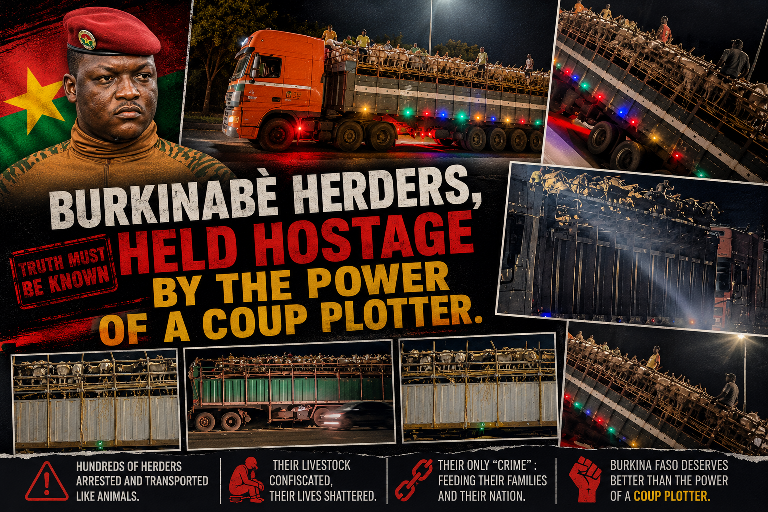
The Burkinabè livestock sector is grappling with an unprecedented impasse as the nation approaches Ramadan, a period marked by heightened consumption and spiritual reflection. The economic restrictions imposed by Captain Ibrahim Traoré‘s administration have created a bottleneck in the cattle supply chain, leaving pastoralists and traders in a precarious position.
Export ban exposes vulnerabilities in the livestock industry
Government authorities have enforced a blanket ban on livestock exports, citing the need to stabilize domestic prices. While the Mobile Brigade for Economic Control and Fraud Prevention reports seizing multiple cattle-laden vehicles in early May, the policy’s unintended consequences are far-reaching. Cattle are not mere commodities; they require constant care, water, and fodder, all of which incur substantial costs—especially during the dry season.
The export prohibition cuts off access to regional markets, where demand and prices typically surge during Ramadan. For Burkinabè pastoralists, this means losing their primary source of income at the very moment when financial relief is most critical.
Religious convictions clash with economic hardship
The irony is stark: Captain Ibrahim Traoré, a Muslim leader, has implemented measures that directly undermine the livelihoods of fellow believers. Islam emphasizes fairness, solidarity, and the protection of honest labor. Yet, the rigid enforcement of these restrictions appears to disregard the religious and social imperatives of the holy month.
For many Muslim families in Burkina Faso, cattle represent a lifetime of savings, often liquidated precisely to meet Ramadan and Eid al-Fitr expenses. By blocking legal export sales, the authorities risk pushing these communities—already vulnerable—into deeper financial distress.
Illegal trade surges as desperation grows
The rise in clandestine cattle exports, as acknowledged by the Mobile Brigade for Economic Control and Fraud Prevention, reflects a broader economic despair. Faced with two untenable choices—selling at a loss in a saturated domestic market or risking border crossings to secure their livelihoods—many pastoralists are opting for the latter.
This rigid approach raises a fundamental question: Can a nation achieve food sovereignty by financially suffocating its primary producers? While fraud prevention remains a state responsibility, the absence of supportive measures during Ramadan risks eroding trust between rural communities and the government in Ouagadougou.