
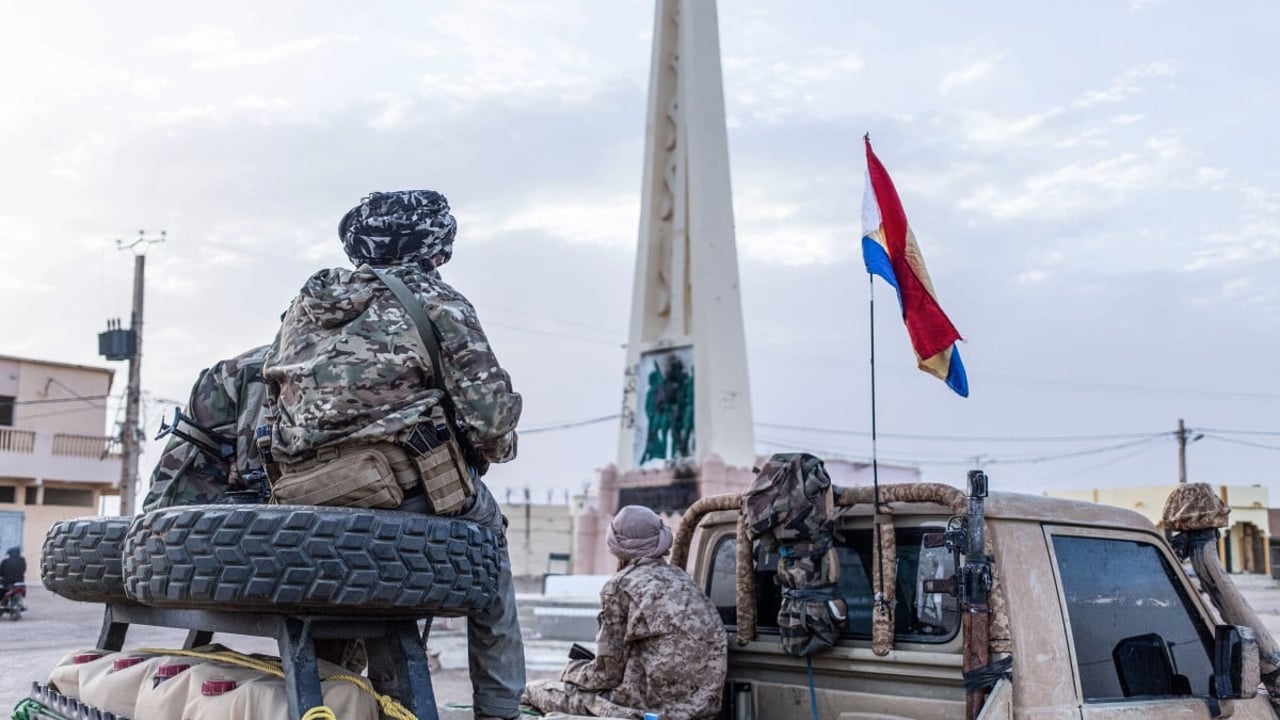
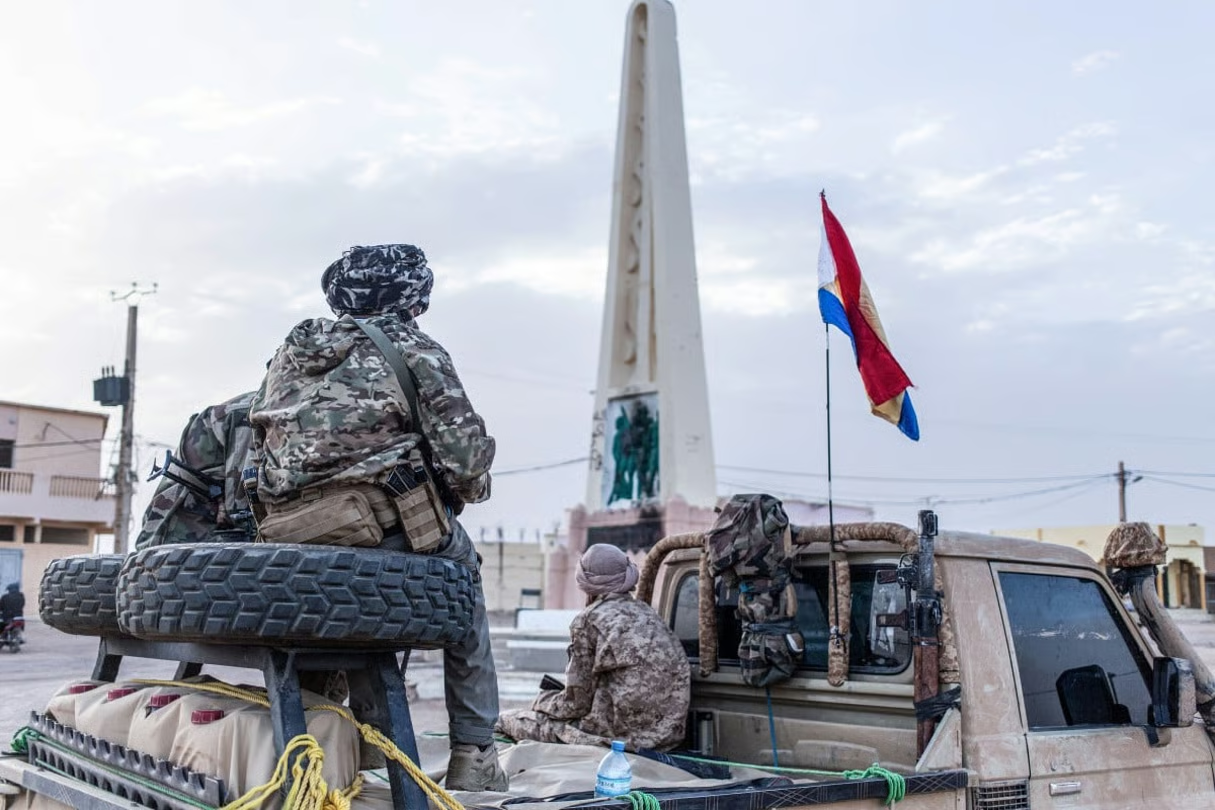
Kidal, a strategic city in northern Mali, came under intense aerial bombardment in the early hours of Thursday, leaving significant material damage in its wake. A local resident, who requested anonymity, reported that at least four air strikes had been carried out during the night, including one that destroyed a home near an old market and another that left a deep crater in the courtyard of the regional governor’s office. This building had been retaken by the National Liberation Front of Azawad (FLA) on April 25 and 26, in collaboration with the Group for the Support of Islam and Muslims (JNIM), the Sahelian branch of Al-Qaeda led by Iyad Ag Ghaly.
Military response and strategic targets
A Malian army officer stationed at the command post in Mopti, central Mali, confirmed that the strikes were part of a deliberate strategy. “We are targeting specific objectives. We have our approach. The intensity of these operations will increase in the coming days,” the officer stated.
Tense calm in Kidal
The once bustling streets of Kidal were eerily quiet on Thursday morning. The resident noted that while many vehicles had fled the city under the cover of darkness, those remaining were few and far between. The strategic importance of Kidal has made it a focal point in the ongoing conflict, with its fate hanging in the balance amid escalating tensions.
The Malian state finds itself in a precarious security situation, grappling with unprecedented coordinated attacks by jihadist factions and rebel groups against key positions held by the ruling junta in Bamako. These developments have deepened uncertainty across the country, as the government seeks to regain control over territories lost to armed groups.
Rebel ambitions and territorial claims
The FLA, a predominantly Tuareg separatist movement also comprising Arab communities, has reasserted its claim to the Azawad region in northern Mali. This vast territory includes the administrative regions of Kidal, Gao, Ménaka, and Tombouctou. The FLA’s recent offensive culminated in the capture of Kidal, the largest city in northern Mali, after intense fighting.
The rebel group has made no secret of its intentions to extend its control over other major northern cities. For decades, Tuareg communities have waged armed struggles, citing long-standing marginalization, with Kidal emerging as a critical flashpoint in their quest for self-determination.