
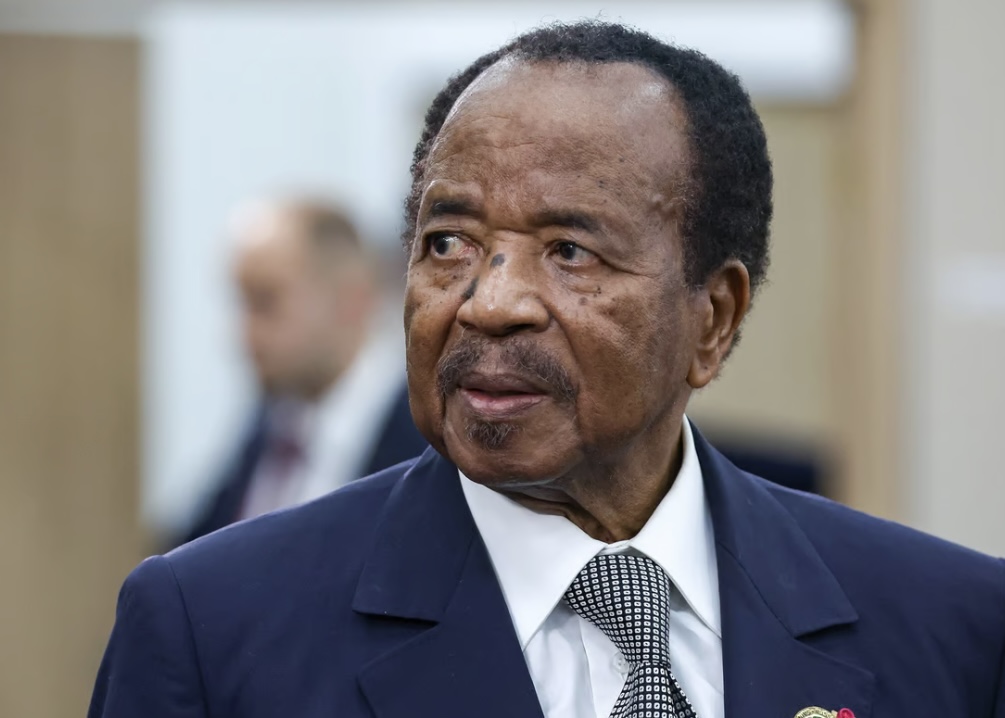
The political scene in Cameroun is heating up as uncertainty grows over the prolonged absence of President Paul Biya. Nearly two months after his departure for a private trip to Europe on June 7, the Rassemblement Démocratique du Peuple Camerounais (RDPC) convened an emergency meeting of top party officials this week. Yet, no official word has emerged regarding a potential return date, leaving questions unanswered and fueling speculation.
The RDPC leadership, through a terse communiqué issued on Wednesday, confirmed the gathering but offered no details about its agenda or purpose. The party insists that state institutions continue to function normally despite the president’s extended absence. This stance contrasts sharply with growing demands from opposition figures for transparency about the exercise of presidential powers and the protocols in place for prolonged absences.
At 93 years old, President Biya’s current stay abroad marks the longest absence since he first assumed office in 1982. Initially described as a ‘short private visit to Europe,’ the trip has now stretched well beyond initial expectations, with no official communication on his return. The silence from the presidency has only intensified the debate, prompting both ruling party officials and independent observers to weigh in on the implications for governance.

In an attempt to counter narratives suggesting a leadership vacuum, the RDPC’s propaganda chief, Christophe Mien Zok, penned an editorial in the party’s mouthpiece, L’Action, on July 15. Zok dismissed claims of the country being run on ‘autopilot,’ asserting that ‘power is not vacant’ and that ‘the Lion has not left.’ The statement underscored the party’s effort to reassure the public, even as official channels continue to broadcast recorded messages from President Biya to foreign leaders, including greetings sent to France’s Emmanuel Macron on Bastille Day and the President of Montenegro. No live appearances or public engagements have been reported during his time away.
Opposition voices challenge the status quo
Criticism is mounting from opposition quarters, with figures like MP Jean-Michel Nintcheu calling on the Constitutional Council to formally recognize a vacancy in the presidency. Meanwhile, the Union Démocratique du Cameroun (UDC) has taken a more measured approach. While stopping short of speculating on President Biya’s personal situation, the party argues that the continuity of the state cannot hinge on silence or unconfirmed reports. In a statement released on July 18, the UDC acknowledged that an extended absence abroad does not automatically constitute a power vacuum but emphasized the need to clarify the mechanisms governing temporary incapacitation and the effective exercise of presidential duties.
Constitutional gaps fuel institutional concerns
Analysts point to a troubling legal ambiguity: Cameroun’s constitution does not specify a maximum duration for the president’s absence from national territory. This legislative void has sparked calls for institutional review, though no framework exists to determine when the Constitutional Council should intervene. The UDC has also highlighted another pressing issue—the vice-presidential post, reintroduced during the constitutional reforms of April, remains unfilled. The party advocates for urgent legal reforms to address scenarios of prolonged presidential absence, ensuring clear procedures are in place for governance continuity. As Africa’s second-longest-serving leader, President Biya’s current absence stands as an unprecedented test of the country’s institutional resilience.