
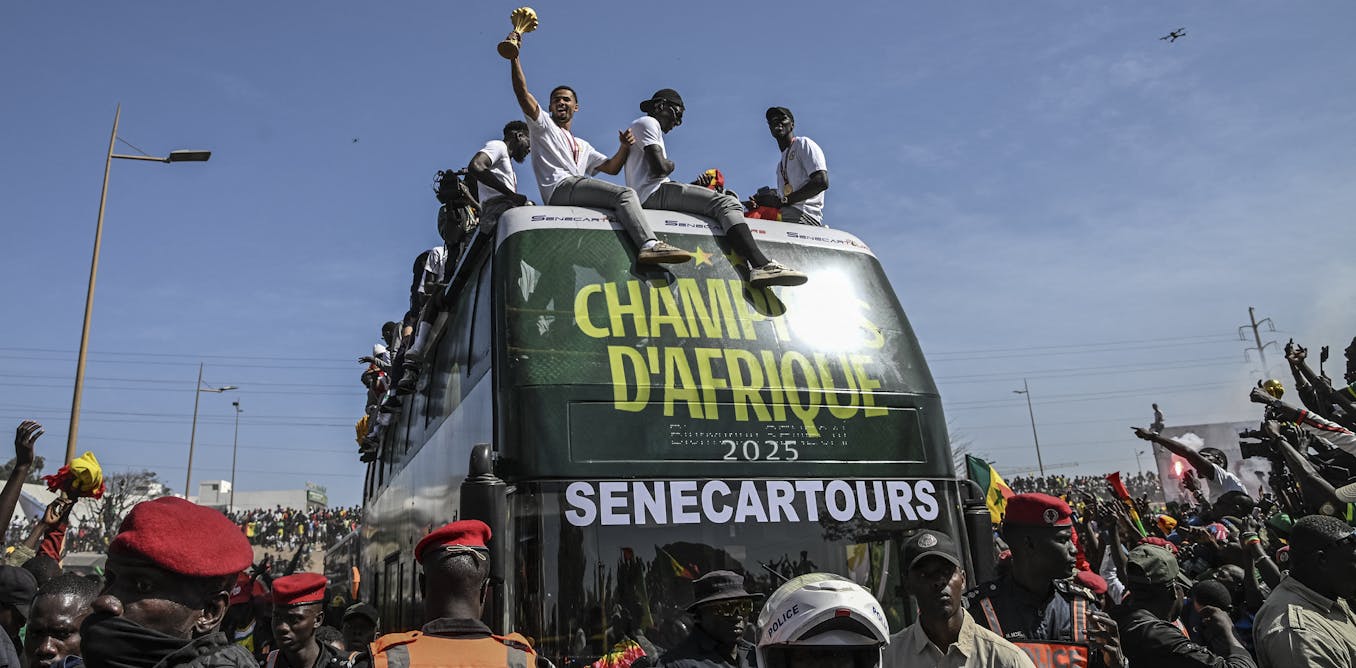
The Confederation of African Football (CAF) has upended the outcome of the CAN 2025 final, declaring a 3-0 forfeit victory for Morocco over Senegal—even though the match concluded 1-0 on the field. The ruling, based on Articles 82 and 84 of the CAF regulations, hinges on Senegal’s alleged temporary withdrawal from the pitch.
This decision has sparked intense debate in the football community. How could the CAF Appeal Jury overturn a result that was finalized by the referee? What does sports law say about such situations? And what consequences could this ruling have for future competitions?
What legal grounds justified the CAF’s decision?
The CAF Appeal Jury based its ruling on Chapter 35 of the CAN regulations, which addresses team withdrawals—specifically Articles 82 and 84. According to the jury, Senegal’s brief departure from the field constituted a withdrawal rather than a temporary suspension, triggering a forfeit under the competition’s rules.
Legal qualification is crucial in such cases. The distinction between a withdrawal and a temporary interruption significantly impacts the applicable legal framework and the final decision. This mirrors how a medical diagnosis determines treatment—an incorrect classification could lead to unintended outcomes.
Why did the CAF Appeal Jury disregard the referee’s decision to continue the match?
While the exact reasoning behind the jury’s decision remains unclear, it exercised its sovereign authority as an independent body within CAF. The jury chose not to prioritize the referee’s decision to resume and complete the match—a central element in this dispute.
The referee’s decision to temporarily halt play rather than declare an outright abandonment was pivotal. According to IFAB Law 5, referees possess the discretionary power to suspend, abandon, or resume matches based on game conditions. There is no fixed time limit dictating when a match should be declared abandoned, meaning the referee’s call is final under the laws of the game.
“The referee’s decisions on match-related facts are definitive, including goal validation and match results. These decisions must be respected by all parties.”
Has a similar case ever occurred in a CAN final?
No documented instance exists where a CAN final result was overturned due to a withdrawal ruling. This case is unprecedented at the continental level.
However, football history includes notable instances of interrupted matches. For example, the 2019 CAF Champions League final between Wydad Casablanca and Espérance de Tunis was abandoned when Moroccan players refused to resume play after a disallowed goal and a malfunctioning VAR system. The Court of Arbitration for Sport (CAS) later ruled in favor of Espérance, citing the refusal to continue as an abandonment.
The key difference in the CAN 2025 case is that Senegal resumed play and completed the match, whereas Wydad Casablanca never returned to the pitch.
Can Senegal challenge this ruling, and what are the chances of success?
Senegal has already filed an appeal with the Court of Arbitration for Sport (CAS), as permitted under sports law. The process involves submitting a formal appeal, paying a filing fee (1,000 Swiss Francs / $1,279), and presenting arguments before a final ruling is issued—likely within months.
Additionally, the Senegalese Football Federation (FSF) has requested a suspension of the CAF decision, allowing Senegal to retain its title until the CAS delivers a definitive judgment.
This case serves as a critical study in sports law, touching on rule interpretation, referee authority, jurisdictional composition, and procedural ethics—issues that extend beyond the scope of this discussion.