
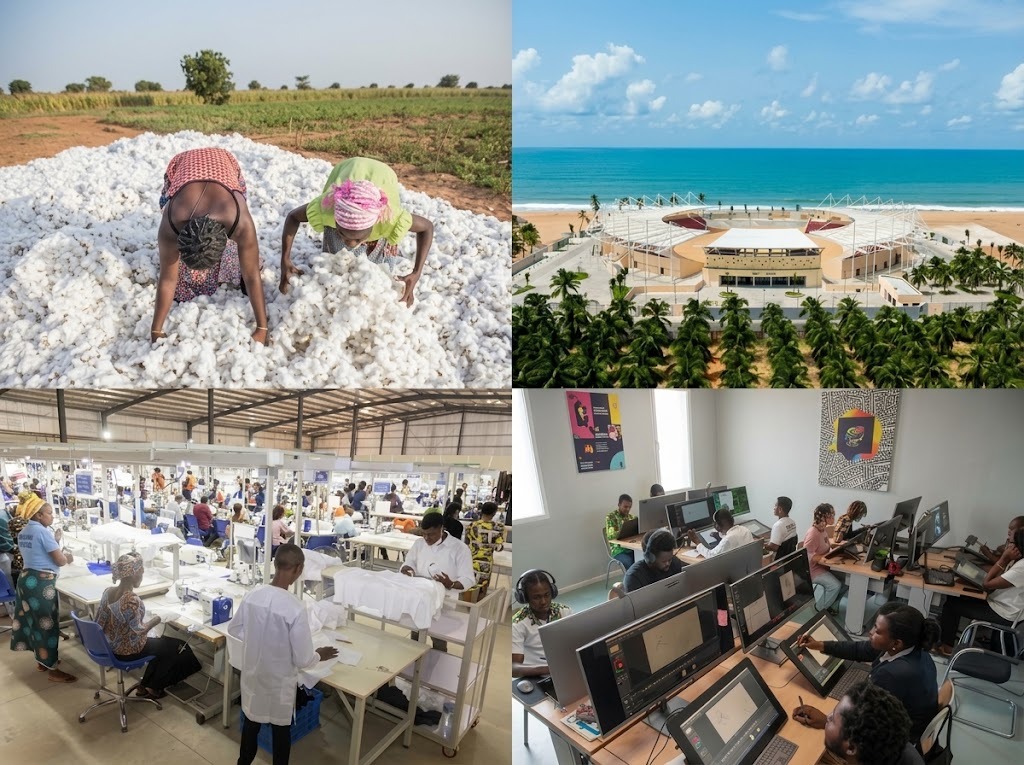
Benin’s government has just unveiled its most ambitious financial roadmap yet, submitting the 2027 budget proposal to parliament. At 4,757,029 billion FCFA, the country’s largest-ever budget represents a 14.7% increase from the revised 2026 figures, setting a critical test: can this massive spending plan finally unlock sustainable growth and inclusive development across the nation?
Why this 4.76 trillion FCFA budget matters more than ever
The leap from 4,148 billion FCFA in 2026 to nearly 4.8 trillion in 2027 isn’t just about numbers—it’s about choices. The government is betting on a 7.5% economic growth target while keeping the fiscal deficit at just 2.8% of GDP, a delicate balance that could redefine Benin’s path forward.
With an inflation target of 2.0%, well below the West African Economic and Monetary Union (WAEMU) ceiling of 3.0%, the budget aims to stabilize prices while funding critical sectors that drive both productivity and social equity. But success will hinge on execution: turning ambitious projections into real-world progress.
Five strategic pillars to drive structural change
1. Agricultural transformation: Beyond subsistence to value creation
The budget channels significant resources into modernizing Benin’s agricultural sector, focusing on productivity gains, value chain strengthening, and local processing. The goal? Shifting from low-value exports to high-value agricultural products that boost rural incomes and reduce food insecurity.
2. Industrial leapfrogging: From raw exports to value-added production
A major push is planned to enhance industrial competitiveness, support SMEs, and attract investment in processing zones. By fostering local manufacturing, the budget aims to create stable, higher-paying jobs and reduce import dependency, particularly in key industries such as textiles, agribusiness, and construction materials.
3. Tourism and culture: Unlocking Benin’s soft power potential
With its rich history and cultural heritage, Benin is positioning tourism as a cornerstone of economic diversification. Investments will target infrastructure upgrades, heritage preservation, and international marketing to position the country as a top West African destination for eco-tourism, heritage tourism, and business travel.
4. Digital innovation: Building a 21st-century economy
Digital transformation is no longer optional—it’s a survival strategy. The budget prioritizes digital infrastructure, e-governance platforms, and tech-enabled education to bridge the digital divide. From rural connectivity projects to startup funding, the goal is to create an enabling environment for innovation and entrepreneurship.
5. Human capital development: Educating, training, and empowering the next generation
No economic transformation is possible without a skilled, healthy workforce. The budget significantly increases funding for education, vocational training, and youth employment programs. Key initiatives include universal secondary education for girls, school feeding expansion, and professional certification systems aligned with labor market needs.
Where the money is going: High-impact public investment priorities
The 2027 budget isn’t just about spending more—it’s about spending smarter. Over half of the budget is earmarked for capital investments in sectors that generate long-term returns:
- Education: Construction and rehabilitation of high schools, university infrastructure upgrades, and expanded digital learning tools.
- Health: Five new zone hospitals, nutrition programs, maternal health initiatives, and emergency care system strengthening.
- Agriculture & Energy: Support for rural electrification, solar-powered irrigation, and post-harvest processing facilities.
- Social Protection: Cash transfer programs, social safety nets, and expanded access to subsidized essential services.
A social safety net scaled like never before
With 1,597.5 billion FCFA allocated to social spending—up from 1,285 billion in 2026—the government is doubling down on reducing inequality and protecting vulnerable populations. Among the flagship initiatives:
- ARCH Program: Expanded cash transfers to support human capital development among poor households.
- Girls’ Education: Full implementation of free secondary schooling for girls, with vocational training integration.
- Universal School Feeding: Scaling the national school meal program to reach every public school, improving attendance and nutrition.
- GBESSOKE Expansion: Scaling up cash transfers to ultra-poor households to support income-generating activities and economic autonomy.
- Social Emergency Platform: Launch of a national integrated system for rapid response to crises like food shortages, natural disasters, and health emergencies.
Healthcare transformation: From clinics to national resilience
The health sector receives a major boost, including five new regional hospitals, rehabilitation of existing facilities, and expanded vaccination campaigns. The focus is on preventive care, maternal and child health, and outbreak response—building a health system resilient enough to handle future pandemics and chronic disease burdens.
Critical programs include:
- Scaling up child nutrition and maternal health services in rural areas.
- Strengthening malaria control and expanding access to family planning.
- Fully implementing the universal vital emergency care initiative to reduce response times and save lives.
Local governments get new tools to drive growth
The 2027 budget introduces groundbreaking reforms to decentralize investment and empower municipalities. The new Fonds d’Investissement Communal (FIC) and economic zoning mechanisms allow local governments to attract private investment, plan infrastructure based on regional strengths, and share resources more equitably across departments. This shift reflects a broader strategy: making development less dependent on central decision-making and more responsive to local needs.
The ultimate test: Turning ambition into tangible progress
At 4.76 trillion FCFA, Benin’s 2027 budget is more than a financial statement—it’s a manifesto. It signals a clear intent to transition from a low-income, commodity-dependent economy to a diversified, knowledge-based and socially inclusive one. But intent alone isn’t enough. The real challenge lies in three areas:
1. Efficiency: Ensuring every franc is spent effectively without corruption or mismanagement.
2. Delivery: Completing infrastructure projects on time, with quality, and reaching intended beneficiaries.
3. Inclusion: Ensuring that growth benefits urban centers and rural areas, women and men, youth and elders alike.
The budget’s submission to parliament marks the beginning of a critical phase. As lawmakers review and debate the proposals, the nation watches: will this unprecedented investment finally break the cycle of underdevelopment, or will missed opportunities leave Benin once again looking to the future with unfulfilled promises?
What’s next? From vision to impact
The coming months will determine whether Benin can turn its 2027 budget into a catalyst for lasting change. Key milestones include:
Parliamentary scrutiny: Debates over sectoral allocations, revenue assumptions, and fiscal sustainability.
Implementation roadmap: Clear timelines, accountability systems, and performance benchmarks for ministries.
Public oversight: Civil society monitoring, independent audits, and community engagement to ensure transparency and results.
One thing is certain: Benin is placing a massive bet on its future. The question now is whether leadership, execution, and citizen engagement will rise to the challenge—transforming billions in spending into better lives for millions.