
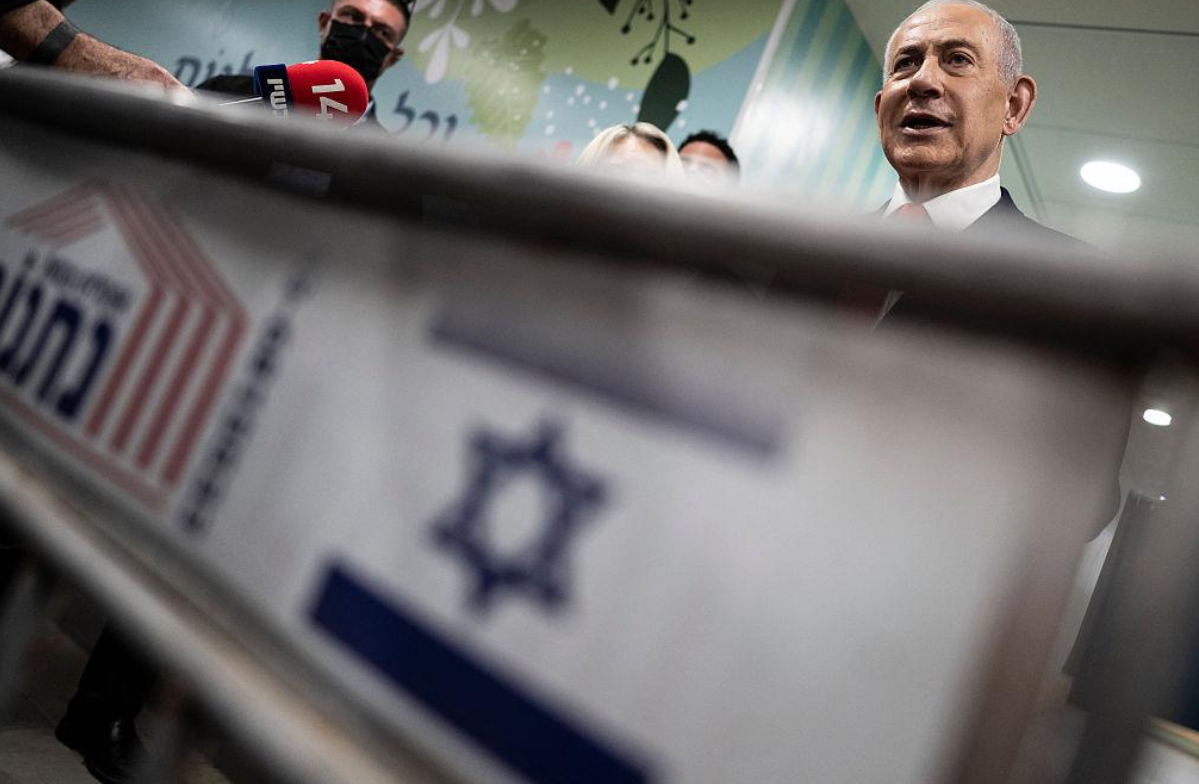
Benyamin Netanyahou’s narrow lead falls short of the 61-seat threshold
Israel’s October 27, 2026, legislative elections delivered a fractured mandate: Benyamin Netanyahou’s Likoud party secured 27 seats, making it the largest faction in the Knesset, but his bloc totaled just 53 seats—12 short of the 61 needed for a majority. This outcome reflects a dramatic erosion from his previous coalition’s 68-seat stronghold, underscoring deep political divides following years of internal strife, military conflict, and public dissent. With opposition leader Gadi Eisenkot’s coalition holding 48 seats and Arab-majority parties—including the Joint List and Ra’am—claiming 19 seats, the new parliament presents an unprecedented balance of power.
Why a weakened Netanyahou threatens Israel’s political stability
The absence of a clear majority forces Netanyahou to navigate uncharted territory. His traditional coalition partners—nationalist and ultra-Orthodox factions—now face pressure to compromise, while opposition blocs eye potential alliances that could sideline Likoud. Scenarios range from a minority government to a rare unity coalition, but each path carries risks: ideological clashes, legislative gridlock, or even a return to the polls. The political fragility also emboldens Arab parties, whose historic gains position them as kingmakers but whose inclusion remains a non-starter for many Zionist factions.
Gaza’s fate hangs in the balance amid coalition limbo
The post-election landscape leaves Gaza’s reconstruction, Israeli security, and Palestinian governance in limbo. Netanyahou’s likely return to power with hardline partners could perpetuate current security policies, including strict measures against Hamas and West Bank settlements. Conversely, a coalition led by Eisenkot might pursue diplomatic avenues, though broad opposition to concessions on Palestinian statehood limits radical shifts. For Palestinians, the election outcome offers no immediate relief; instead, it highlights how Gaza’s future hinges on the fragile alliances that will shape Israel’s next government.
A fractured parliament’s impact on regional security dynamics
Israel’s political instability reverberates beyond its borders. The government’s ability to address Iran’s nuclear ambitions, Hezbollah’s military posturing in Lebanon, and Syria’s shifting alliances may weaken under partisan divisions. While national security enjoys bipartisan consensus, a divided Knesset could delay decisive responses to regional threats, increasing the risk of miscalculation or escalation. The uncertainty also complicates Washington’s calculations, as U.S.-Israel relations—critical for military and diplomatic coordination—face potential friction over Gaza and broader Middle East strategies.
Arab capitals weigh the fallout of Israel’s election deadlock
Regional actors, including Saudi Arabia, the UAE, Egypt, and Jordan, are recalibrating their engagement with Israel. Riyadh’s normalization talks, contingent on Palestinian conditions and regional stability, may stall if Jerusalem lacks a cohesive government. Conversely, a coalition open to negotiations could revive dialogue, though meaningful progress remains unlikely without fundamental shifts in Israeli policy. The election’s outcome thus serves as a litmus test for Arab-Israeli relations, where progress is often hostage to domestic political storms.
Three paths forward: survival, stalemate, or a new vote
- Netanyahou’s survival: Securing fragile alliances with nationalist or ultra-Orthodox parties to cobble together a minority government, risking legislative paralysis.
- An opposition-led coalition: Eisenkot’s bloc and Arab parties exploring uncharted territory, despite ideological divides.
- A return to elections: If negotiations collapse, a repeat vote could deepen polarization or force a reshuffling of alliances.
Netanyahou’s victory without power marks a turning point for the Middle East
Israel’s election has not just reshaped its political map—it has exposed a society divided on security, governance, and national identity. With no party commanding a majority, the next government’s composition will determine whether Israel leans toward confrontation or compromise. For the Middle East, the stakes are existential: Gaza’s recovery, Iran’s nuclear ambitions, and the fragile Arab-Israeli détente all hinge on Jerusalem’s next moves. Netanyahou’s mandate, though technically leading, offers no guarantees of stability. Instead, it marks the beginning of a high-stakes game where Israel’s internal fractures could redraw the region’s geopolitical fault lines.