
The paradox is striking: a nation that exports millions of barrels of crude oil while its own citizens scramble to fuel their vehicles. This is the uncomfortable reality confronting Niger’s transitional government under General Abdourahamane Tiani as the country grapples with a deepening fuel crisis. Despite boasting of energy sovereignty, the state now finds itself repeatedly importing gasoline and diesel to meet domestic demand a situation that raises critical questions about governance, infrastructure, and policy execution.
From oil producer to fuel importer: the widening gap in Niger’s energy strategy
Since 2011, Niger has operated the Agadem oil field and the Zinder refinery (SORAZ). With daily crude production reaching over 110,000 barrels in 2024 of which 90,000 are exported and 20,000 refined domestically one might expect a stable supply of refined products. Yet, recent official figures reveal a widening gap between production and availability on the local market.
Data released by Petroleum Minister Hamadou Tini in October 2026 showed a dramatic rise in the gasoline deficit: from 47.25 million liters in 2024 to 159.74 million in 2025, and 196.62 million liters in the first eight months of 2026. Diesel shortages also worsened, reaching 52.60 million liters during the same period. These figures are not mere anomalies they signal a systemic failure in aligning production, refining, storage, and distribution within the domestic energy chain.
Why domestic oil wealth hasn’t translated into energy security
The crisis exposes a structural imbalance: Niger produces oil but struggles to ensure consistent availability of refined fuels. Despite the refinery’s operational status, output falls short of national demand. This discrepancy raises pressing concerns: insufficient refining capacity, financial constraints among downstream operators, bottlenecks in distribution networks, or a combination of all three.
While SORAZ continues to supply the National Oil Products Distribution Company (SONIDEP), the gap between supply and demand persists. The result? Long queues at gas stations, disrupted transportation, stalled businesses, and economic slowdowns especially in sectors reliant on road freight and mobility.
Algerian cooperation: a lifeline or a symptom of deeper governance failures?
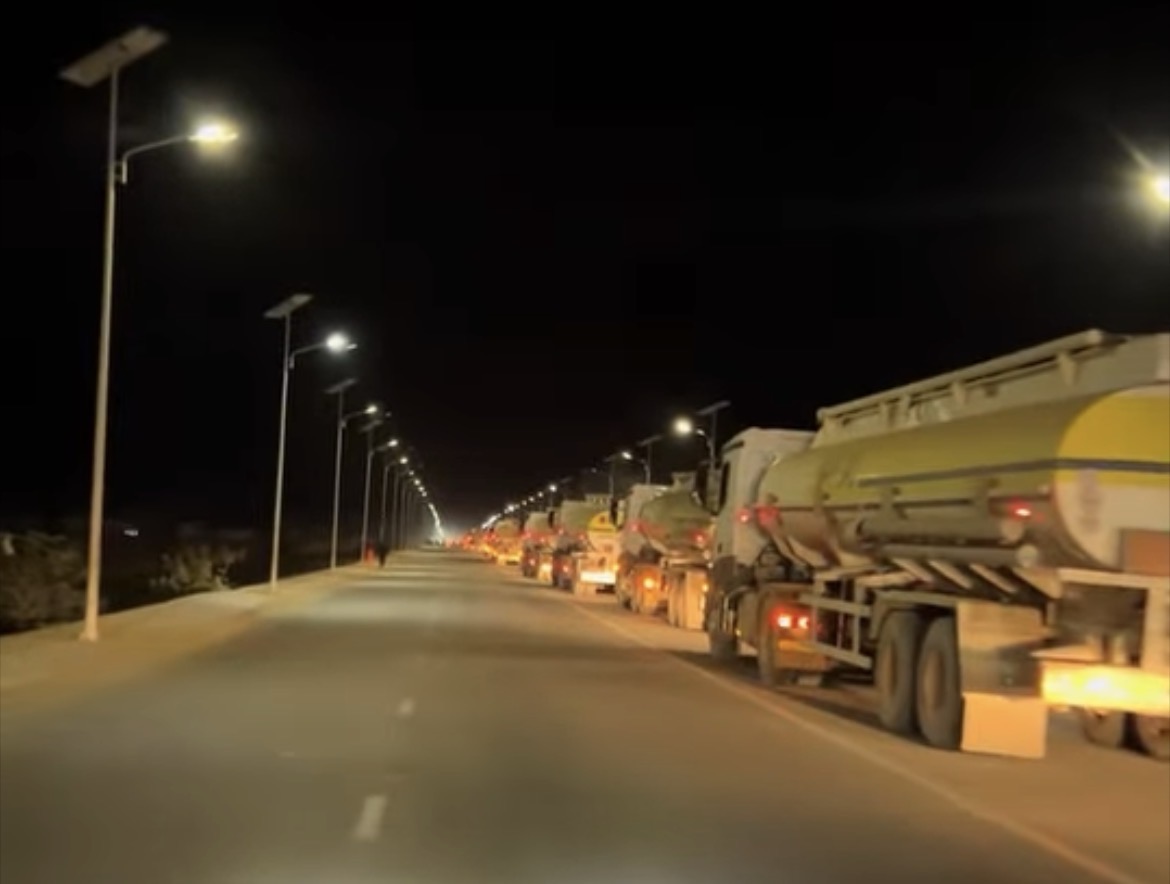
In response to the shortage, Niger turned to Algeria. On March 24, 2026, Niamey and Algiers signed a hydrocarbon cooperation memorandum, followed in June by three agreements between SONIDEP and subsidiaries of Algeria’s Sonatrach. These accords aim to restore fuel supplies, including the arrival of 53 tanker trucks carrying 1.65 million liters of gasoline and diesel on November 1, 2026.
While international cooperation is not inherently problematic, the opacity surrounding these deals raises red flags. What are the financial commitments? What price has Niger agreed to pay? Are there long-term supply guarantees or compensatory mechanisms? Without clarity, citizens are left to question whether such agreements are truly in the national interest or whether they mask deeper inefficiencies in Niger’s own energy sector.
The financial dimension: how debt within the oil chain deepened the crisis
Another layer of the problem lies in the financial health of the petroleum ecosystem. In October 2026, the government announced the creation of a technical committee to address supply crises and restructure inter-company debts involving SONIDEP, SORAZ, the Niger Electricity Company (NIGELEC), and China National Petroleum Corporation (CNPC). The goal: a three-month plan to resolve outstanding obligations and restore liquidity.
This initiative highlights a paradox: a sector positioned as a key revenue source for the state has accumulated financial liabilities that now threaten its operational continuity. Transparency is essential. The public deserves full audits, clear identification of responsibility, and verifiable corrective measures not vague accusations of irregularities or shadowy “oil mafias.”
Human and economic toll: who pays the price of energy mismanagement?
The consequences of this crisis are not theoretical they are immediate and widespread. Taxi drivers spend hours searching for fuel. Shopkeepers lose sales due to delayed deliveries. Artisans with generators face prolonged downtime. Small businesses, transporters, and informal workers bear the brunt of an unreliable supply chain.
These disruptions reveal a fundamental truth: natural resources hold real value only when they improve daily life. For the Tiani administration, which has prioritized national sovereignty, the fuel crisis presents a harsh test of credibility. If oil wealth does not translate into reliable energy access, what purpose does sovereignty serve?
Energy sovereignty isn’t declared it’s delivered through action
Since assuming power in July 2023, General Tiani has framed sovereignty as a cornerstone of governance. Yet the petroleum sector now exposes critical gaps: persistent fuel shortages, continued reliance on imports, inter-institutional debt, and murky terms in international agreements.
The November 1 import shipment from Algeria may offer short-term relief, but it does not resolve structural issues. Niger’s energy future requires more than export volumes and diplomatic accords. It demands transparent management, an efficient distribution network, coherent financial policies, and a strategy aligned with the needs of its people.
The true test of Niger’s energy sovereignty lies not in official rhetoric or exported crude but in the ability of citizens to fuel their vehicles, power their businesses, and move freely without interruption. Until then, the regime’s claims ring hollow, and the crisis will continue to challenge both its competence and legitimacy.
By Henri Nkeng — Journalist