
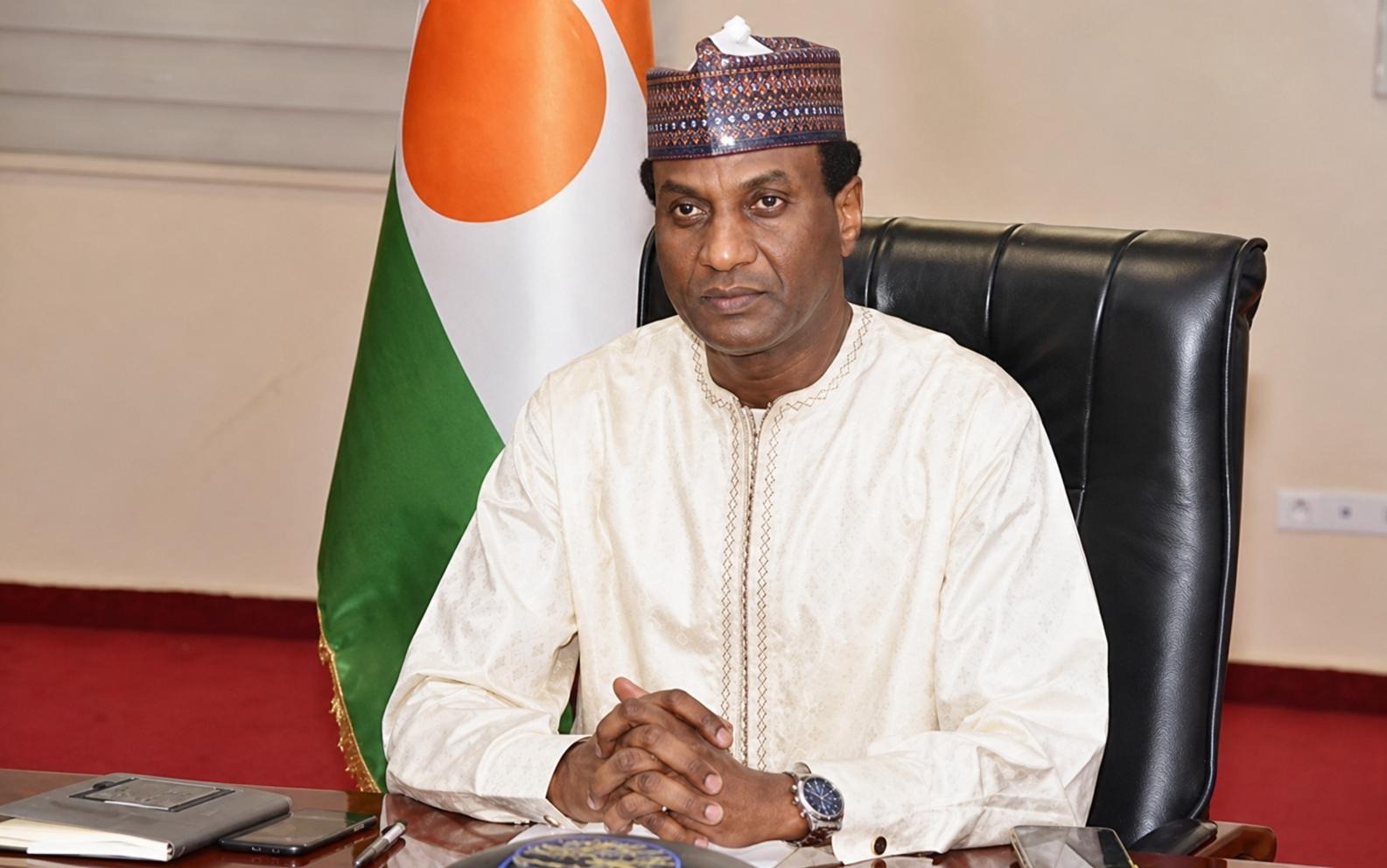
In the shifting sands of Niger’s transitional military regime, the line between trusted ally and potential threat can blur with alarming speed. The recent whispers swirling around Prime Minister Ali Mahamane Lamine Zeine have thrust into the spotlight the precarious position of civilian leaders navigating the complex power structures of a junta-led state.
Observers within the Prime Minister’s inner circle report growing unease as stringent new security protocols are implemented around the economist. His entire close protection detail has been abruptly replaced, while even the most trusted visitors now face mandatory physical searches before gaining access to his presence. Authorities have attributed Lamine Zeine’s prolonged absence from official duties to a severe bout of malaria, yet behind closed doors, speculation intensifies about his possible house arrest, fueled by persistent rumors of an imminent resignation.
A pattern of containment
The political calculus behind these measures reveals a deliberate strategy of gradual marginalization. In systems where military leadership holds absolute sway, information control becomes a crucial governance tool. The lack of transparent communication naturally fuels speculation, particularly when security arrangements for a civilian figure appear designed more for confinement than protection.
This approach follows a well-established pattern in Sahelian military transitions: the doctrine of absolute conformity. When technocrats or civilian leaders hesitate to endorse strategic decisions or ideological shifts imposed by uniformed authorities, the security apparatus swiftly moves to neutralize dissent. Rather than risk public dismissal—potentially damaging the facade of national unity—juntas often employ subtle containment tactics, restricting movement and monitoring communications.
The calculus of controlled power
Such methods offer significant political advantages. By maintaining a leader in office while systematically stripping away decision-making authority, military authorities preserve the illusion of institutional continuity while consolidating real control. This approach also allows the regime to gauge potential reactions from domestic audiences, international partners, and internal factions before taking more decisive action.
The case of Lamine Zeine raises critical questions about the genuine autonomy of civilian officials within military-led transitions. Across several Sahelian nations, technocrats are frequently appointed to reassure donors, manage economic balances, and project an image of structured governance. Yet this administrative legitimacy often remains contingent upon unquestioning political loyalty to the military command.
Regional echoes of a familiar dynamic
The current situation in Niger mirrors similar developments elsewhere in the Sahel. From the challenges faced by Choguel Maïga in Mali to the power dynamics surrounding Apollinaire Kyélem de Tambèla in Burkina Faso, the underlying principle remains unchanged: civilian politicians serve as economic buffers or diplomatic fig leaves. Should they introduce even minor friction into the military command’s decision-making processes, swift retaliation becomes inevitable.
In these contexts, enhanced surveillance serves a dual purpose. It prevents potential conspiracies while simultaneously broadcasting a clear message to the entire state apparatus: no official, regardless of rank, operates beyond the watchful eye of the military leadership. Replacing a close protection team, limiting access points, or intensifying contact filtering thus become political signals as much as security measures.
For Ali Mahamane Lamine Zeine, the challenge now extends beyond routine governance. He must navigate a labyrinth of suspicion where every movement is scrutinized and every silence dissected. More broadly, this episode underscores a harsh truth about military-led transitions: while civilian leaders may occupy visible positions in the hierarchy, their actual power remains fragile and conditional, constantly subject to the military’s approval.
The institutional facade thus conceals a more brutal reality: in exceptional regimes, trust in civilian leaders is not absolute but provisional, subject to the ever-watchful gaze of those in uniform.