
Inaugural seminar kicks off Côte d’Ivoire’s sustainable development initiative
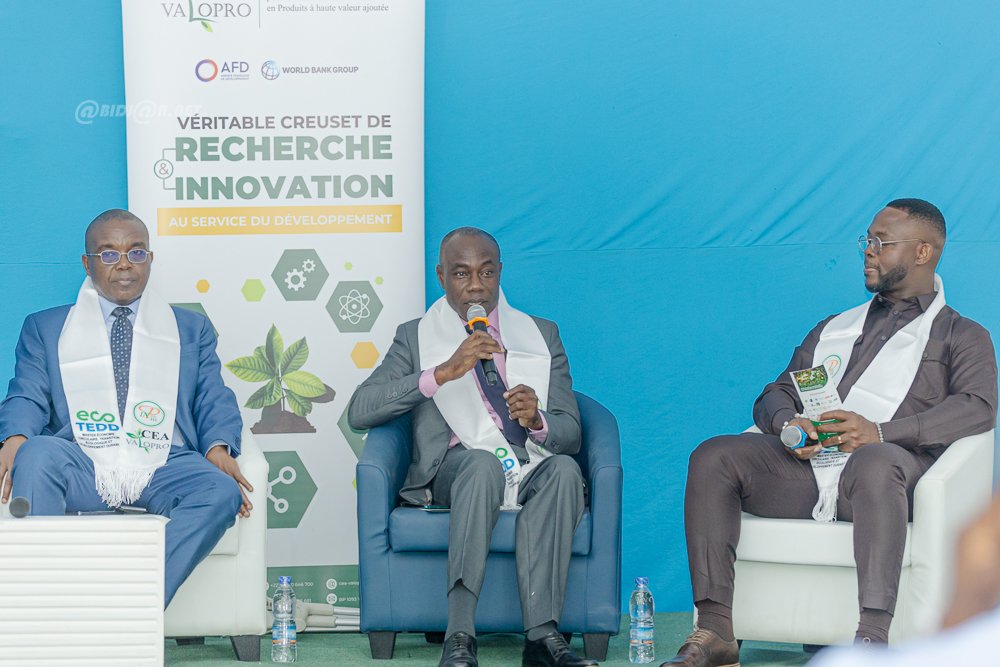
The Institut National Polytechnique Félix Houphouët-Boigny (INP-HB), through its CEA VALOPRO division, officially launched the Master in Circular Economy, Ecological Transition and Sustainable Development (ECOTEDD) during an inaugural seminar held in Abidjan’s Angré district on May 16, 2026.
The event, themed “Sustainable Africa, Resilient Côte d’Ivoire: RSE and Circular Economy as Drivers of a New Development Model”, brought together national and international experts, public policymakers, private sector leaders and technical partners to address critical challenges in ecological transition and economic model transformation across the continent.
Economic circularity emerges as African solution to environmental challenges
Professor Benjamin Yao, coordinator of CEA VALOPRO, set the tone by emphasizing the strategic importance of this initiative, designed to deliver high-value content while making environmental expertise more accessible to media outlets. During panel discussions, experts examined Africa’s pressing environmental issues, including waste management, deforestation, energy transition and the hurdles in accessing climate financing.
Professor Yao positioned circular economy as uniquely suited to African realities: “Circular economy preserves value creation. What we call waste today can become tomorrow’s wealth,” he explained, citing concrete examples from agricultural product valorization in cashew and cocoa supply chains.
He strongly advocated against Western model replication, stressing the need for contextually appropriate solutions: “We must develop simple, effective and sustainable approaches tailored to our African context.”
Corporate social responsibility gains traction as market access requirement
The seminar also highlighted the current limitations of Corporate Social Responsibility (RSE), which remains insufficiently embedded in organizational strategies. Panelists noted a growing trend where RSE is becoming a prerequisite for public market access, urging companies to move beyond mere communication and integrate these principles into their core governance structures.
On climate financing, experts identified a paradox: while substantial funds exist, they remain largely inaccessible due to cumbersome procedures. “The resources are available, but the technical processes are prohibitive,” they cautioned, emphasizing the need to develop local expertise capable of preparing internationally compliant project proposals.
First cohort commits to transformative sustainable development
Abraham Bosson, spokesperson for the inaugural class, articulated the students’ determination to contribute actively to development model transformation. “We envision an Africa that innovates, leverages local resources and builds sustainable development aligned with its realities,” he stated.
Highlighting his generation’s responsibility, he added: “We bear a historic responsibility to become change agents capable of implementing innovative, sustainable projects for our nations.”
The ECOTEDD Master’s program extends beyond academic frameworks, focusing on tangible impact: “Our goal isn’t just learning—it’s creating measurable change within our companies, institutions and communities,” Bosson explained.
The two-year program, offered online with stringent admission criteria, aims to train a new generation of specialists in waste valorization, RSE implementation, climate finance and environmental project development, with a strong practical orientation.
Through this initiative, INP-HB seeks to cultivate qualified human capital capable of effectively addressing Côte d’Ivoire’s and Africa’s sustainable development challenges.
The organizers anticipate launching the next call for applications within weeks, aiming to amplify this momentum toward a more circular, inclusive and resilient economy.