
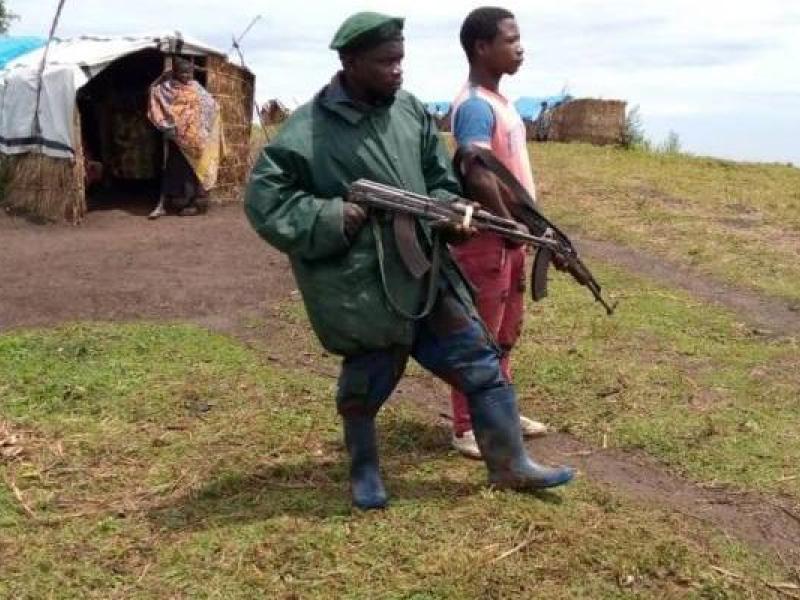
CRP/FRP of Thomas Lubanga fails to gain armed group support in Ituri
- Security
The Convention for Popular Revolution/Forces for Popular Revolution (CRP/FRP), led by Thomas Lubanga—a former International Criminal Court (ICC) convict accused of fueling instability in Ituri, eastern Democratic Republic of Congo—remains isolated from mainstream armed groups, according to the latest United Nations expert report on the DRC.
Released to our editorial team on July 1, 2026, the UN experts’ document, submitted to the UN Security Council, notes that since its official launch on January 10, 2025, the CRP/FRP has consistently opposed government authority and advocated for regional autonomy.
The report highlights that in a strategic shift to align with broader regional trends and avoid isolation, Thomas Lubanga publicly endorsed the Alliance of Democratic Forces for the Liberation of Congo (AFC/M23) on July 16, 2025. However, the document explicitly states:
“As of the report’s drafting, no official cooperation between the CRP/FRP and AFC/M23 had been documented.”
The CRP/FRP leadership includes former warlords, political figures, and local leaders from Ituri, many of whom live in exile in Uganda and some registered as refugees. The group is currently led by Lobho Gokpa Justin, a former colonel in the Congolese Armed Forces (FARDC).
Internal divisions have weakened the CRP/FRP’s cohesion. A leadership crisis in November 2025 significantly eroded its structure, with membership shrinking from approximately 300 fighters to fewer than 1,000. Recruitment efforts have primarily targeted the “G5” community, with a majority of fighters hailing from the Hema ethnic group—some former members of the M23. The group has also attempted to recruit from displacement camps in Ituri and refugee settlements in Uganda.
From January 2026, Innocent Kaina—subject to international sanctions—collaborated with the CRP/FRP, recruiting individuals from Ugandan refugee camps, including former M23 combatants. Despite these efforts, the CRP/FRP has struggled to secure broad-based support among other armed factions or Ituri communities. Notably, attempts to recruit young Lendu fighters have yielded minimal results.
Thomas Lubanga Dyilo, a convicted war criminal released from prison in 2020 after serving a 14-year sentence for war crimes—including the conscription and use of child soldiers—founded the CRP in January 2025. The movement positions itself as a response to what it describes as systemic failures in governance, citing corruption, kleptocracy, and widespread human rights abuses in Ituri over eight years.
The CRP/FRP’s rhetoric centers on allegations of state failure to protect civilians and guarantee their security, pointing to mass displacement, refugee crises, sexual violence, and systematic destruction of property in Ituri. The group also accuses military governance under the state of siege of exacerbating insecurity by manipulating and sponsoring armed factions to maintain political dominance and facilitate illicit mining operations.
Since his ICC conviction in 2012 and subsequent release in 2020, Lubanga was later appointed to a presidential task force tasked with promoting peace and dissuading communities in Ituri from joining armed groups. Despite extensive field missions, these efforts yielded limited results, and Lubanga’s bid for a parliamentary seat in Ituri was ultimately invalidated.