
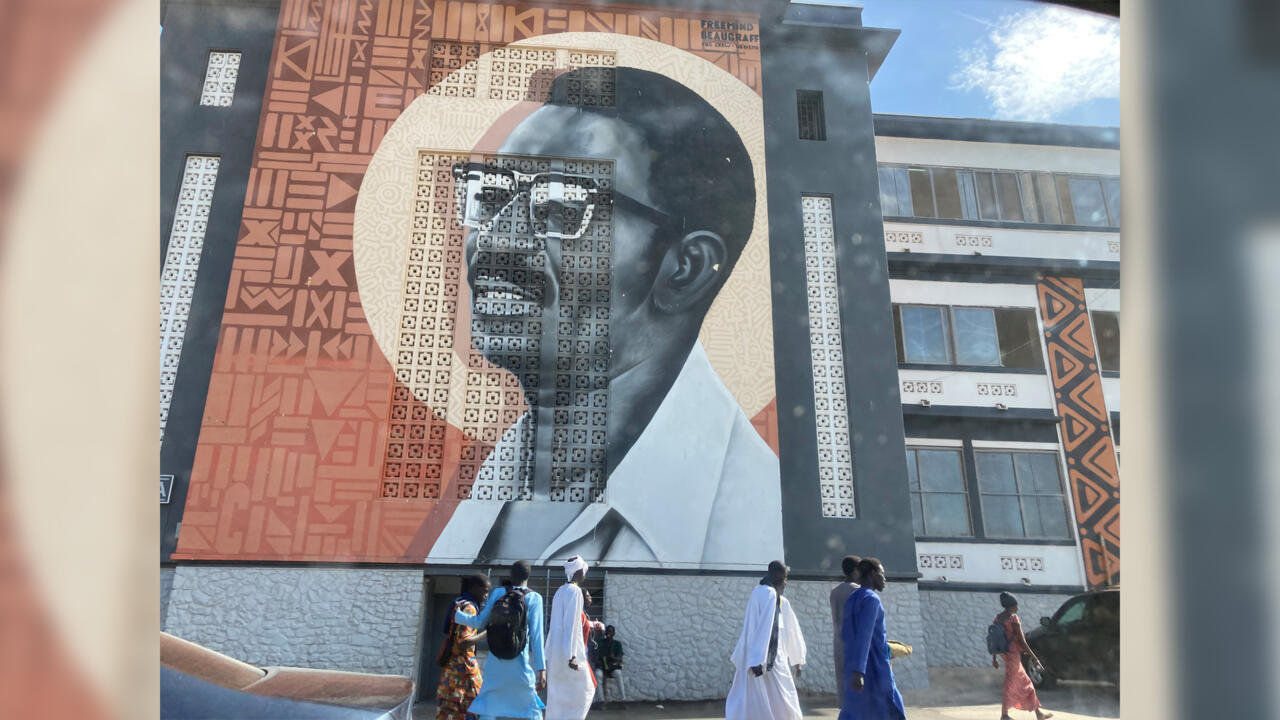
In the 1970s, Dakar’s university stood at the heart of a fierce intellectual divide. While President Léopold Sédar Senghor’s Négritude philosophy dominated Senegal’s post-independence landscape, another voice challenged it from within the same campus walls. That voice belonged to Cheikh Anta Diop, a towering scholar whose vision for Africa’s rebirth clashed sharply with the prevailing narrative. Today, the university bears his name—a testament to his enduring intellectual legacy, though his ideas remain as contentious as ever.
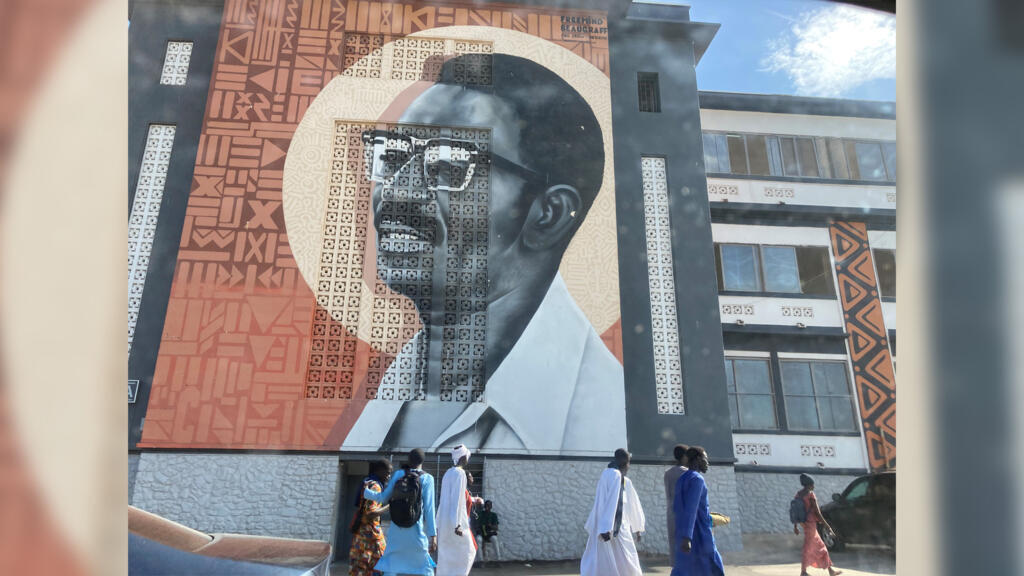
Cheikh Anta Diop, whose groundbreaking work Nations nègres et culture was published in 1955, argued that ancient Egypt was a Black African civilization—a claim that undermined the Négritude movement’s emphasis on emotion over reason. His 1970s-era debates with Senghor weren’t merely academic; they were a clash of foundational visions for Africa’s future.
“For Senghor, emotion was Black, reason Hellenic,” explained historian Buuba Diop, who studied at the university during that era. “Cheikh Anta Diop couldn’t agree with that. He believed Africa’s rebirth had to start from the truth of its ancient Egyptian roots.” Sociologist Fatou Sow, another student at the time, recalled the tension: “The Egyptian question was central. Senghor rejected the idea of Africa’s Egyptian origins. He respected Diop’s brilliance but loathed his ideas—yet they kept responding to one another.”
Between exile and recognition
Despite his intellectual prowess, Diop faced systematic exclusion. The university where he worked denied him a teaching position until 1981. Relegated to the Fundamental Institute of Black Africa (IFAN), he established a carbon-14 dating laboratory that merged nuclear physics with research into Africa’s origins. Even his rare campus appearances were restricted. Sow described one pivotal moment: “The Association of African Historians held a conference on ancient antiquity and the Mediterranean. Diop wasn’t on the program. Students intervened, insisting he be invited. When he finally spoke, no one moved—he delivered his talk alone. It was a historic moment.”
Diop’s death in 1986 prompted belated recognition: the university was renamed in his honor the following year, as was IFAN. Yet his advocacy for Wolof as an academic language remains unfulfilled. “Recognition came too late,” Sow reflected. “The university bearing his name still hasn’t integrated the language he fought for.”
A legacy that endures
The rivalry between Senghor’s Négritude and Diop’s Afrocentric vision shaped Senegal’s intellectual landscape. While Senghor’s philosophy emphasized cultural pride through French-language poetry, Diop championed scientific rigor and the reclamation of African history. His ideas, once marginalized, now resonate globally—but on the campus that bears his name, his presence lingers more as a symbol than a living academic force.
In the 1970s, the university was already a battleground for ideas. Today, it stands as a monument to a debate that remains unresolved—a testament to the power of intellectual courage in the face of institutional resistance.