
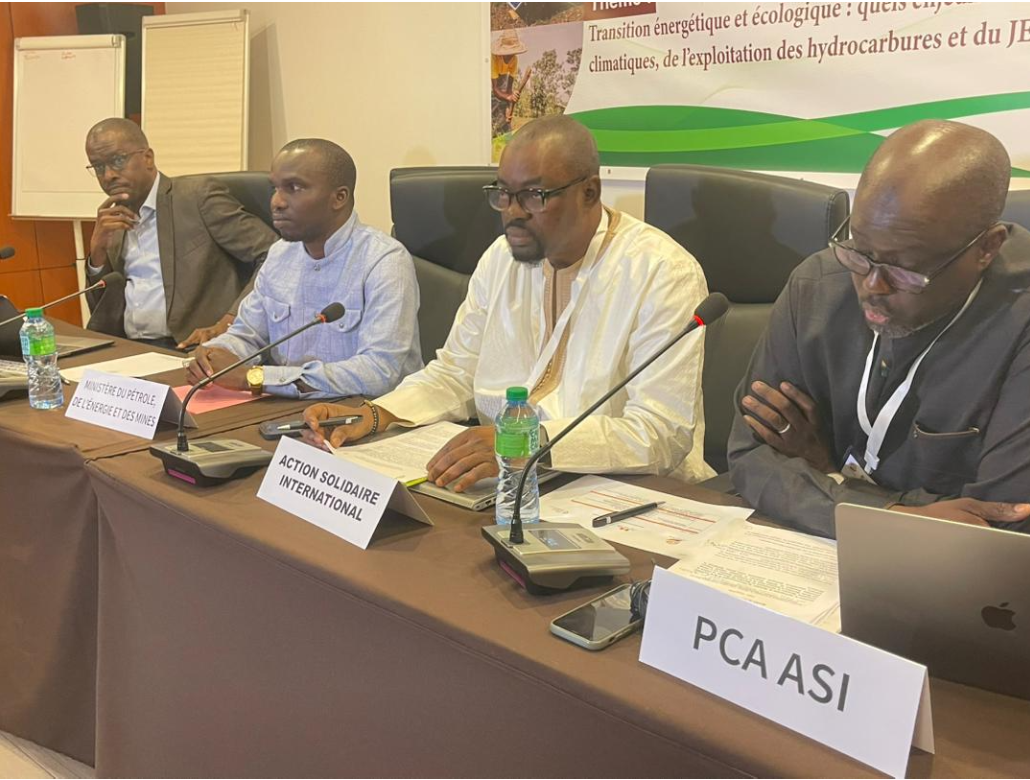
The fourth edition of the Environment and Energy University kicked off this Tuesday in Dakar, bringing together a diverse assembly of specialists, researchers, policymakers, civil society representatives, and technical partners all focused on Senegal’s ecological and energy transition.
The two-day event, taking place on May 19 and 20, is designed to spark meaningful discussions on sustainable energy solutions amid growing climate challenges and the evolving landscape of oil and gas extraction in the country.
The opening ceremony was led by Dr. Elhadji Ndiaye, a delegate from the Ministry of Petroleum, Energy and Mines. Key institutions like the National Agency for Renewable Energies (ANER), the Senegalese Rural Electrification Agency (ASER), academic experts, and multiple NGOs actively contributed to the proceedings.
Dr. Elhadji Ndiaye opened his remarks by highlighting how energy and environmental concerns have evolved beyond niche discussions to become central pillars of Senegal’s economic, social, and sustainable development agenda.
Energy as a driver of progress
In his address, he emphasized the pivotal role of energy in boosting economic productivity, fostering innovation, generating employment, and improving living standards across the nation.
Mamadou Barry, President of Action Solidarité Internationale and coordinator of the event, underscored the urgent need for concrete action to accelerate Senegal’s ecological transition.
He warned that while rising temperatures and erratic rainfall patterns intensify flooding, coastal erosion, and crop losses, awareness of sustainable development remains insufficient among both communities and decision-makers.
“Senegal is experiencing the harsh realities of climate change—repeated flooding, encroaching seas, and shrinking harvests. This demands a fundamental rethink of our development strategies,” he declared.
Barry called for a balanced approach that integrates hydrocarbon production with renewable energy expansion, ensuring energy sovereignty without compromising climate commitments.
“The dawn of oil and gas production in Senegal must not slow our commitment to cleaner energy. The future lies in dual progress,” he stressed.
He also advocated for stronger involvement of climate-vulnerable communities in shaping environmental policies, ensuring their voices are central to shaping a resilient, sustainable future.