
diplomatic outreach: Félix Tshisekedi sends key message to Angola amid regional peace talks
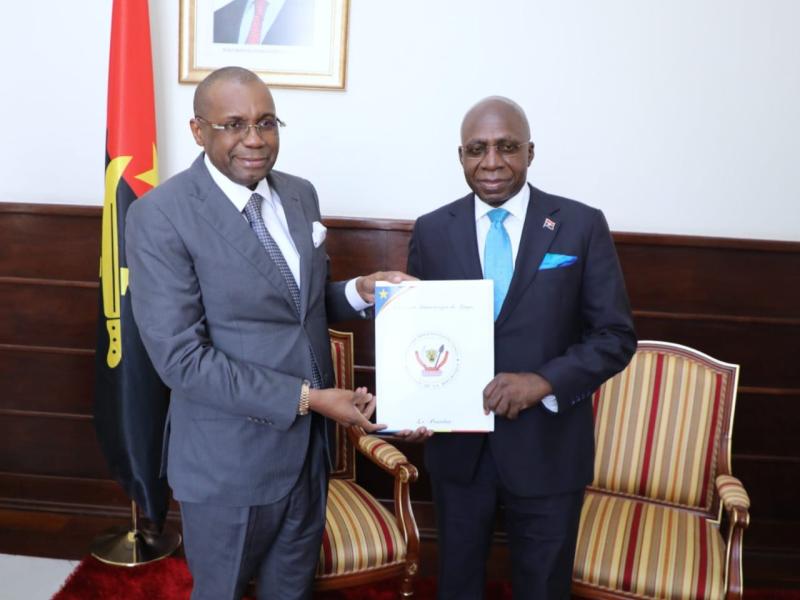
The President of the Democratic Republic of Congo, Félix Tshisekedi, has delivered an official message to his Angolan counterpart, João Lourenço, marking a new phase in high-stakes regional diplomacy. The communication, entrusted to Ambassador Antoine Ghonda Mangalibi, was formally handed over to Tete António, Angola’s Minister of External Relations, in Luanda.
The exchange takes place against a backdrop of escalating tensions in eastern DR Congo, where the M23 rebellion—backed by neighboring Rwanda—continues to control large parts of North Kivu and South Kivu. Despite ongoing peace initiatives in Washington and Doha, no durable resolution has yet emerged, leaving civilians and local authorities under severe strain.
Beyond bilateral relations, the message underscores the urgent need for coordinated regional responses to the crisis. Kinshasa and Luanda have been at the forefront of diplomatic efforts, engaging in regular consultations on both economic cooperation and broader peace and security challenges in the Great Lakes region. This latest move follows a series of high-level meetings, including President Tshisekedi’s recent visit to Brazzaville to confer with Congolese counterpart Denis Sassou Nguesso. The visit came shortly after Burundian President Évariste Ndayishimiye, then Chair of the African Union, conducted similar consultations in Kinshasa with religious leaders and opposition figures.
The timing of the communication is particularly significant. In February 2026, regional leaders meeting in Luanda designated Angola to lead follow-up consultations with Congolese stakeholders ahead of a planned inter-Congolese dialogue. The initiative was announced after a summit involving President Lourenço (then AU Chair), President Tshisekedi, Togolese Prime Minister Faure Gnassingbé (appointed AU mediator), and former African heads of state Olusegun Obasanjo. Since then, Kinshasa and Luanda have maintained close diplomatic contact, though tangible progress has been slow. Sources indicate that disagreements persist over the format and participants of the proposed dialogue, leaving the process stalled.
As President Tshisekedi approaches the midpoint of his current term, the move signals a renewed commitment to regional leadership on peace and governance. The message, while its contents remain undisclosed, is widely seen as part of a broader strategy to stabilize the region and address both immediate security threats and long-term political reforms. With the country’s constitutional debate still unresolved and regional tensions high, the diplomatic gesture highlights the delicate balance between domestic priorities and international obligations.
- Politics