
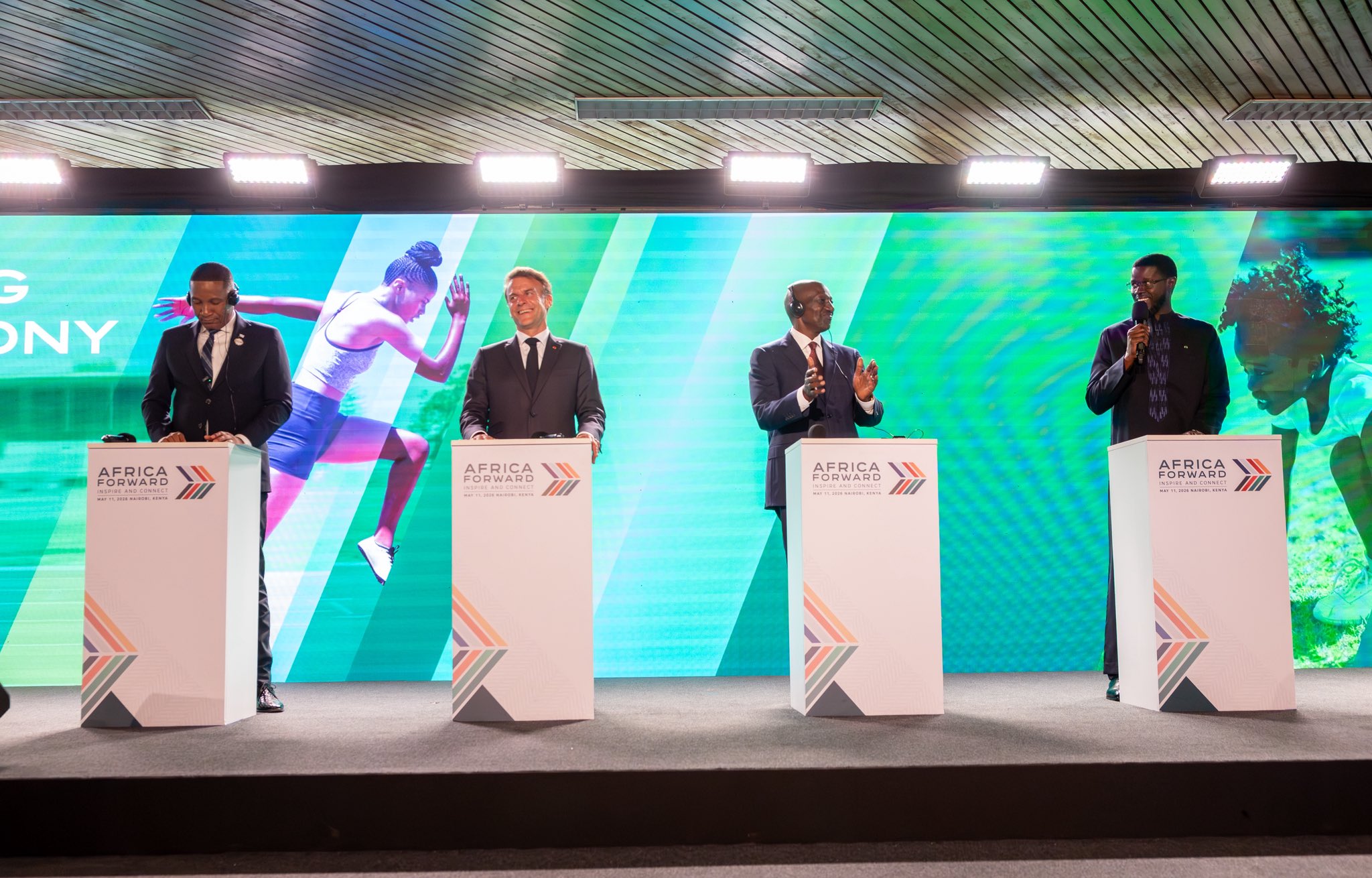
During a high-profile diplomatic gathering in Nairobi, the unexpected clash between Senegal and Morocco over the African Cup of Nations final took center stage—though no Moroccan officials attended the sports session. President Bassirou Diomaye Faye of Senegal seized the moment to celebrate his nation’s continental triumph, a move that drew cheers from the audience but left Patrice Motsepe, president of the Confederation of African Football (CAF), visibly uncomfortable. French President Emmanuel Macron observed the scene with amusement, as reported by a firsthand account.
The controversy stems from the disputed final in Rabat on January 18, where Senegal claimed a hard-fought 1-0 victory in extra time. Yet, on March 17, the CAF Appeals Committee controversially awarded the match to Morocco by default (3-0), a decision Senegal labeled a « administrative heist. » The Senegalese Football Federation (FSF) has since filed an appeal with the Court of Arbitration for Sport (TAS) in Lausanne, dragging both the CAF and the Royal Moroccan Football Federation (FRMF) into a prolonged legal battle.
a diplomatic shadow over continental relations
Four months after the chaotic final at the Stade Moulay Abdellah, the fallout continues to strain Senegal–Morocco ties. While Morocco sent its Prime Minister Aziz Akhannouch to discuss industrial and renewable energy initiatives in Nairobi, no high-ranking officials from Rabat participated in the sports-themed discussions. « They chose not to engage, » noted an insider familiar with the situation. Even during the closing plenary, French delegates downplayed any visible tension. Minister Eléonore Caroit stated, « Given the scale of the issue, I expected it to come up—but it didn’t. » Her counterpart, Foreign Minister Jean-Noël Barrot, later acknowledged the dispute was being addressed in bilateral talks, adding, « This isn’t just about football. »
The legal and diplomatic ramifications extend beyond the pitch. A French national, the brother of a Senegal team staff member, was sentenced to three months in prison in Morocco for allegedly throwing a water bottle at security forces during post-match unrest. After clamoring his innocence, he was released on April 18 following an appeal. Meanwhile, three of the 18 Senegalese supporters jailed for violence and property damage were freed the same day, though the remaining 15 remain incarcerated, facing sentences ranging from six months to a year. Their fate now rests solely with King Mohammed VI, who holds the sole authority to grant clemency.
football’s global ripple effect
While both nations insist on preserving their brotherly relationship, the dispute has already left its mark on global football governance. At the FIFA Congress in Vancouver in late April, the International Football Association Board (IFAB) adopted a new rule dubbed the « Pape Thiaw Law »—named after the Senegalese coach who encouraged his players to walk off the field in protest of a controversial penalty against Morocco. The amendment now empowers referees to issue red cards to players who abandon the pitch or to coaching staff who incite such actions. « We wanted to prevent a ‘Senegalization’ of football, » quipped a CAF delegate present at the congress.
With legal battles in Lausanne, political prisoners in Rabat, and diplomatic maneuvering in Nairobi, the African Cup of Nations final has become one of the most protracted sagas in African football history—far from settled, and far from over.