
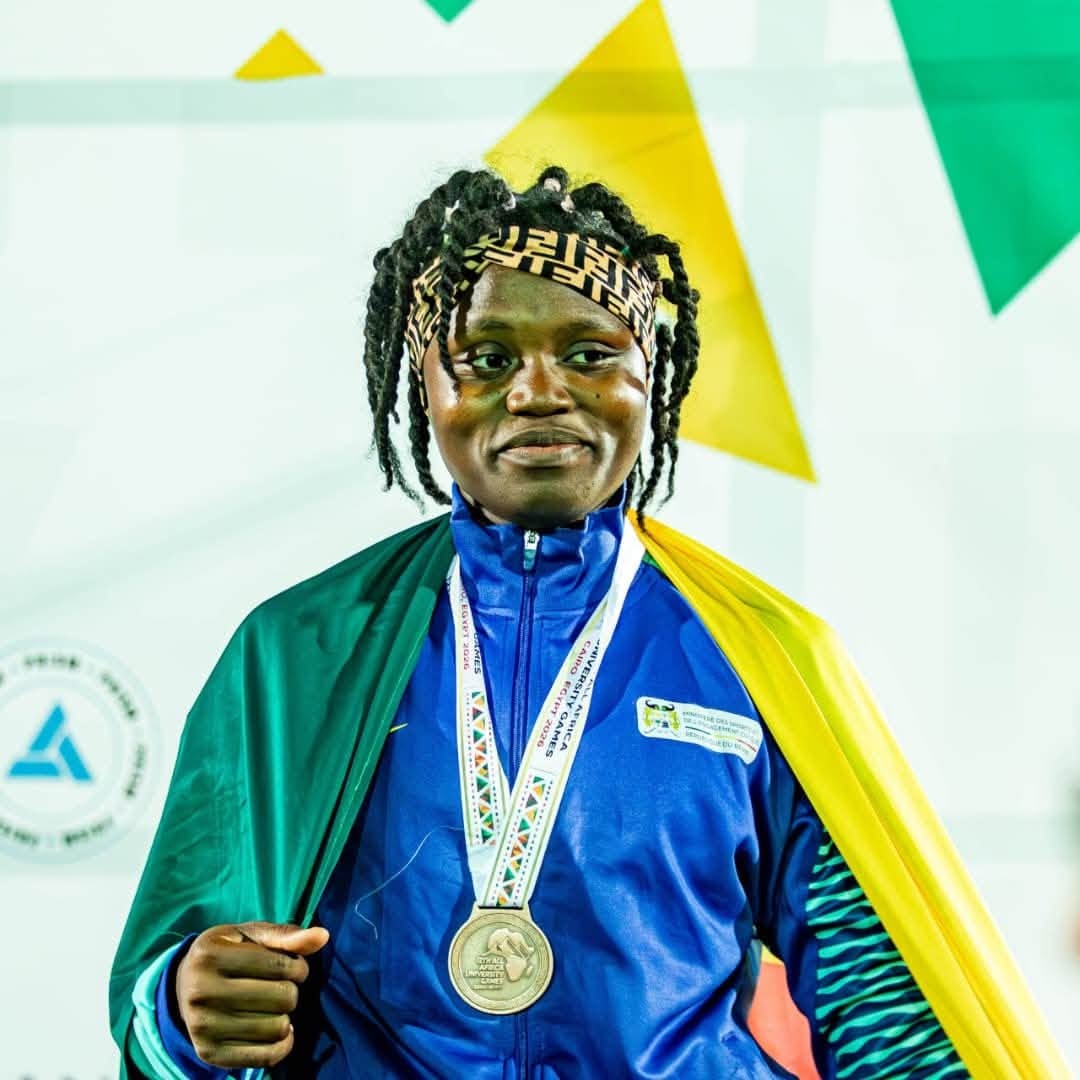
Porto-Novo’s Brigitte Tchede has rewritten the Bénin athletics storybook in Cairo, delivering two medals across different disciplines and igniting a national conversation about what comes next for the West African nation’s sporting ambitions.
Double podium sparks fresh questions over Bénin’s athletic future
The 12th African University Games in Cairo closed on 16 September with a surge of public debate about whether Brigitte Tchede’s historic double has finally positioned Bénin’s athletes on the continental stage. From Porto-Novo to Accra and now to the Egyptian capital, the 26-year-old’s trajectory is being dissected as a potential turning point for the country’s sporting ambitions.
Her silver in the women’s discus, where she shattered her own national record with a 47.08-metre throw, was followed by a second podium finish in an unspecified second discipline—both instantly catapulting her into the spotlight as the delegation’s breakthrough performer.
A record falls and the conversation begins
The discus silver was more than a medal; it was a statement. Tchede’s leap from her May African championships standard of 44.37 m to 47.08 m in Cairo represents a 2.71-metre improvement in less than six months, a gain that resonates far beyond Beninese borders. Athletics followers are already asking whether this is the first ripple of a wave that could lift other Bénin throwers to continental contention.
Sport administrators point to the broader implications: two medals secured before the Games’ conclusion give the country something to build on, but they stop short of calling it a new era. The question now circulating in sports circles and media forums alike is whether Bénin can convert momentum into sustained investment, infrastructure upgrades, and youth-talent pipelines that mirror the achievements of larger athletics nations.
From Accra to Cairo: the measurable leap
Comparing the Ghanaian championships in May with the Egyptian university tournament reveals a pattern of deliberate progress. The same athlete who cleared 44.37 m in Accra returned six weeks later with a personal best and a podium finish in Cairo. Analysts cite structured technical training, targeted competition exposure, and psychological conditioning as key ingredients behind the leap, yet they caution that such gains remain fragile without institutional backing.
What the double medal really means for Bénin
Beyond the personal triumph, the medals Tchede collected in Cairo are prompting a national debate about sport policy, funding models, and the role universities should play in nurturing elite athletes. Social media feeds are buzzing with calls to replicate the support structures that helped her excel, while others question whether two medals in one edition are a fluke or the start of something more durable.
Local commentators are framing the moment as a mirror: it reflects both the potential of individual athletes and the gaps in the national system. The conversation has shifted from celebration to practical questions—how can the federation replicate this success, what financial mechanisms are needed to retain top talent, and whether televised exposure of university competitions can inspire a new generation of throwers.
The polyvalent athlete at the centre of the storm
Tchede’s dual podiums have also spotlighted the advantages of multi-discipline versatility. Athletics federations across the continent value athletes who can compete across throwing events, and her ability to deliver in two different categories has re-energised discussions about cross-training models in Bénin. Coaches and former athletes are already urging youngsters in Porto-Novo and Parakou to adopt a broader technical base rather than specialising too early.
Bénin’s athletics still searching for depth as debate intensifies
While Tchede’s breakthrough is undeniable, the bigger picture remains incomplete. The country lacks depth in middle- and long-distance events and has not yet produced a world-ranking thrower outside the discus. The current debate therefore has two parallel tracks: one celebrates a single athlete’s milestone, the other pressures the system to produce many more Tchede-style success stories.
National federation officials insist the organisation is reviewing its high-performance pathways, including talent identification camps, foreign coaching exchanges, and university partnership programmes. Critics, however, argue that symbolic medals must translate into institutional change if Bénin seeks to climb from the lower half of African athletics rankings.
Next stop: the harvest of public reaction
The fallout from Cairo continues to unfold. Journalists are probing the mood in locker rooms, university corridors, and government offices. Social media hashtags referencing #TchedeEffect are trending, and editorial boards are commissioning opinion pieces on whether the moment can trigger a sports policy overhaul. The question on everyone’s lips is simple: will Brigitte Tchede’s medal haul be remembered as a glorious one-off or as the catalyst that redefines what Bénin can achieve on the continental stage?
As the dust settles on the 2026 African University Games, one thing is clear: the fallout from Tchede’s performances has only just begun, and the next chapter may well determine whether this was merely a flash in the pan—or the dawn of a new chapter for Bénin athletics.