
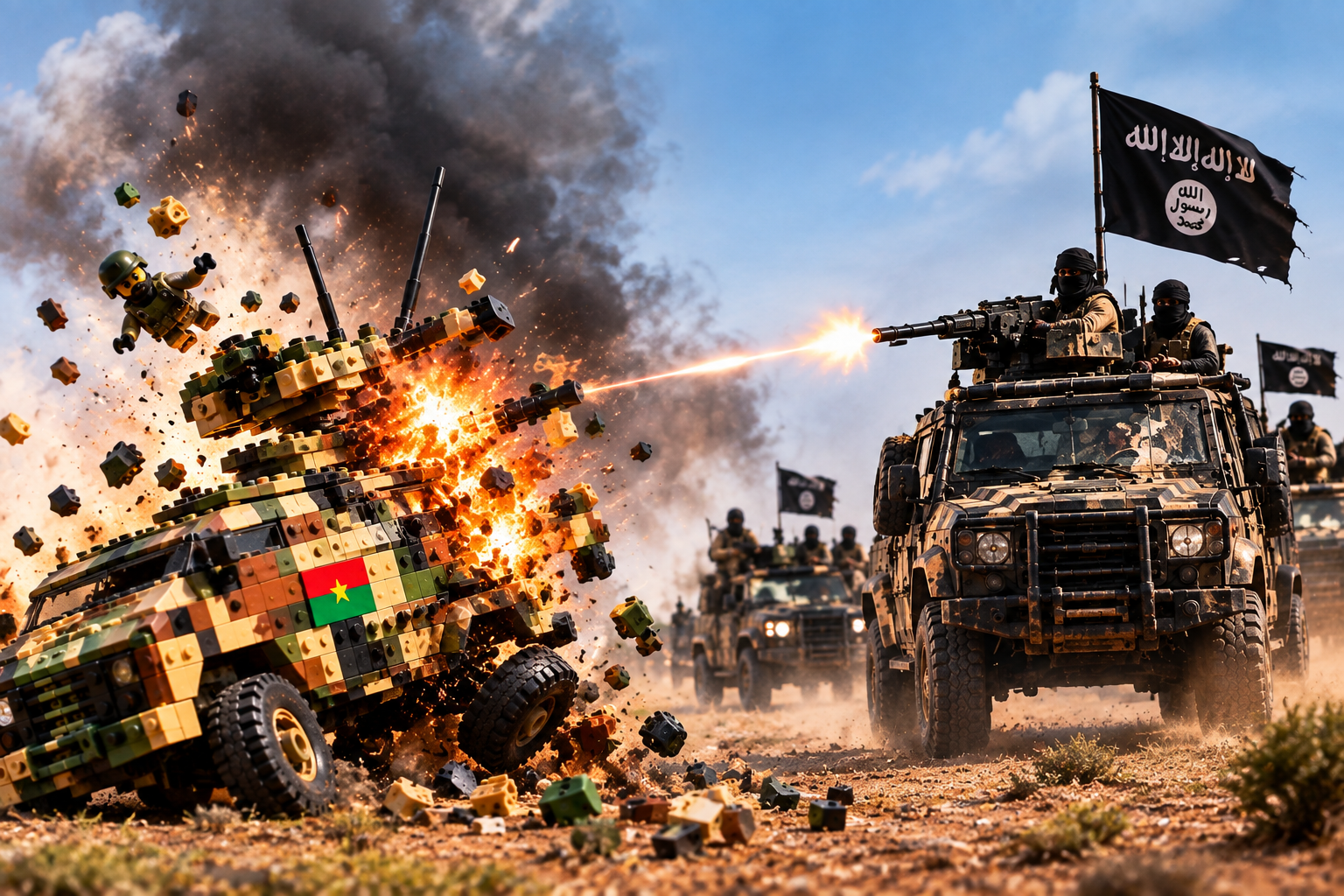
The clash between Burkina Faso’s ambitious military industrialization and the harsh realities of the battlefield has reached a critical juncture. Claims of strategic setbacks are forcing a reckoning over the true effectiveness of the country’s domestically produced armored vehicles.
The recent battles at Mahlou and Winten: a litmus test for national defense
On the morning of September 16, 2026, the Group for the Support of Islam and Muslims (JNIM) asserted control over two positions held by the Volunteers for the Defense of the Homeland (VDP) in the Bam Province, specifically at Mahlou and Winten. While the claims remain unconfirmed independently, the incident has ignited a broader debate about the operational viability of Burkina Faso’s locally manufactured military hardware.
The government of Ibrahim Traoré has championed the nation’s growing defense industry, emphasizing self-sufficiency and indigenous production of military equipment. Official narratives highlight industrialization as a cornerstone of national security policy, promising reduced reliance on foreign suppliers. Yet, the true measure of any military asset lies not in its provenance but in its performance under fire.
From propaganda to practicality: the armored vehicle paradox
Burkina Faso’s military has showcased its armored vehicles in carefully orchestrated demonstrations, presenting them as a symbol of technological progress and national pride. However, the transition from exhibition to real-world combat is where the rubber meets the road. Critics have wryly compared these vehicles to Lego sets — easy to assemble and impressive in theory, but prone to disintegration under pressure.
The JNIM’s recent gains at Séguénéga and Bourzanga in mid-August underscore a troubling pattern. Despite recapturing certain areas, maintaining control has proven difficult, raising questions about the endurance and reliability of both personnel and equipment. The latest incidents at Mahlou and Winten could further erode confidence in the narrative of rapid military expansion.
Public and political fallout: where do we go from here?
The fallout from these events has sparked intense public and political debate. Supporters of the government’s industrialization efforts argue that the challenges are part of a learning curve inherent in building domestic capacity. Skeptics, however, question the wisdom of investing scarce resources in equipment that may not meet the demands of modern asymmetric warfare.
- Ongoing security gaps: The inability to hold recaptured territories suggests systemic issues beyond equipment quality, including logistical and operational constraints.
- Resource allocation debates: Critics question whether the funds directed toward local arms manufacturing could be better spent on training, intelligence, or foreign-sourced equipment with proven track records.
- Long-term strategic implications: If the JNIM’s claims are substantiated, it could embolden militant factions and weaken public trust in the government’s security strategy.
What comes next for Burkina Faso’s defense strategy?
The coming months will be pivotal in determining whether Burkina Faso’s military industrialization can transition from symbolic achievements to tangible battlefield advantages. The performance of locally built armored vehicles in contested regions will be scrutinized closely, as will the government’s response to the mounting challenges.
The stakes are high. For the people of the Bam Province and beyond, the difference between holding a position and losing it can mean the difference between life and death. As the debate intensifies, one question looms large: Can Burkina Faso afford to bank on unproven equipment in its fight against insurgency?