
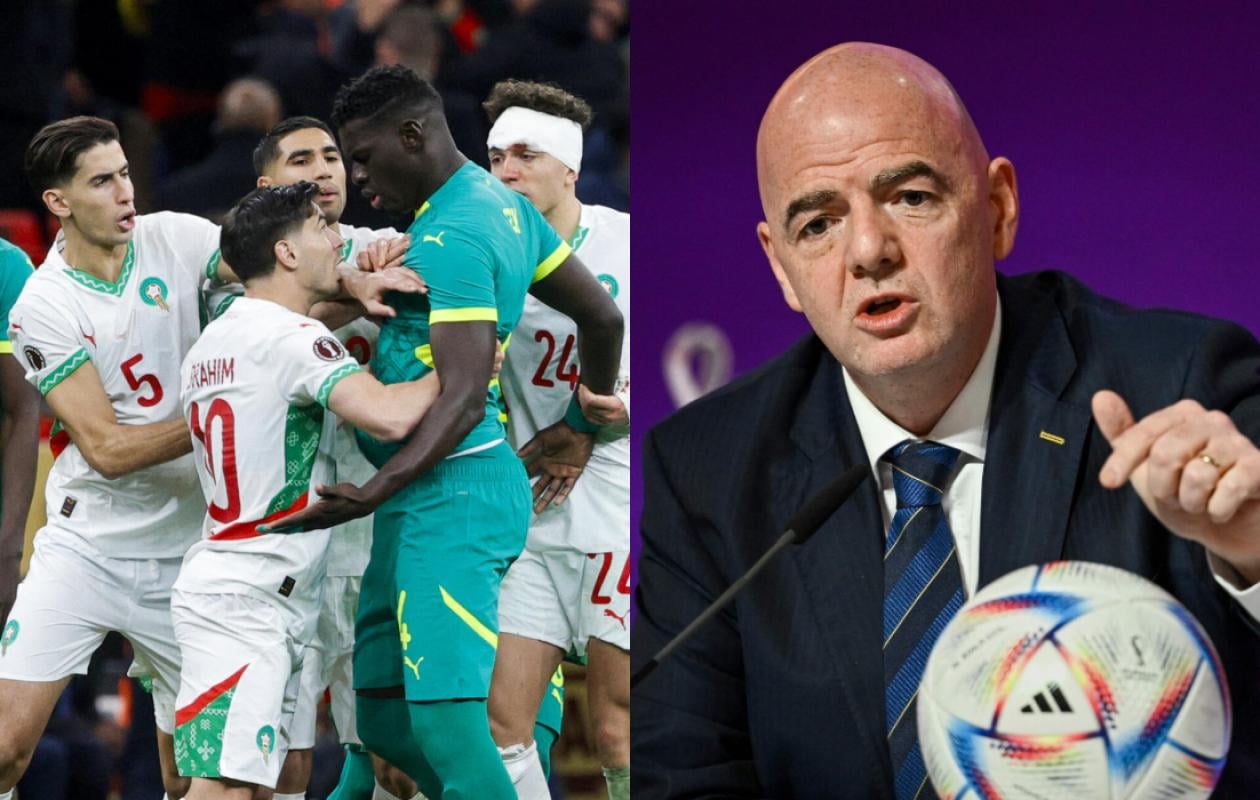
FIFA tightens regulations ahead of 2026 world cup after controversial Senegal-Maroc can 2025 final

As preparations intensify for the 2026 FIFA World Cup, global football’s governing body is implementing stricter regulations to curb extreme on-field disputes.
The move follows a turbulent climax to the 2025 Africa Cup of Nations, where Senegal and Morocco’s final in Rabat was marred by player walkouts and chaotic scenes. These incidents have prompted FIFA to act decisively to maintain the sport’s integrity.
Key changes to FIFA’s disciplinary framework
The newly approved amendments, ratified by the International Football Association Board (IFAB), will take effect at the 2026 World Cup—scheduled to run from June 11 to July 19 across the United States, Canada, and Mexico.
Immediate expulsions for field protests
Players who voluntarily leave the pitch to protest referee decisions now face automatic red cards. Coaches or staff members who instigate such actions will also be held accountable. The updated rules state:
« At the discretion of match officials, any player leaving the field to contest a decision may be immediately expelled. This also applies to technical staff who encourage such behavior. »
Forfeits for match abandonment
Teams that cause the permanent suspension of a match will automatically be declared losers by forfeit. This measure aims to eliminate deliberate match interruptions that disrupt competition flow.
During the 2025 AFCON final, Senegal’s coach Pape Thiaw instructed his players to walk off after a controversial penalty decision and a disallowed goal. The episode created widespread confusion before players returned to complete the match.
FIFA’s zero-tolerance approach for competitive integrity
These sweeping changes reflect FIFA’s commitment to preserving the integrity of international competitions. By enforcing stricter penalties, the organization seeks to prevent future controversies that could undermine the sport’s credibility.
The 2026 World Cup will be the first major tournament to test these new regulations, signaling a new era of accountability in global football.