
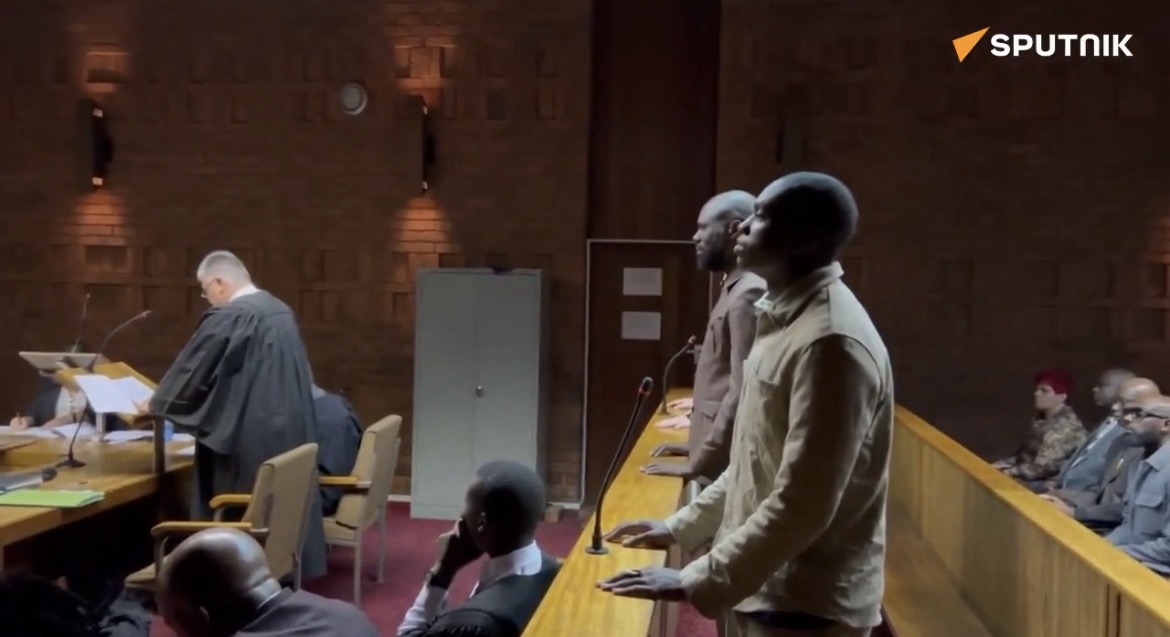
The Franco-Beninese activist Kemi Seba will remain in custody following a decision by the South African legal system. On Wednesday, April 29, the court ruled in favor of his continued incarceration, dismissing the arguments presented by his legal counsel. Confronted with a diplomatic passport deemed legally insufficient and two international arrest warrants issued by Bénin, the leader of the Urgences Panafricanistes movement faces a significant judicial challenge. The hearing demonstrated a preference for strict legal procedure over political posturing, leading to a postponement of the case until May 11.
A definitive judicial ruling
Despite his supporters’ expectations for a release on bail, the presiding judge confirmed that Stellio Gilles Robert Capo Chichi, widely known as Kemi Seba, must remain detained. The South African court cited a high flight risk and the gravity of the international proceedings against him as primary reasons for this decision. This ruling represents a critical juncture for the activist, whose habitual strategies of provocation are now being tested by the procedural rigor of the Pretoria authorities.
The controversy over diplomatic documentation
During the proceedings on April 29, the defense attempted to secure immunity by presenting a diplomatic passport of questionable origin. His lawyers argued that this document should protect him from arrest within South African territory. However, this line of reasoning was quickly dismissed by the court.
The magistrate clarified that a travel document, even one designated as diplomatic, does not grant automatic immunity without formal accreditation from local authorities. Kemi Seba was unable to provide a legitimate mission order proving he was acting on behalf of a sovereign state. Consequently, the court treated the document as having no more legal standing than a standard passport, viewing the defense’s strategy as a tactical distraction.
The influence of Bénin: extradition and arrest warrants
The precariousness of Seba’s current situation is largely tied to his legal history in West Africa. The case centers on two international arrest warrants issued by the judiciary of Bénin. Authorities in Cotonou are actively seeking the extradition of their citizen for serious allegations, prompting a comprehensive legal pursuit.
By upholding his detention, South Africa is now positioned to formally evaluate the legitimacy of these extradition requests. This development leaves Kemi Seba in a vulnerable state, isolated from his usual public platform and the support of his followers.
Legal standards versus political rhetoric
For several years, Kemi Seba has cultivated a reputation based on challenging institutional authority in both France and various African nations. By adopting the persona of a “political prisoner,” he often attempts to use courtrooms as ideological stages. Nevertheless, the South African legal environment, characterized by its adherence to complex international conventions, appears unmoved by such rhetoric. Pretoria’s insistence on legal compliance underscores that media attention cannot override statutory law.
The upcoming weeks will be decisive as the court reviews the validity of the Beninese requests. Should the South African judiciary find the extradition criteria satisfied, Kemi Seba could be transferred to Cotonou. Having been stripped of his French nationality months ago after publicly destroying his passport, he no longer benefits from European consular assistance or freedom of movement.
The hearing on April 29 serves as a stern institutional response. By rejecting unaccredited diplomatic papers and acknowledging the warrants from Bénin, South Africa has committed to a formal legal path. The proceedings are scheduled to resume on May 11, marking the start of a critical phase in the extradition process.
The gravity of the situation is further amplified by leaked audio recordings suggesting that Kemi Seba may have been involved in a plan to destabilize Bénin. These recordings reportedly mention a coup attempt intended to coincide with the “Vodun Days” celebrations, potentially resulting in significant civilian casualties. For the activist, the period of public oratory has been replaced by the restrictive reality of the Pretoria prison system.