
Gabon: the strategic shift at Kobe-Kobe
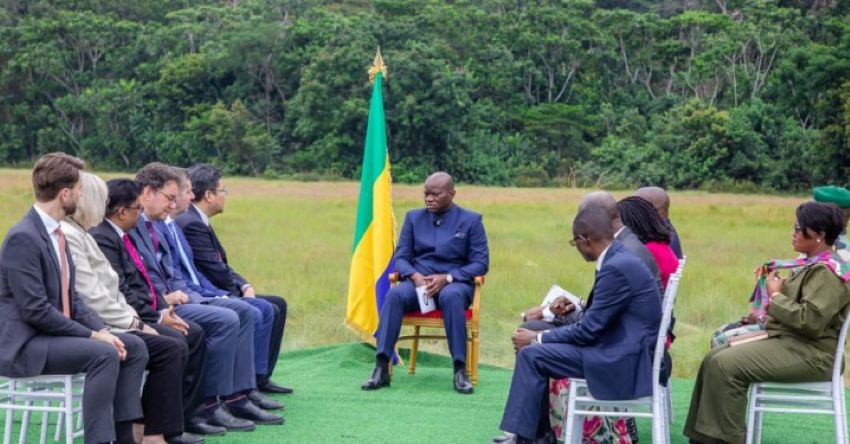
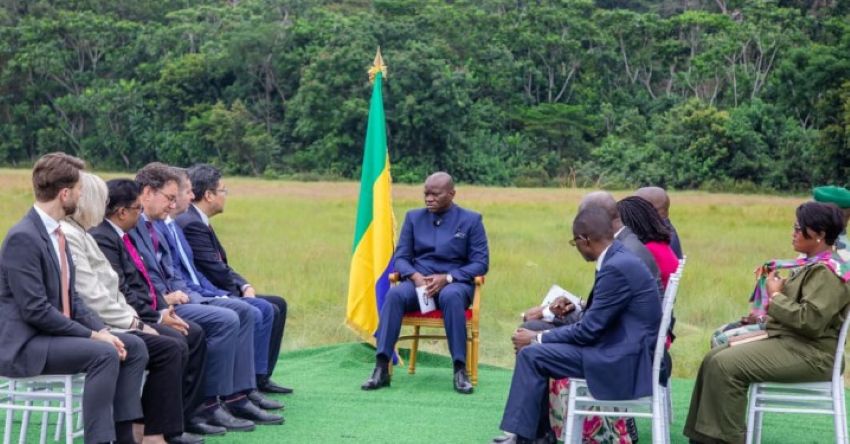
Following the official inauguration of the Kobe-Kobe deep-water port construction on Gabon’s Atlantic coast, President Brice Clotaire Oligui Nguema convened a strategic meeting in Nyonie with ambassadors and representatives from the major global powers involved in the project.
This high-level gathering was more than a diplomatic formality; it signaled a bold new ambition to establish Gabon as a premier industrial, logistical, and mining center for Central Africa.
The Head of State utilized this exchange to deliver a firm message to international partners: Kobe-Kobe is far more than a maritime facility. It serves as the foundation for a revamped economic model designed to prepare for the post-oil era, bolster national economic sovereignty, and integrate Gabon more effectively into global supply chains.
A transformative economic doctrine
Central to the Kobe-Kobe initiative is one of the most significant strategic assets on the continent: the Belinga iron ore deposit. With estimated reserves of nearly 7.5 billion tonnes and an exceptional iron content of approximately 65%, it remains one of the world’s most important untapped mineral resources.
The project marks a significant departure from traditional extractive practices. For years, the African commodity sector focused on the simple extraction and export of raw materials. The vision presented by the Gabonese presidency seeks to dismantle this cycle.
The integrated complex will consist of four interconnected pillars: the Belinga mine, a 500-kilometer electric railway, a deep-water port capable of hosting the world’s largest vessels, and dedicated energy infrastructure to power the entire industrial network.
This vertical integration is designed to retain value within the country, fostering the birth of a local steel industry capable of processing mineral production on Gabonese soil.
The strategy of multi-partner diplomacy
During his discussions with diplomats at Kobe-Kobe, Brice Clotaire Oligui Nguema highlighted a cornerstone of his international policy: the diversification of partnerships.
The President emphasized that the nation’s future cannot rely on a single partner or a specific sphere of influence. Instead, it must be built on open cooperation involving various economic and industrial powers.
This philosophy is reflected in the international consortium assembled for the project. China is spearheading the mining and rail infrastructure, while France is heavily involved through logistics operators. Expertise from Italy, India, the United States, and Australia is also being leveraged across the industrial, financial, and energy sectors.
This multi-national framework aims to secure the necessary funding and technology while ensuring Gabon maintains its decision-making autonomy.
Ambassadors from France and China, Fabrice Mauriès and Zhou Ping, praised this balanced approach, noting that it opens new avenues for cooperation. Their public endorsement reflects the growing international confidence in Gabon under the Fifth Republic.
An industrial turning point for Central Africa
Beyond the physical structures, Kobe-Kobe represents a massive economic gamble. Government forecasts predict the creation of over 100,000 direct and indirect jobs, the development of a robust national subcontracting network, and a significant ripple effect across the entire economy.
Sectors such as transport, energy, metallurgy, engineering, and vocational training are expected to thrive within this vast economic corridor. Furthermore, the geopolitical implications are substantial. With this deep-water port, Gabon is positioned to become a primary maritime gateway for Central Africa, intensifying regional competition in the logistics sector.
By encouraging diplomats to share this vision with their respective governments and financial institutions, Brice Clotaire Oligui Nguema aims to further expand the pool of international investors.
Ultimately, Kobe-Kobe is a symbol of a national strategy to transform natural wealth into industrial progress. If successful, Gabon could transition from a raw material exporter to a major industrial force in Central Africa within the next decade.